Clear Sky Science · en
Unraveling configurational pathways to regional environmental performance: a multi-period fsQCA analysis of China’s governance dynamics
Why regional green progress matters
Across the world, cities and regions are trying to grow their economies without choking on smog or poisoning rivers. This article looks at how different parts of China manage that balancing act, asking a simple but vital question: what mixes of pressure from citizens, local conditions, and government action actually lead to cleaner air, water, and land over time?
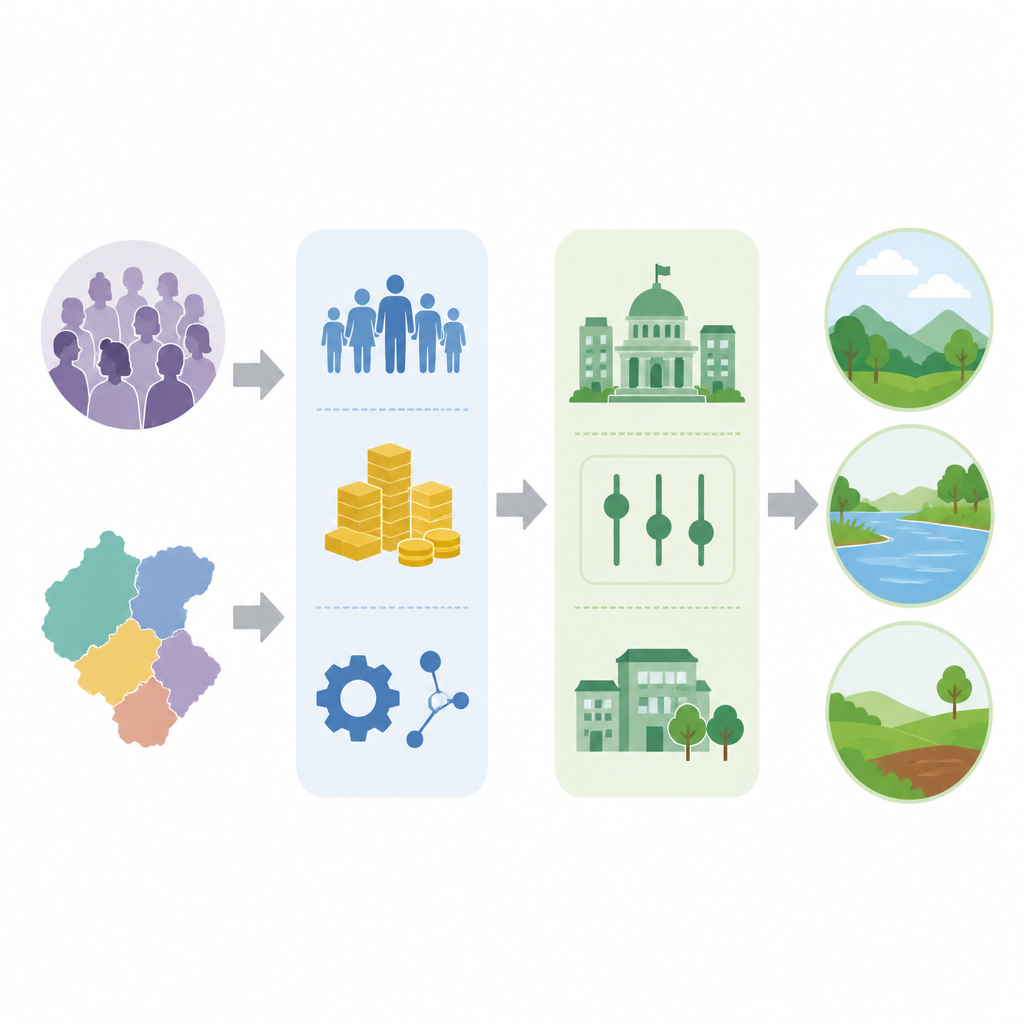
Many routes to cleaner environments
The researchers argue that there is no single magic ingredient that guarantees good environmental results. Instead, they build a practical lens called the pressure–state–response–environment framework. Pressure covers what comes from outside government, such as public concern about pollution and competition with neighboring provinces. State describes the regional setting: how many people live there, how rich they are on average, and how advanced local technology is. Response captures what governments actually do, mainly through regulations and how much money they spend on environmental programs. Environmental performance is the outcome, measured with a blend of indicators for air, water, and solid waste.
Following China’s provinces over time
To see how these elements work together, the study follows 31 Chinese provinces from 2018 to 2023, a time that spans the end of one national five year plan and the start of the next. Rather than look at each factor on its own, the authors use a comparative method that searches for patterns of conditions that show up again and again in regions with similar results. This approach accepts that several different combinations of pressure, state, and response can lead to equally strong environmental performance, an idea known as equifinality. It also lets the authors compare how these patterns change as national priorities shift toward tougher climate targets and new rules.
What high performing regions have in common
The findings show that provinces with strong environmental records tend to share three broad features. First, they face steady peer pressure, because provincial leaders are ranked and compared on their green results, and no one wants to fall behind. Second, they have enough economic strength and technological capability to support cleaner production and waste treatment. Third, their governments respond using a mix of tools, but the dominant tool changes over time. In the earlier years, many high performing regions leaned heavily on environmental spending, using public funds to upgrade treatment plants and waste systems. In the later years, as national policy turned toward stricter rules and enforcement, direct spending played a smaller role and firm regulation became more central.
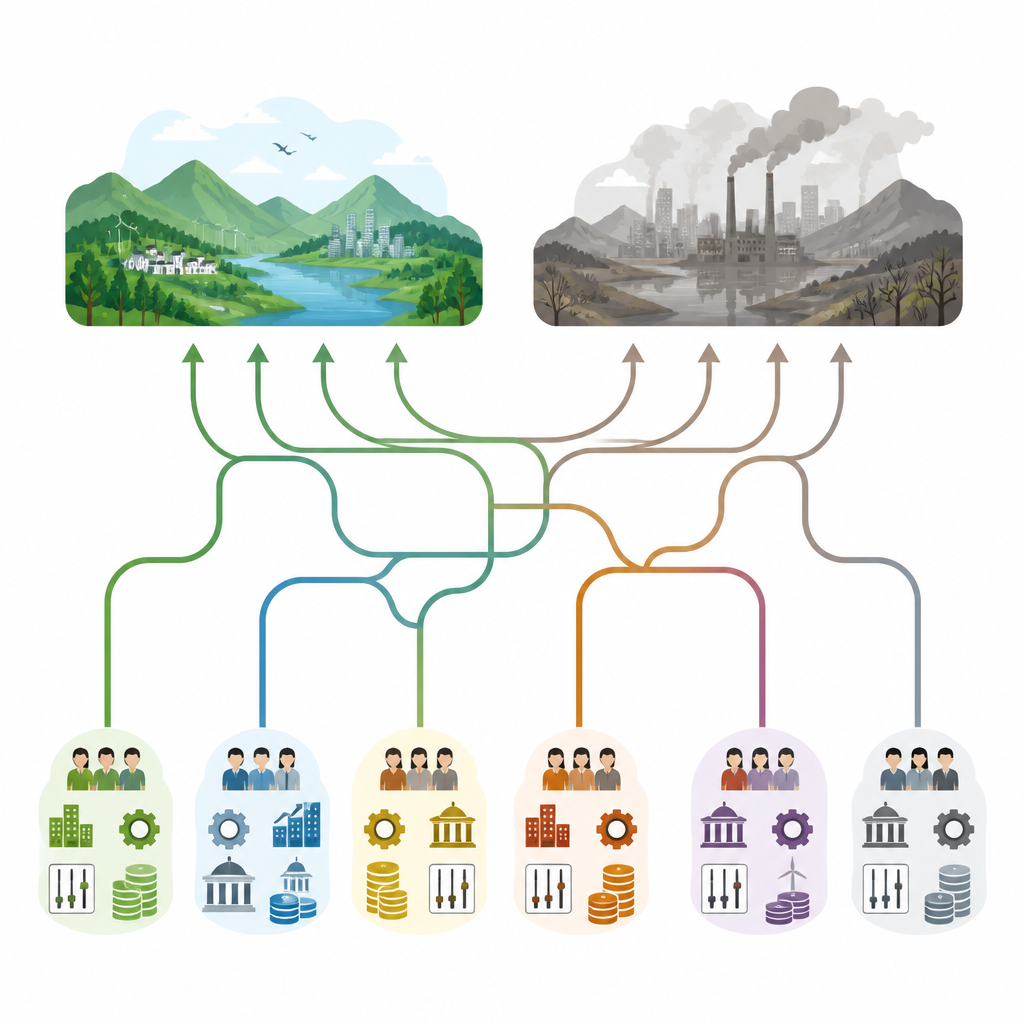
Different regions, different workable mixes
The study also uncovers clear regional contrasts. In the more developed eastern provinces, strong technology and higher incomes are the backbone of success, supported by competition among governments and tightening rules. In central China, large populations create both environmental stress and public demand, so crowding becomes a key driver that pushes officials to act. In the less developed west, where money and technology are more limited, successful cases often rely on added fiscal support, public pressure, and policy backing from the central government. Importantly, the paths to poor performance are not just the mirror image of the successful ones: simply removing a weakness does not automatically create a high performing mix.
What this means for future policy
For a lay reader, the main takeaway is that improving a region’s environment is less like turning a single dial and more like tuning a whole soundboard. Citizen concern, local wealth, population, technology, and government choices all matter, but what counts most is how they are combined in a specific time and place. China’s experience suggests that steady competition between local leaders, backed by adequate resources and evolving from spending based support toward firm, credible enforcement, can gradually raise environmental standards. At the same time, policies must be tailored to each region’s strengths and limits, rather than copying a one size fits all blueprint.
Citation: Tan, S., Liu, X., Li, W. et al. Unraveling configurational pathways to regional environmental performance: a multi-period fsQCA analysis of China’s governance dynamics. Humanit Soc Sci Commun 13, 623 (2026). https://doi.org/10.1057/s41599-026-06936-3
Keywords: environmental governance, China provinces, public pressure, government regulation, environmental performance