Clear Sky Science · en
Between peace and the market: bot and human communication of peaceful death in Japanese social media
Why talking about peaceful death online matters
How we imagine a calm, pain-free death shapes the way we care for the sick, prepare for loss, and design our health systems. In Japan, where most people die in hospitals and death is often a quiet, private matter, social media offers a rare public window into what people really think and feel. This study looks at years of posts on Twitter/X that use the phrase “peaceful death,” asking who is speaking, what they talk about, and how automated accounts may be nudging the conversation in subtle ways.
Looking at online talk about a gentle end
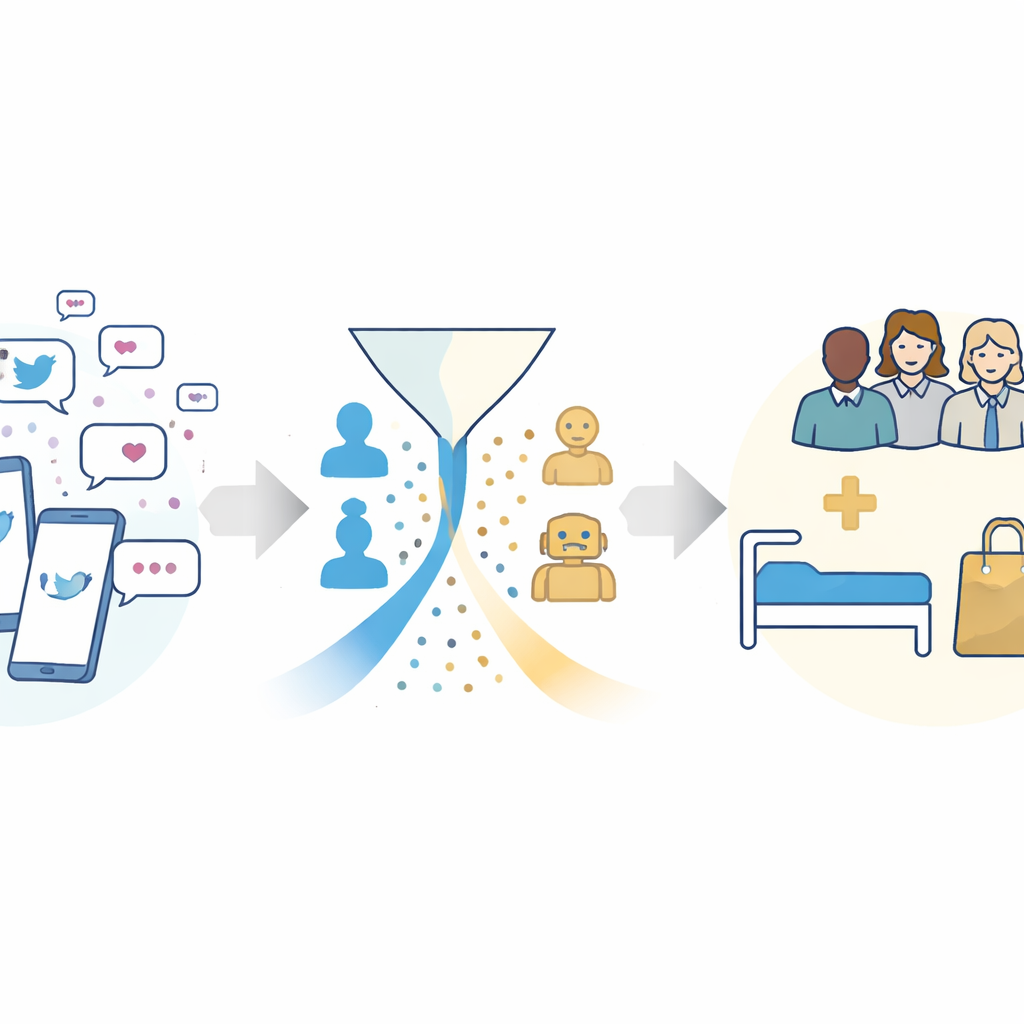
The researchers gathered more than 100,000 Japanese tweets that mentioned “peaceful death” between 2017 and 2023. From these, they drew a random sample of 10,000 posts and used text-mining software to count which words most often appeared together. Instead of reading each tweet by hand, they built “word networks” where frequently linked terms cluster, revealing major themes at a glance. They also randomly selected 100 accounts and checked their profiles to see whether they were likely to be ordinary people, organizations, or automated bots.
Discovering the hidden role of bots
In the first sample, almost a quarter of active accounts turned out to be bots, a higher share than in many earlier Twitter studies. These automated accounts were not just harmless quote machines. They pushed certain ideas again and again, such as a famous saying often attributed to Leonardo da Vinci about a well-lived life leading to a happy death, and promotions for books sold through major online stores. Some posts linked the idea of a peaceful death to debates over euthanasia, even though assisted dying is illegal and rarely discussed openly in Japan. The pattern suggested that commercial interests and automated scripts were helping to frame public talk about what counts as a good death.

Separating human voices from machine noise
To hear human voices more clearly, the authors built a second, carefully cleaned sample of 10,000 tweets. They traced suspicious accounts back through the larger dataset, flagged bots using clues such as profile details and behavior, and replaced their posts with tweets from identifiable people. In this human-focused set, conversations about peaceful death still included the same inspirational quote and the same book on Native American beliefs, but bots were no longer driving them. Popular tweets often mourned fictional characters in video games, anime, and films, especially male heroes, while real deaths—particularly of women—were much less visible. A few posts described experiences with cancer or COVID-19, stressing the importance of pain relief, emotional comfort, and being able to say goodbye.
What peaceful death means beyond the hospital
Across the cleaned sample, a peaceful death was less about high-tech medicine and more about freedom from pain, a sense of gratitude, and basic human needs being met. People valued time with family, the chance to prepare, and the feeling that death was not rushed or lonely. At the same time, the study uncovered an uneasy mix of spiritual references, imported New Age ideas, and commercial products promising a good death or a happier life. Influencers who review books and other cultural goods played a visible role in spreading such messages, blurring the line between personal reflection and marketing. The authors argue that this reflects a broader trend in Japan toward treating death as another consumer experience.
Why these findings matter for society
In plain terms, the study shows that when Japanese people talk about a peaceful death online, they are not just swapping stories—they are doing so in a space shaped by bots, advertisers, and unequal attention to whose deaths matter. Automated accounts seem to promote euthanasia and self-help style success stories more loudly than ordinary users do. Meanwhile, genuine accounts highlight that a good death means relief from suffering and care that respects a person’s life story, not just their diagnosis. The authors conclude that health professionals, policymakers, and platform companies need to recognize how automated systems and commercial actors influence public ideas about dying. Making discussions of death more open, balanced, and transparent—both online and offline—could help more people in Japan approach the end of life with comfort, dignity, and support.
Citation: Vargas Meza, X., Oikawa, M. Between peace and the market: bot and human communication of peaceful death in Japanese social media. Humanit Soc Sci Commun 13, 617 (2026). https://doi.org/10.1057/s41599-026-06924-7
Keywords: peaceful death, Japanese social media, Twitter bots, end-of-life care, death commercialization