Clear Sky Science · en
Muslim-Armenian godfatherhood (Kirvelik) in Ottoman Diyarbakır and the impact of this tradition on social relations
Ritual Bonds That Cross Religious Lines
In the multiethnic city of Diyarbakır in the late Ottoman Empire, Muslim and Armenian neighbors developed an unusual kind of family tie. Through a tradition called kirvelik—similar to godfatherhood—they used a child’s circumcision ceremony to create a lifelong bond between households that did not share blood or even religion. This article explores how that bond worked, why Muslim families chose Christian Armenians for such an intimate role, and how the practice helped different communities live together, support one another, and manage tensions in a diverse society.
What It Means To Become a Ritual Relative
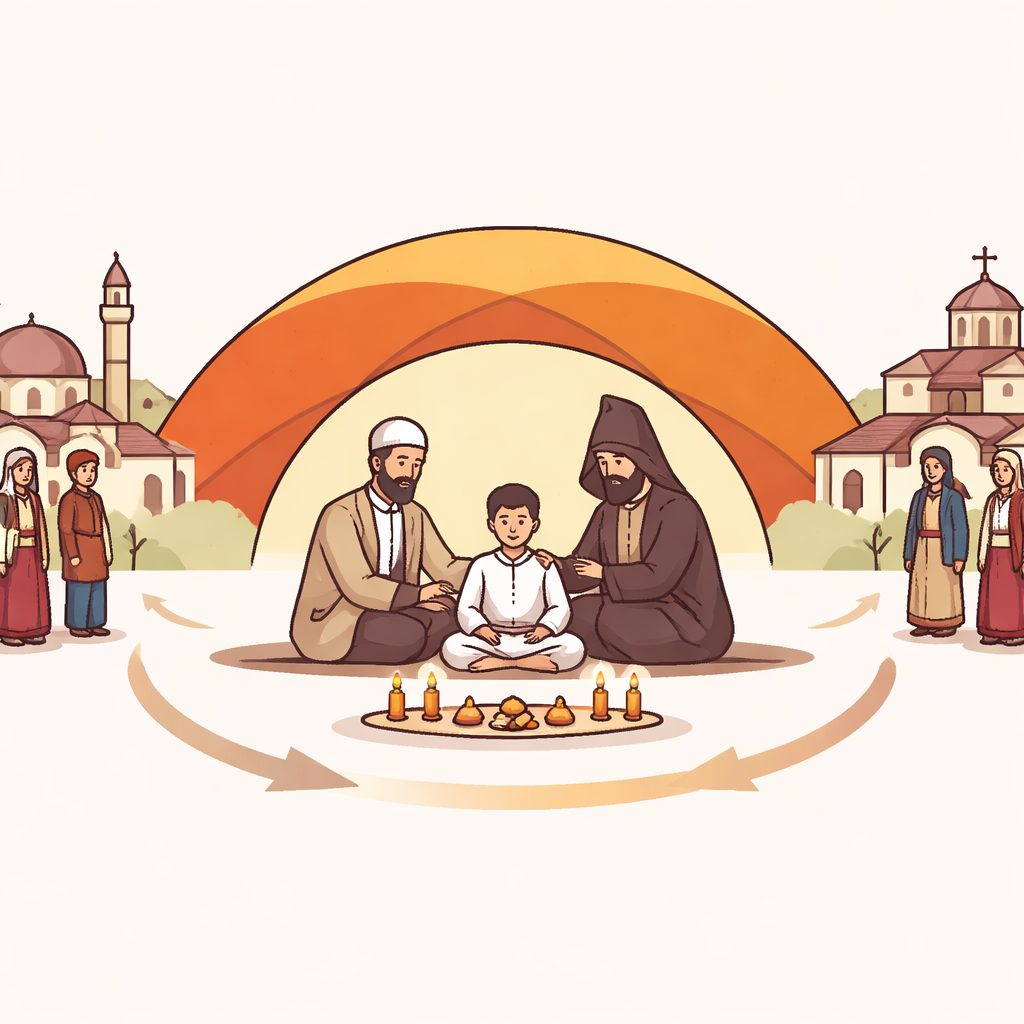
Kirvelik begins with a boy’s circumcision feast, a major life event in Muslim communities. A kirve is the respected elder who helps pay for the celebration and physically holds the child during the operation, taking on both expense and responsibility. From that moment on, the two families are treated as if they were close relatives, despite having no blood tie. This idea of “imaginary kinship” is well known in anthropology: people publicly declare each other as kin through ritual rather than birth. In Eastern and Southeastern Anatolia, especially around Diyarbakır, Muslims did not restrict this role to fellow believers. They often chose Armenian Christian neighbors as kirves, and Armenians used parallel terms in their own language and customs, blending local practice with their own religious traditions.
Living Together Through Everyday Trust
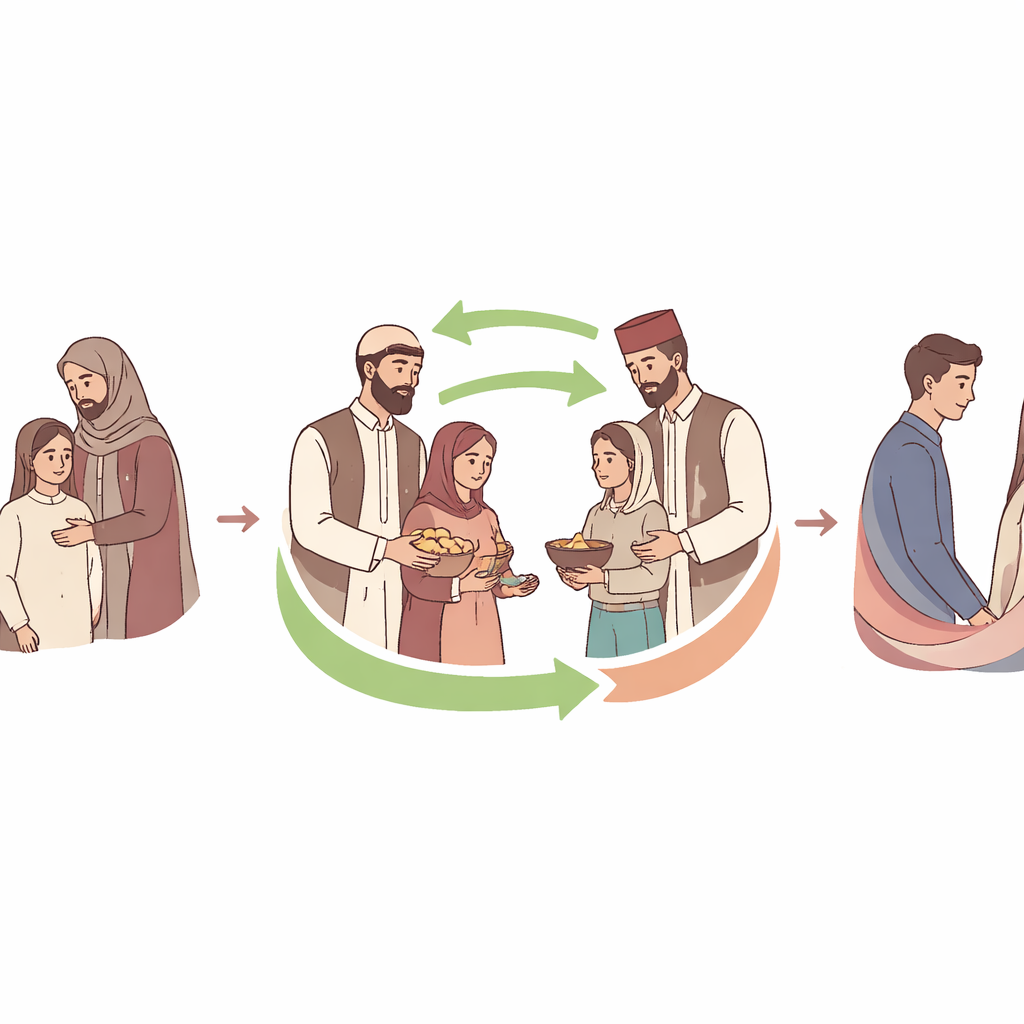
Once the kirvelik bond was formed, daily life changed in concrete ways. A Muslim kirve could come and go freely from his Armenian kirve’s house and vice versa, eating meals, sleeping over, and storing goods as if in his own home. In mixed towns and villages, this trust carried over into trade: farmers arriving from the countryside might unload their animals and wares directly into a kirve’s house, confident they would be safe. People often addressed one another as “kirve” even when no formal bond existed, using the word as a warm title that stood in for “brother” across religious lines. In a region where many faiths and ethnicities lived side by side, kirvelik acted as social glue, making it easier to cross boundaries without erasing them.
Softening Inequalities and Setting Clear Limits
Kirvelik also helped balance social inequalities. In the Ottoman world, Muslims generally held a higher legal and social status than non-Muslims, including Armenians. By tying Muslim and Armenian households together as ritual kin, kirvelik could raise the standing of a disadvantaged family and give it allies with more power or resources. At the same time, the bond created strict limits: marriage between kirve families was treated as taboo, even when religious law did not forbid it. A boy who had been held by a kirve at circumcision was not expected to marry his kirve’s daughter, just as siblings would not marry. For Armenians wary of their daughters marrying Muslims, kirvelik provided a culturally accepted way to deepen friendship with Muslim neighbors while reinforcing community rules against mixed marriage.
Protection In Times of Fear
The protective side of kirvelik became most visible during the violent upheavals and forced relocations of Armenians in 1915. In some places, Armenian or Assyrian Christians sought refuge with their Muslim kirves, hoping that the ritual bond would outweigh pressure from authorities or hostile groups. The article notes several cases in and around Diyarbakır where Muslim kirves sheltered or assisted their Armenian partners, sometimes at personal risk. These efforts were far from universal and could not stop large-scale policies, but they show how a locally created institution of mutual obligation sometimes offered a fragile lifeline when formal legal protections failed.
Why This Old Custom Still Matters
The study concludes that kirvelik was far more than a colorful custom attached to a childhood rite. In Ottoman Diyarbakır, it formed a flexible but powerful web of obligations that linked Muslims, Armenians, and other communities such as Assyrians and Jews. It strengthened friendships, eased trade, softened sharp inequalities, discouraged certain risky marriages, and in rare but important moments provided real physical protection. Even today, related practices continue among groups like Alevis and Yazidis, showing how ritual kinship can help people navigate difference while preserving their own identities. For a lay reader, kirvelik offers a window onto how everyday relationships and shared ceremonies can quietly hold diverse societies together—or at least give them tools to try.
Citation: Ertaş, K. Muslim-Armenian godfatherhood (Kirvelik) in Ottoman Diyarbakır and the impact of this tradition on social relations. Humanit Soc Sci Commun 13, 497 (2026). https://doi.org/10.1057/s41599-026-06874-0
Keywords: kirvelik, Muslim-Armenian relations, Ottoman Diyarbakır, ritual kinship, social cohesion