Clear Sky Science · en
Group emotional entropy: a perspective on the pathways of collective intelligence generation
Why our moods matter in a crisis
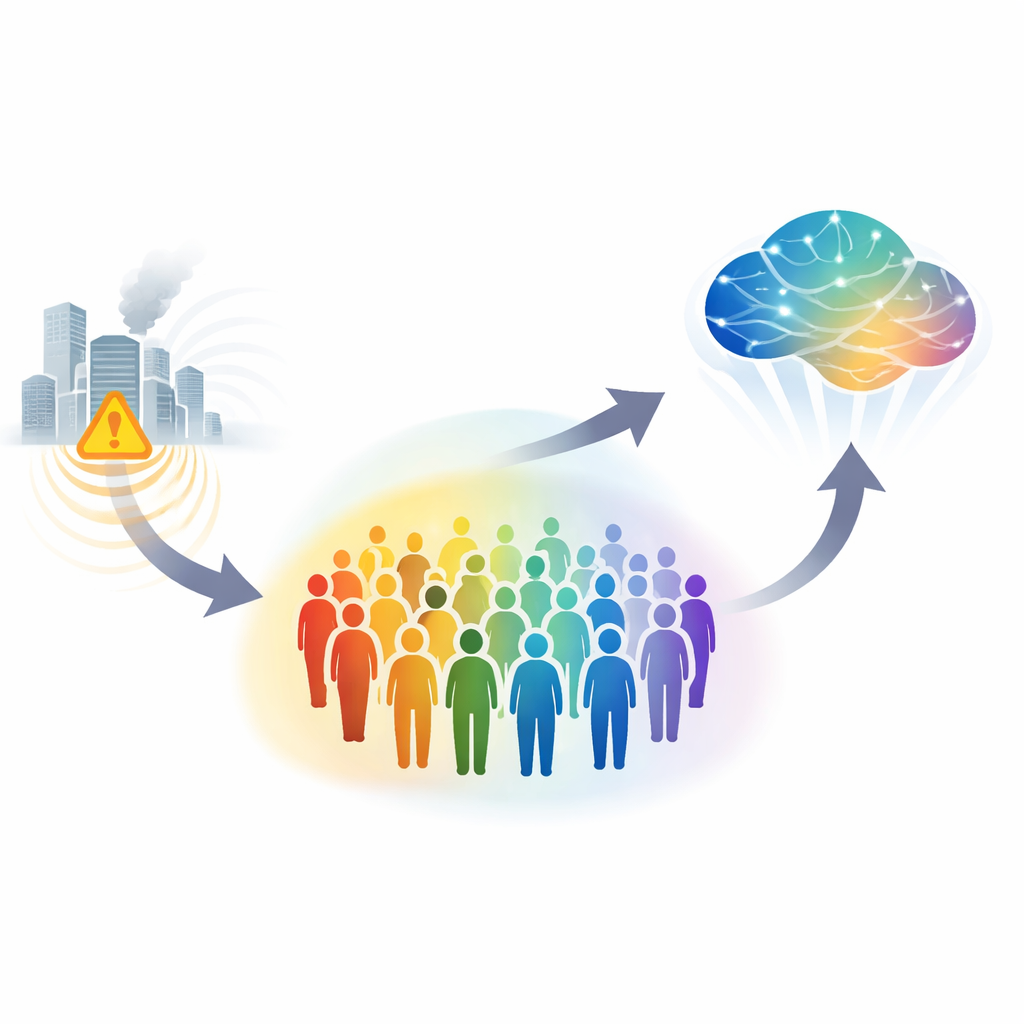
When disasters strike, from sudden storms to building fires, we often focus on facts and logistics: What happened? Who is in charge? But just as important is what people feel together. This paper explores how the mix and evolution of emotions in a crowd can nudge a community toward panic and chaos—or toward shared wisdom and better decisions. By treating group emotions as a kind of “energy” that can be measured and guided, the authors argue that societies can deliberately turn turmoil into smarter collective action after emergencies.
From wise crowds to emotional storms
Groups can be remarkably smart, sometimes outperforming their brightest members, yet they can also behave irrationally and destructively. The authors link this split personality to the emotional life of crowds. Whenever a major event captures public attention, people form a loose, temporary group around it—commenting online, sharing news, and reacting emotionally. These shared feelings are not just individual moods; they interact, spread, and clash, creating what the authors call “group emotional entropy,” a measure of how varied and disordered the overall emotional landscape is. Too much uniform outrage or fear can be as dangerous as complete emotional chaos, and understanding this balance is central to explaining when crowds become wise rather than wild.
Measuring the hidden order in group feelings
To make this idea concrete, the authors build a mathematical model that tracks how many people are engaged with an event over time and how their emotions are distributed. Drawing inspiration from thermodynamics and information theory, they treat emotions as a kind of energy and entropy as a gauge of disorder in that energy. Their key step is to move beyond earlier work that only counted how many people felt each emotion at a single moment. Instead, their model captures how both group size and emotional mix evolve over time, providing a “spatiotemporal” picture. They show that emotional entropy is highest when different feelings—such as fear, anger, sadness, hope, and calm—are present in more balanced proportions, and lowest when one emotion dominates and the group becomes highly polarized.
What real crises reveal
The team tests their framework using social media data from four recent emergencies in China, including a severe rainstorm, an earthquake, and two major fires. For each case, they estimate how many people were actively discussing the event and classify posts into basic emotional categories. They then fit their equations to these data, checking whether the model can reproduce the observed patterns. Despite some noise—especially when looking hour by hour—the model lines up well with reality once data are viewed day by day. This allows the authors to calculate how quickly emotional entropy rises and falls, and to see when a situation moves toward a balanced emotional mix or toward sharp emotional dominance, such as sustained anger or fear.
Turning chaos into shared insight
Building on these measurements, the paper introduces the companion idea of “informational negentropy,” which represents the growth of order and useful information in the group. As emotional entropy declines—meaning that raw, undirected emotional energy is being processed rather than simply exploding outward—negentropy rises. The authors interpret this as the crowd digesting the shock of the event and turning it into shared understanding and potential wisdom. They describe this as a transfer from emotional turbulence to structured knowledge, echoing the familiar ladder from data to information, knowledge, and eventually wisdom. In this view, emergencies inject new knowledge potential into society; whether this becomes mob behavior or mature insight depends on how emotions are regulated along the way.
Guiding crowds toward wiser outcomes
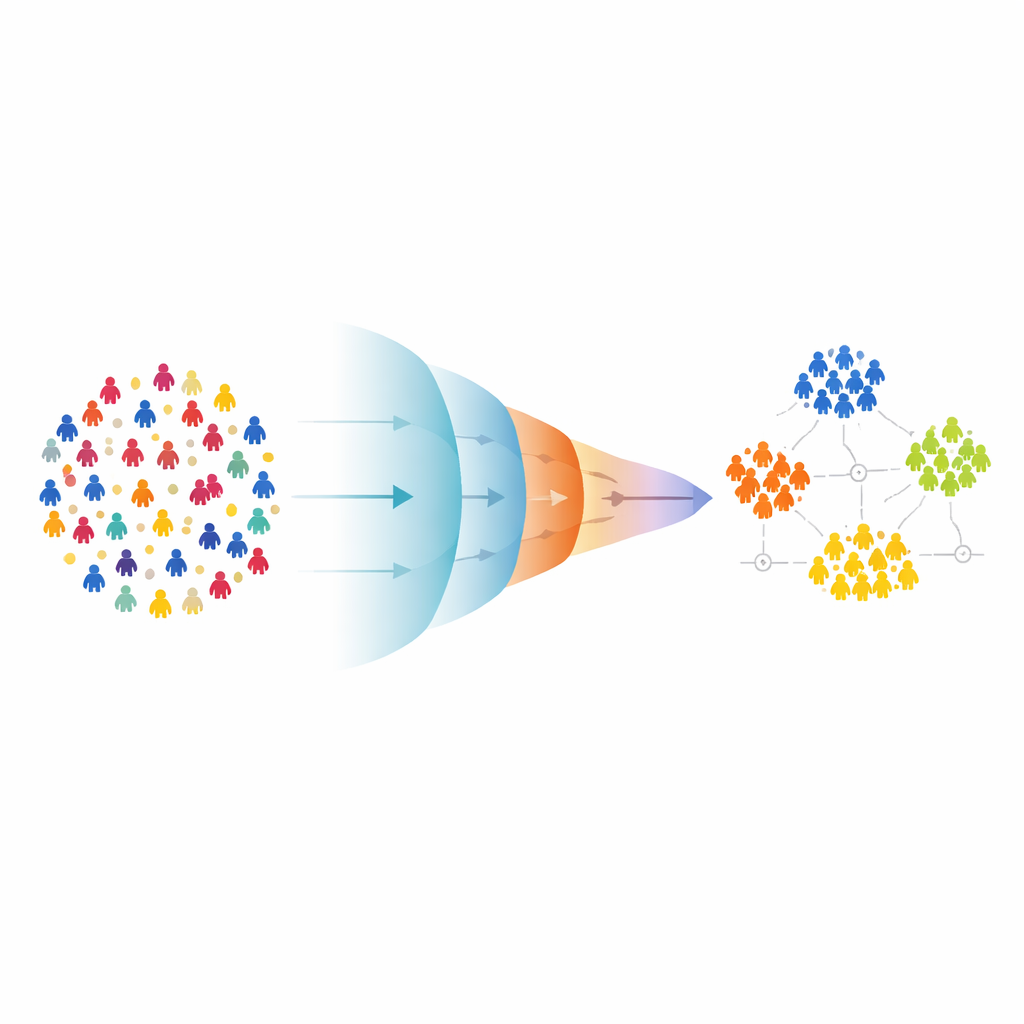
Because the model identifies when emotional entropy is too low (due to extreme polarization) or evolving in an unhelpful way, it also points to how authorities and community leaders might intervene. The authors discuss two strategies: one that “attenuates and transfers” a dominant emotion by spreading some of its intensity into other, less represented feelings, and another that “aggregates and polarizes” scattered minor emotions into a more manageable focal emotion. In simpler terms, effective communication and policy responses can either soften and diversify overwhelming anger or organize scattered worries into a clearer, more constructive stance. When done well, this speeds up the conversion of emotional energy into knowledge and coordinated action. For lay readers, the bottom line is that how we collectively feel—and how those feelings are guided—can significantly influence whether a crisis leaves us only shaken, or also smarter together.
Citation: Xia, Y., Liu, J., Liu, Y. et al. Group emotional entropy: a perspective on the pathways of collective intelligence generation. Humanit Soc Sci Commun 13, 469 (2026). https://doi.org/10.1057/s41599-026-06798-9
Keywords: collective intelligence, group emotions, social media sentiment, crisis response, entropy models