Clear Sky Science · en
The socioeconomic correlates of the willingness to conserve: contextualizing the conservation of the Mt. Magdiwata watershed forest reserve in San Francisco, Agusan del Sur, Philippines
Why This Mountain Matters to Everyday Life
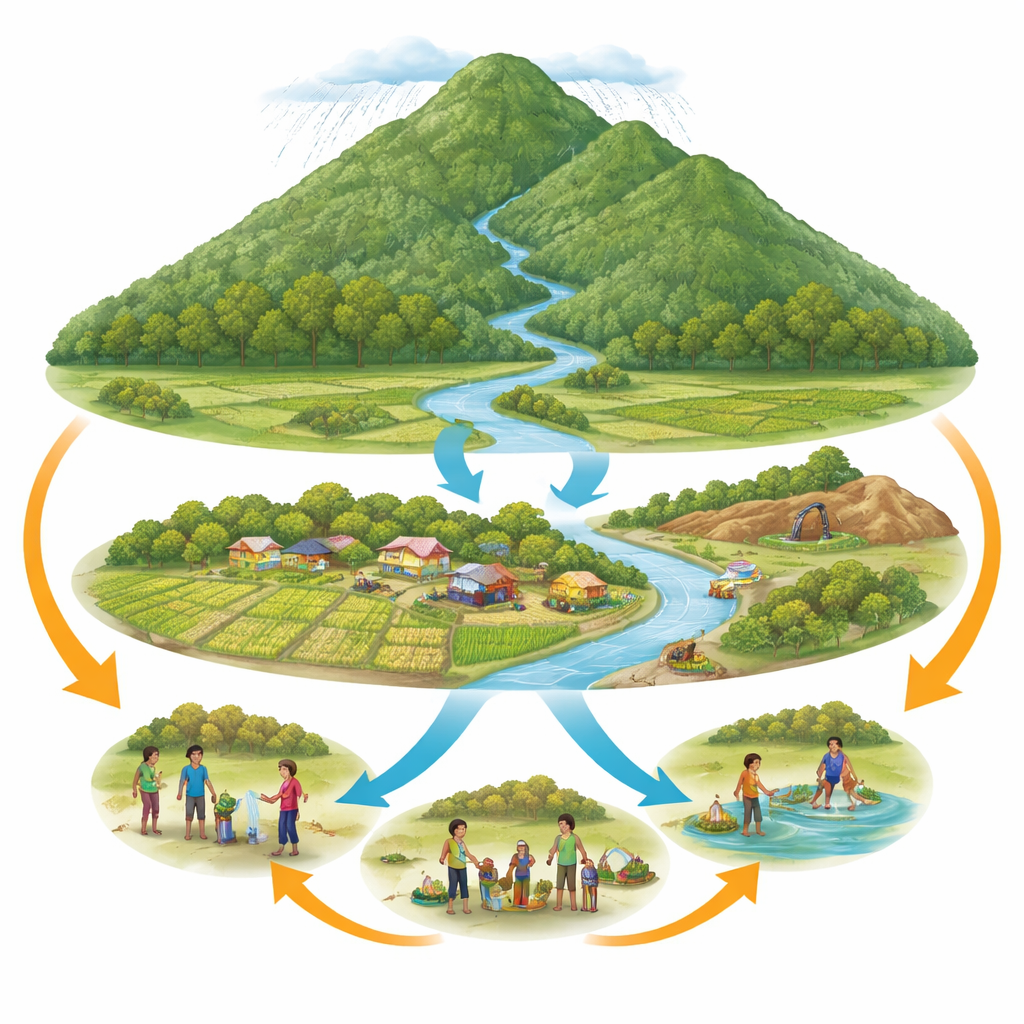
High in the southern Philippines, Mt. Magdiwata is more than a green backdrop on the horizon. It is a living water tower that feeds taps, fields, and small businesses in the town of San Francisco, Agusan del Sur. The people who live around this forested mountain—mostly low‑income farming families—depend on its streams for drinking, cooking, washing, and growing crops. This study asks a deceptively simple question with big implications: what makes these households more or less willing to help protect the mountain and its water?
Life Around a Working Mountain
The researchers surveyed 185 households in Barangay Ormaca, a community that lies along the slopes of Mt. Magdiwata. Most residents have lived there for more than two decades, raising families on small plots of land. Their income is modest, often just above the national poverty line, and few have completed college. Farming is the backbone of local livelihoods, with rice, other crops, and some livestock providing both food and cash. Small‑scale mining and forest product gathering also play important roles, taking advantage of the region’s rich gold deposits and timber resources.
Living on Less Water Than You Might Think
Despite living beside a major watershed, households in Ormaca use surprisingly little water in daily life. On average, each person consumes about 31 liters per day for drinking, cooking, washing, and bathing—well below the Philippine estimate of 48 to 108 liters. People collect water from taps, wells, pumps, and rivers, sometimes walking more than half a kilometer to reach reliable sources. Farming and livestock use additional water, especially for animals and for gold processing in small mines, but many crop farmers still rely heavily on rainfall and nearby streams rather than large irrigation systems.
What Drives People to Help Protect the Watershed
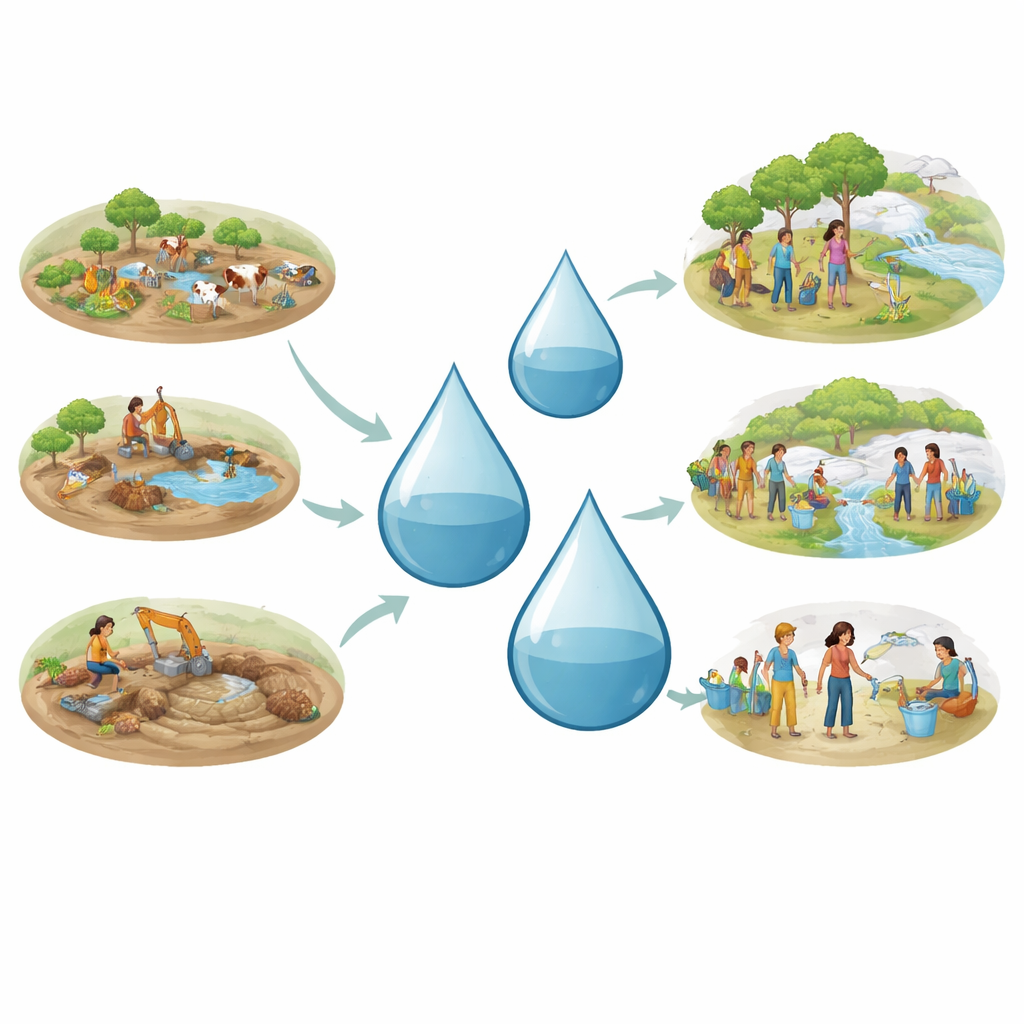
To move beyond simple averages, the team used a statistical method that looks at households with low, medium, and high willingness to join conservation efforts separately. Across these groups, one pattern stood out: families involved in agriculture were consistently more willing to help conserve the watershed. Their harvests depend directly on a steady, clean water supply, so they have a strong personal stake in keeping the mountain healthy. Households that used more water each day—mostly because of farming and livestock—also showed greater willingness to join activities such as water‑saving practices or community projects.
Other factors mattered in more uneven ways. Families living closer to water sources tended to be more willing to conserve, especially among already engaged households, perhaps because they see changes in stream flow and quality firsthand. Larger households, by contrast, were less willing at higher levels of engagement, likely because they feel more pressure to expand income‑earning activities that can compete with conservation. Awareness of local conservation rules had a surprising twist: among the least willing households, knowing more about policies sometimes lowered their willingness, possibly because they perceived regulations as costly or restrictive rather than supportive. Gender also played a role at the low end of willingness, with male‑headed households somewhat more inclined to participate, reflecting traditional decision‑making roles in rural communities.
Turning Insight into Action on the Ground
These findings suggest that the key to lasting conservation at Mt. Magdiwata lies in recognizing how deeply water links nature and livelihoods. When families see that their crops, animals, and household needs depend on a healthy watershed, they become more open to joining protection efforts. The authors argue that local policies should build on this water–livelihood connection: for example, by pairing conservation rules with visible benefits such as improved water access, small grants or loans for sustainable farming, and practical training in water‑saving techniques. Education campaigns that highlight residents’ existing water‑saving habits can reinforce pride in stewardship rather than simply warning about penalties or bans.
What This Means for Protecting Mt. Magdiwata
Put simply, people around Mt. Magdiwata are most willing to conserve the forest and its streams when doing so clearly supports their everyday survival and well‑being. Farming households and heavier water users have the strongest motivation to protect the watershed, while distance from water, large family size, and poorly framed regulations can become barriers. The study shows that conservation is not just a matter of laws or scientific plans; it is about aligning protection efforts with the daily realities of the communities that rely on the mountain. By investing in research, education, and “green” financing that treat water as both a lifeline and a shared responsibility, policymakers can help ensure that Mt. Magdiwata continues to provide for people—and that people, in turn, choose to care for it.
Citation: Balanay, R., Aguilos, N.Z.A., Guinancias, A. et al. The socioeconomic correlates of the willingness to conserve: contextualizing the conservation of the Mt. Magdiwata watershed forest reserve in San Francisco, Agusan del Sur, Philippines. Humanit Soc Sci Commun 13, 496 (2026). https://doi.org/10.1057/s41599-026-06754-7
Keywords: watershed conservation, community livelihoods, water use, Philippines, smallholder farmers