Clear Sky Science · en
From values to motives: dual psychological routes to green product patronage in a developing country
Why everyday green choices are harder than they look
Buying eco‑friendly products seems like a simple way to help the planet, yet in many places these choices are harder and more costly than they appear. This article explores why some people in Chile keep choosing green products over and over again, even when they are more expensive or less convenient, and why others, who care more about how they look to others, may actually turn away from long‑term green habits. Understanding these hidden motives can help design better policies, products, and messages that make sustainable living more realistic for ordinary consumers.
The challenge of going green in a tight budget world
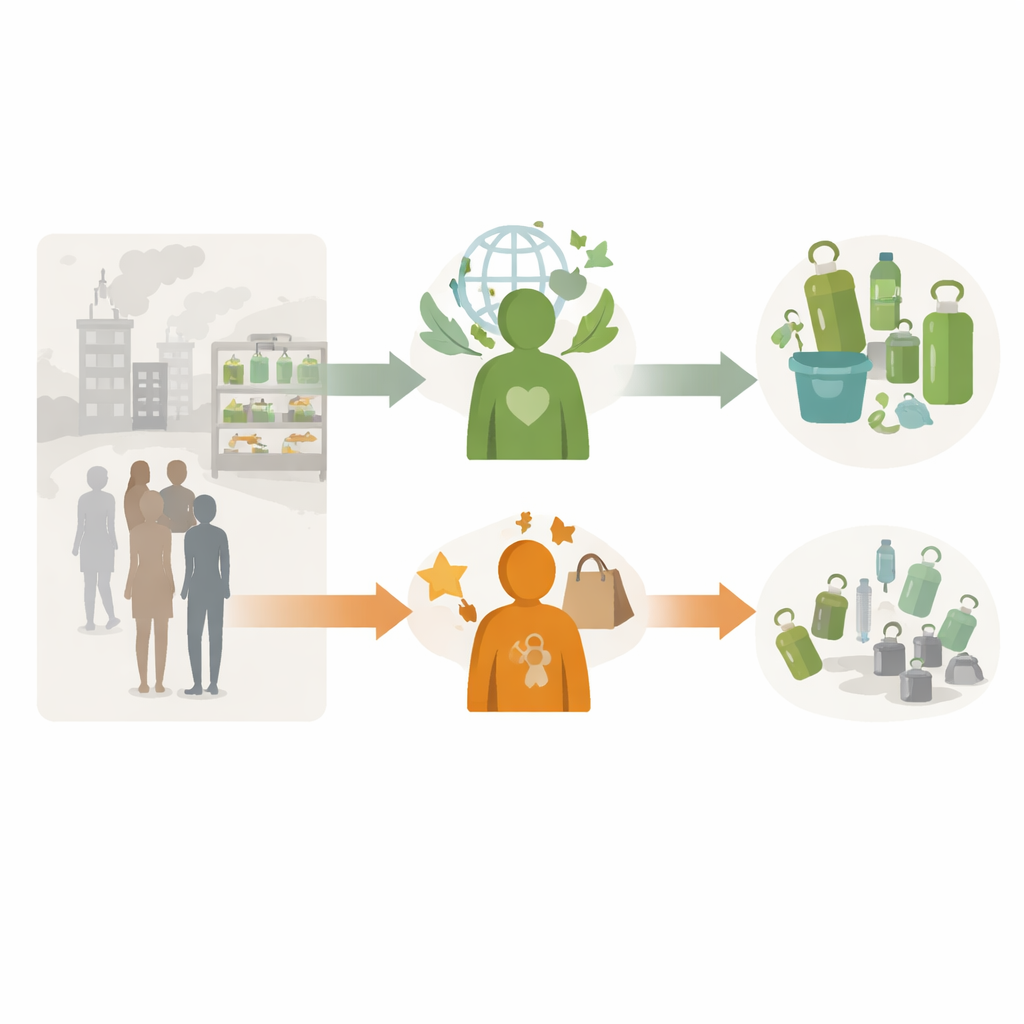
Chile offers a striking example of the tension between environmental concern and everyday reality. The country faces severe pollution and climate‑related damage, yet also leads the region in environmental actions, from cleaner public transport to strong green regulations. Despite widespread awareness and interest, truly green products—such as organic foods, electric cars, or biodegradable cleaners—are often scarce, cost significantly more than standard options, and can be harder to find, especially outside big cities. Many people say they like the idea of green products, but few can afford to pay large price premiums or cope with the added effort they often require. In this context, the study focuses not just on one‑time purchase intentions, but on “patronage intention”: a deep, long‑term commitment to keep buying and using green products across situations.
Two kinds of values, two possible paths
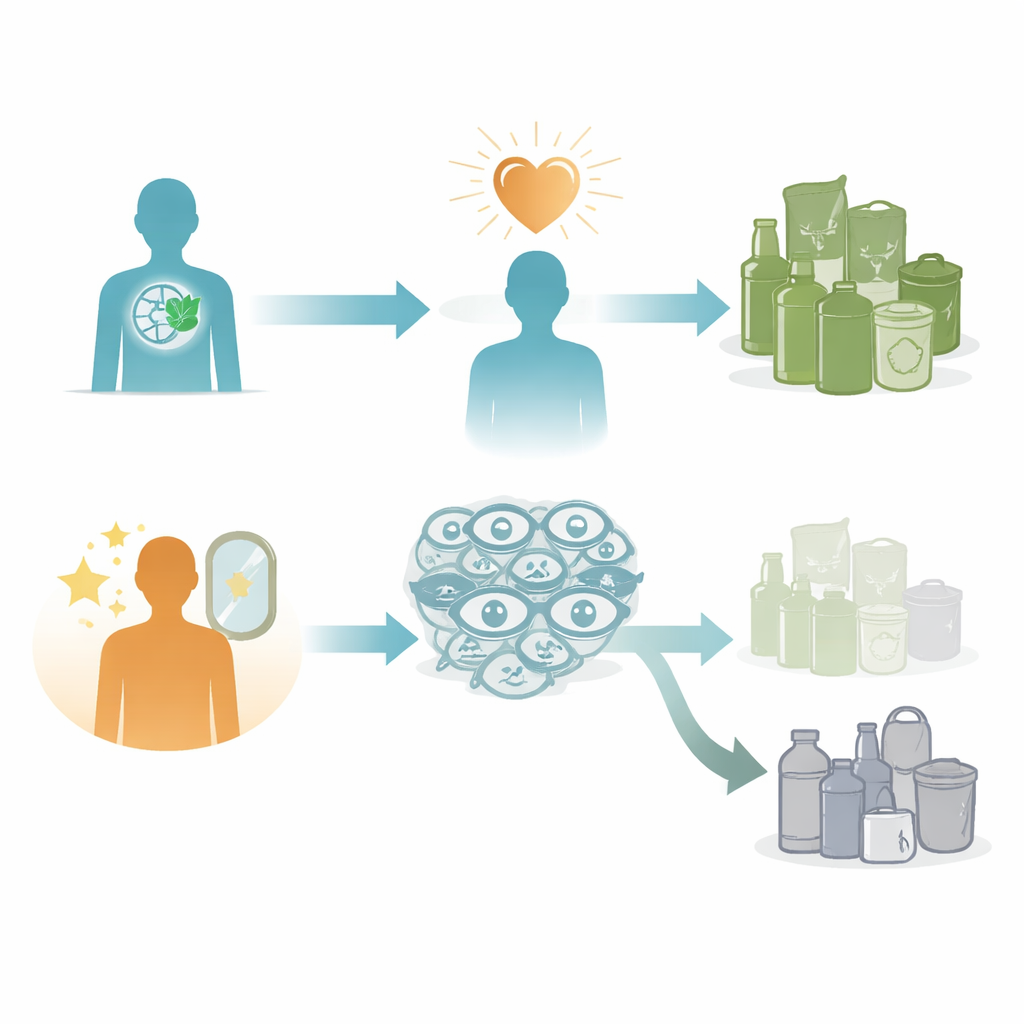
The researchers propose that people’s basic values shape whether they develop that long‑term commitment through two different psychological routes. One group holds “biospheric” values, meaning they care deeply about nature and the health of the planet for its own sake. Another group holds more “egoistic” values, prioritizing personal benefit, status, and comfort. For biospheric consumers, the team expects a “moral route”: these people feel an inner duty to protect the environment and judge choices by their impact on the ecosystem. For egoistic consumers, they propose an “individualistic route”: green behaviour is attractive mainly if it improves their social image, helping them look modern, caring, or high‑status in the eyes of others. The study also tests whether the sense that “people around me expect me to buy green” strengthens either route.
How the study was carried out
To test these ideas, the authors surveyed 428 adults in Chile who had bought a green product in the previous two months. Participants rated how strongly they identified with environment‑centered versus self‑centered values, how much they felt a personal moral obligation to act in an environmentally friendly way, how much they worried about having a pro‑environmental image, and whether they intended to keep buying and using green products in the future. Advanced statistical models were used to see how these pieces fit together and whether social expectations changed the strength of any links.
What really drives steady green buying
The results strongly support the moral route. People with biospheric values were more likely to feel that living green is simply “the right thing to do,” and this personal moral sense, in turn, strongly predicted their intention to keep buying green products over time, even in a setting where these products can be costly or inconvenient. Once this inner duty was taken into account, the direct effect of biospheric values on long‑term commitment essentially disappeared, meaning the moral feeling is the key engine. By contrast, the individualistic route did not behave as expected. While egoistic values did make people more concerned about having a green image, this image concern was actually linked to lower—not higher—intentions to keep buying green products. In Chile’s context of high prices, mixed quality, and public scepticism about “green” claims, worrying about appearances seems to backfire, perhaps because people fear being seen as showing off or as insincere.
Why this matters for changing everyday behaviour
For readers and decision‑makers, the takeaway is that lasting green habits in a developing‑country setting are most strongly rooted in inner moral conviction rather than in image‑building. Appeals that speak to people’s sense of responsibility toward nature and future generations, and that treat them as capable of living up to those values, are more likely to sustain repeated green choices than messages that promise status or social approval. At the same time, the study shows that simply nudging people to “look green” may even discourage continued commitment when products are expensive, confusing, or socially contested. To make sustainable consumption truly widespread, policies and marketing need to support and reinforce people’s environmental values while also making green options trustworthy, affordable, and practical.
Citation: Vidal-Buitano, A., Torres-Moraga, E., Montoro-Ríos, F.J. et al. From values to motives: dual psychological routes to green product patronage in a developing country. Humanit Soc Sci Commun 13, 458 (2026). https://doi.org/10.1057/s41599-026-06727-w
Keywords: green consumption, consumer values, Chile, sustainable products, environmental psychology