Clear Sky Science · en
Risk spillover and network connectedness analysis of green financial and related financial markets: evidence from China
Why green money risks matter to everyone
As countries race to cut carbon emissions, vast sums of money are being funneled into “green” projects through special bonds, stock indexes, and carbon markets. This paper asks a simple but crucial question: when shocks hit these markets—whether from policy changes, pandemics, or wars—how do the risks travel through China’s broader financial system? The answer affects ordinary savers, companies seeking finance, and governments trying to steer a smooth transition to a low‑carbon economy.
Different pieces of the green finance puzzle
China’s green finance system rests on three main pillars. Green bonds raise long‑term funding for environmentally friendly projects, green stock indexes track companies involved in pollution control and clean technologies, and carbon markets put a price on emissions to push firms toward cleaner production. Around them sit more familiar markets: traditional stocks and bonds, foreign exchange, short‑term money markets, and futures on energy, metals, and farm products. These markets are increasingly intertwined. A policy move that affects interest rates or carbon prices can ripple across them all, changing borrowing costs, investment decisions, and even commodity prices.
Following the path of financial tremors
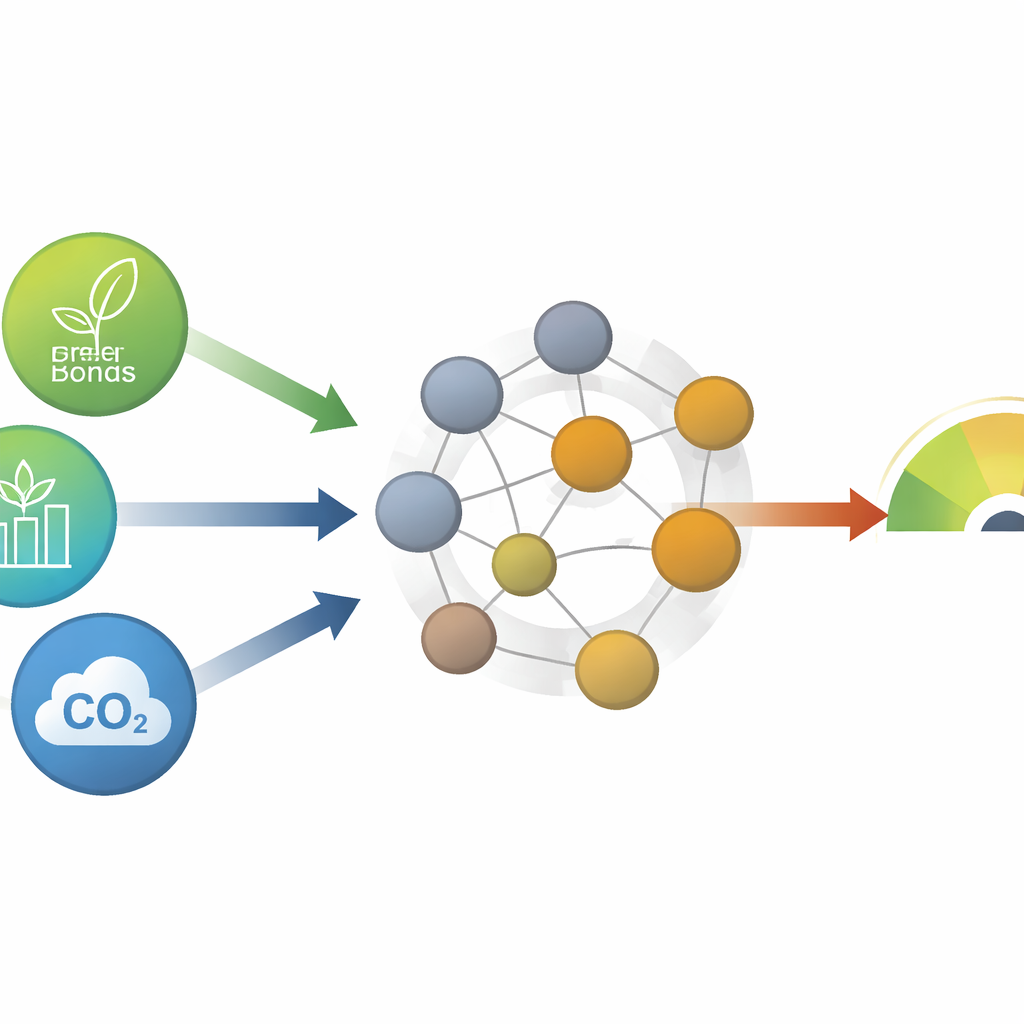
To map how these ripples move, the authors use advanced statistical tools that treat each market as part of a constantly shifting network. Instead of assuming that relationships are fixed, their model lets connections strengthen or weaken day by day, and it looks not only at whether markets move together, but at which ones tend to push risk outward and which ones mainly receive it. They also break the results into short‑term, medium‑term, and long‑term effects, roughly corresponding to daily reactions, business‑cycle swings, and slow‑moving structural shifts in the economy.
Who sends and who absorbs risk
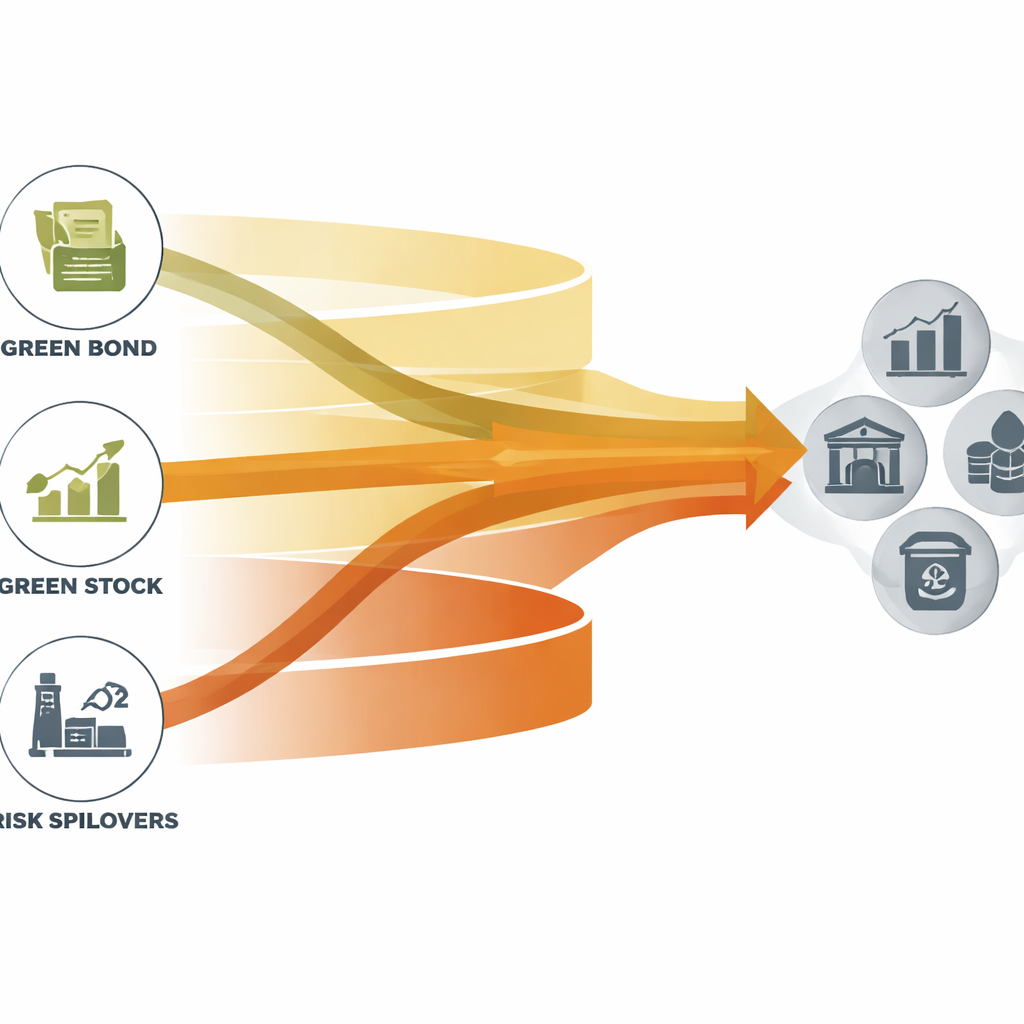
The analysis shows that, inside China’s green universe, markets do not play equal roles. Green bond and green stock markets typically act as net senders of risk, while the carbon market is mostly a taker. Shocks in green bonds and green stocks spill over strongly to their traditional counterparts, confirming tight two‑way links between “green” and regular securities. By contrast, the carbon market remains relatively insulated, with its price movements dominated by its own internal dynamics and only modest connections to other sectors. Among the wider set of markets, traditional stocks, traditional bonds, and energy futures are also important broadcasters of risk, while currency, foreign exchange, and some commodity markets tend to absorb more than they send.
Crises, long shadows, and hidden connections
Risk sharing is not constant over time. The study finds that overall spillovers spike during major episodes such as the 2014–2015 oil price crash, the China–US trade tensions, the COVID‑19 pandemic, and the Russia–Ukraine conflict. The pandemic stands out for both the height and the persistence of its impact: during 2020, more than two‑thirds of market volatility was linked across the system. Looking across time horizons, long‑term spillovers are generally stronger than short‑ and medium‑term ones, implying that slow policy and structural forces—such as the energy transition and regulatory reforms—shape the deepest connections. Network maps reveal that the green bond market sits at the center of this web, acting as a key bridge between green assets and the more traditional parts of China’s financial system.
What this means for the green transition
For a layperson, the main takeaway is that green finance does not live in a separate, protected bubble. In China, markets that fund environmentally friendly projects are now powerful enough to transmit shocks to regular stocks, bonds, and even commodity prices. At the same time, the carbon market—intended to guide the economy toward lower emissions—still behaves more like a small, policy‑driven pool that mostly absorbs, rather than spreads, risk. Because long‑term forces and crises play outsized roles in shaping these links, regulators and investors need to watch the whole network, not just individual instruments. Managing the green transition safely will require better oversight of green bonds and stocks, more robust carbon markets, and early‑warning systems that track how financial tremors travel through this growing web of climate‑related finance.
Citation: Huang, Z., Ding, X. & Wang, Y. Risk spillover and network connectedness analysis of green financial and related financial markets: evidence from China. Humanit Soc Sci Commun 13, 344 (2026). https://doi.org/10.1057/s41599-026-06706-1
Keywords: green finance, risk spillover, China, carbon market, financial networks