Clear Sky Science · en
Natural language reveals that political partisans are more affectively aligned over political issues than partisan identities
Why This Matters for Everyday Politics
People often say that liberals and conservatives “hate” each other and feel totally opposite about hot-button topics like guns, immigration and abortion. This study asks a simple but surprising question: when we look at the actual words people use online, are their emotions about political issues really that far apart, or are they more divided over who is on which team? By examining hundreds of millions of real-world comments and news stories, the researchers show that Americans’ feelings are more similar on issues than the public debate might suggest, and that the sharpest emotional rifts center on partisan identities themselves.
Looking at Feelings Through Everyday Language
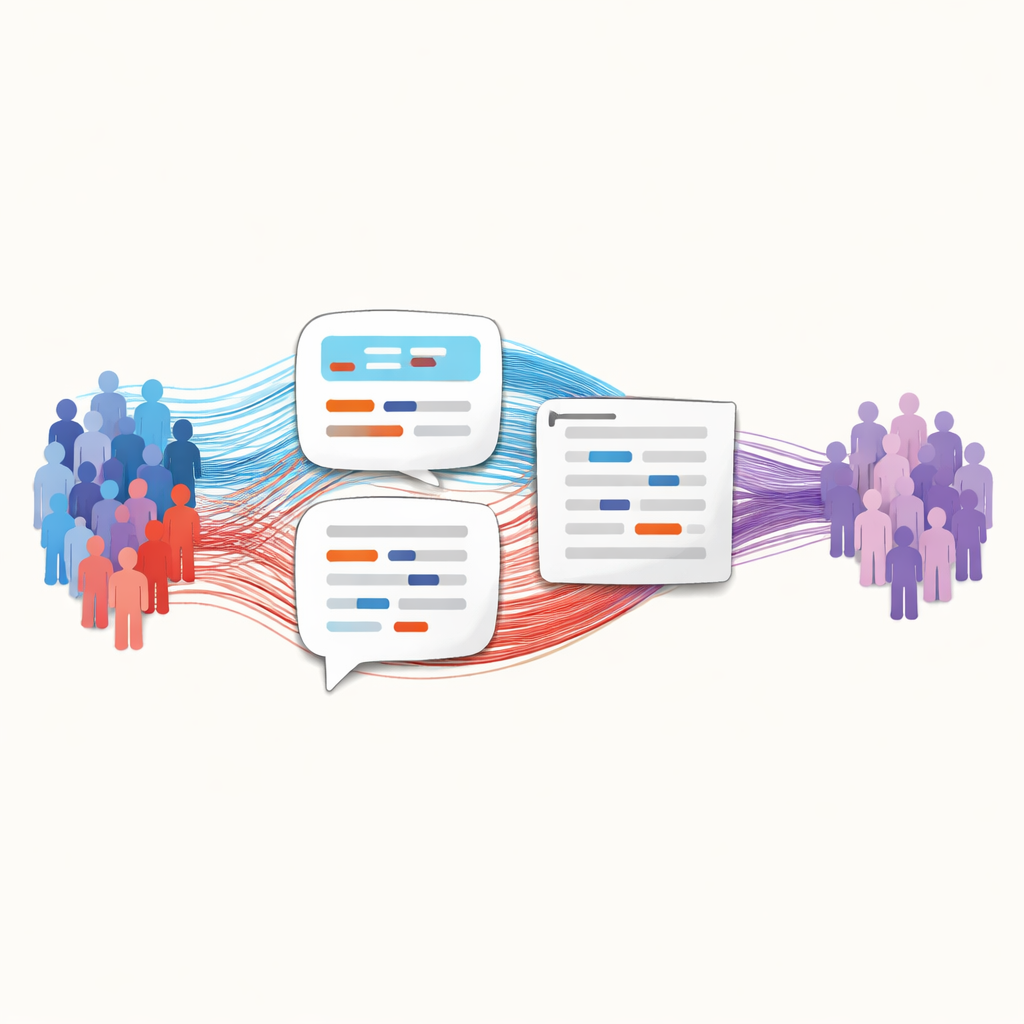
Instead of relying on opinion polls, the authors turned to the language people produce in the wild. They analyzed roughly 300 million comments from politically active Reddit communities and about 7 million articles from partisan news outlets. Using natural language processing, they represented each word as a point in a high-dimensional space, where words that appear in similar emotional contexts lie closer together. They then built a “valence” line running from negative words like “sad” to positive words like “joy.” Projecting each term onto this line gave a score reflecting how positively or negatively that word tends to be used in a given community or outlet.
Comparing Feelings About Groups and Issues
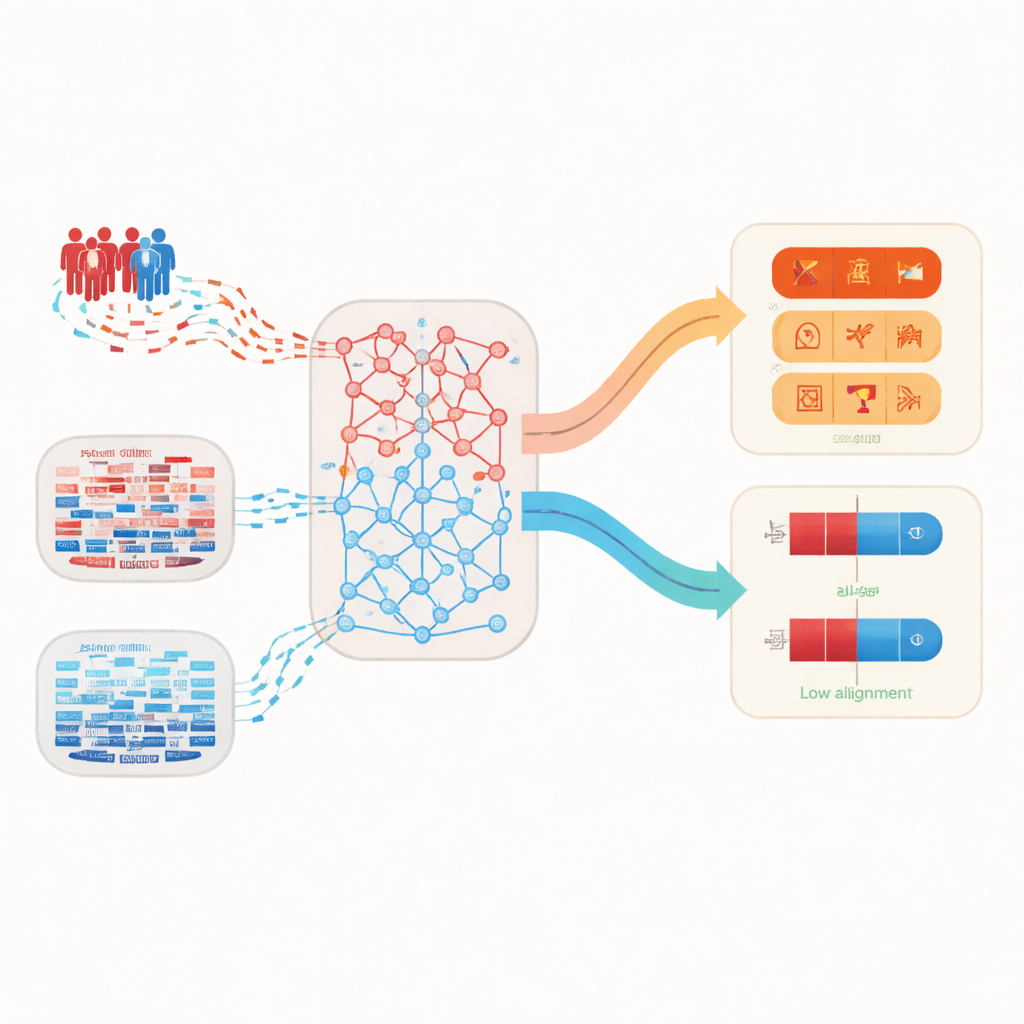
The researchers focused on two kinds of politically charged words. “Identity words” referred to partisan groups, such as Republicans and Democrats. “Issue words” covered seven major topics at the heart of U.S. political fights: abortion, immigration, the Constitution, guns, religion, policing and crime, and LGBTQ+ matters. For each conservative and liberal subreddit or news outlet, they measured how positively or negatively these words tended to appear. Then they compared the patterns across the political divide: if conservatives and liberals ranked the pleasantness of these words in a similar order, that indicated emotional alignment; if their rankings differed, that signaled emotional misalignment.
Finding Common Ground on Contentious Topics
Across both Reddit and news media, emotional alignment was consistently stronger for political issues than for partisan identities. In other words, liberals and conservatives disagreed more sharply in how they felt about each other than in how they felt about guns, abortion, immigration and the other topics. On Reddit, there was still some misalignment about issues—for instance, abortion was used somewhat more negatively in conservative spaces and somewhat less negatively in liberal ones. But on average, issue-related words showed much higher similarity in emotional tone than identity words, where the emotional divide was large and clear. In news outlets, the gap was even starker: partisan identities were strongly polarized, while issue words were almost as emotionally aligned across left and right outlets as they were within each side.
Checking the Pattern With a Smarter Lens
To make sure these patterns were not just artifacts of the word-embedding method, the team used a large language model to rate the emotional tone toward specific words directly within individual Reddit comments. They sampled hundreds of thousands of comments containing terms like “religion,” “gun,” “abortion,” “immigrant,” “Republican,” and “Democrat,” and asked the model to judge how pleasant or unpleasant each comment’s attitude toward the target word was. This context-sensitive approach largely confirmed the earlier results: emotional disagreement was much larger for partisan labels than for issues. Conservatives tended to talk more positively about “Republican” and more negatively about “Democrat,” while liberals showed the mirror image, but differences in feelings about issues were smaller and sometimes negligible.
What This Says About Polarization
The findings suggest that the bitter tone of modern politics may stem less from irreconcilable feelings about specific policies and more from strong hostility between partisan camps. People may argue fiercely about guns or immigration, yet still share mixed, often negative emotions about these difficult topics—far from the caricature that one side “loves” what the other “hates.” That emotional overlap could be a foothold for reducing polarization: emphasizing shared concerns about safety, fairness, or human suffering might prove more productive than trading insults between party labels. By showing that issue-based feelings are relatively aligned, this study points to issue-focused, empathy-building conversations as a promising route to soften partisan divides.
Citation: Rim, N., Jackson, J.C., Berman, M.G. et al. Natural language reveals that political partisans are more affectively aligned over political issues than partisan identities. Commun Psychol 4, 65 (2026). https://doi.org/10.1038/s44271-026-00430-x
Keywords: affective polarization, political partisanship, online discourse, natural language analysis, political issues