Clear Sky Science · en
Cannabis consumption is associated with altered steroid metabolism in young men
Why this study matters to everyday readers
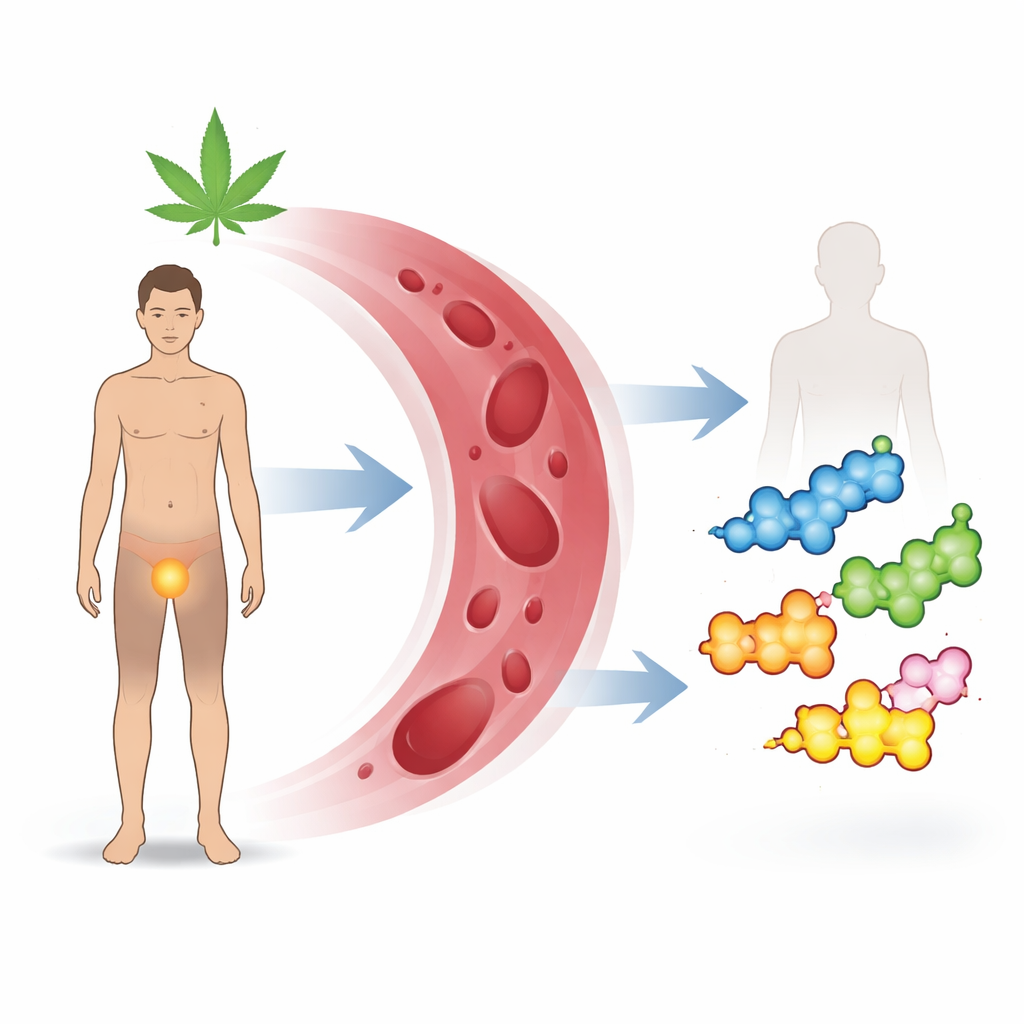
Cannabis is one of the most commonly used drugs worldwide, yet its effects on male hormones and fertility remain surprisingly unclear. Some older work suggested that marijuana might lower testosterone, while more recent studies hint at the opposite. This article investigates how cannabis use is linked to a wide range of male hormones in the blood, offering a more complete picture of what may be happening inside the bodies of young men who consume cannabis.
Taking a close look at young men in real life
The researchers drew on a large Swiss project that routinely examines the health of young men during mandatory military enrollment. From this population, they selected 47 men who had recently used cannabis and 47 similar men who reported no use and had no cannabis detected in their blood. All were between 18 and 23 years old, which limits the usual age-related swings in hormone levels. Importantly, cannabis use was confirmed with blood tests for THC and its main breakdown product, avoiding the uncertainty that comes from self-report alone.
Measuring many hormones instead of just one
Rather than focusing only on testosterone, the team used a sensitive laboratory method called LC–MS/MS to screen 171 different steroid molecules. These included male sex hormones (androgens), hormones related to pregnancy and fertility (progestogens), stress and metabolic hormones (corticosteroids), and several modified forms of these compounds. Seventy steroids passed strict quality checks and were included in the final analysis. Seven key hormones were measured precisely, while the others were compared using relative signal strengths, giving an unusually rich "hormone fingerprint" for each participant.
Higher testicular male hormones in cannabis users
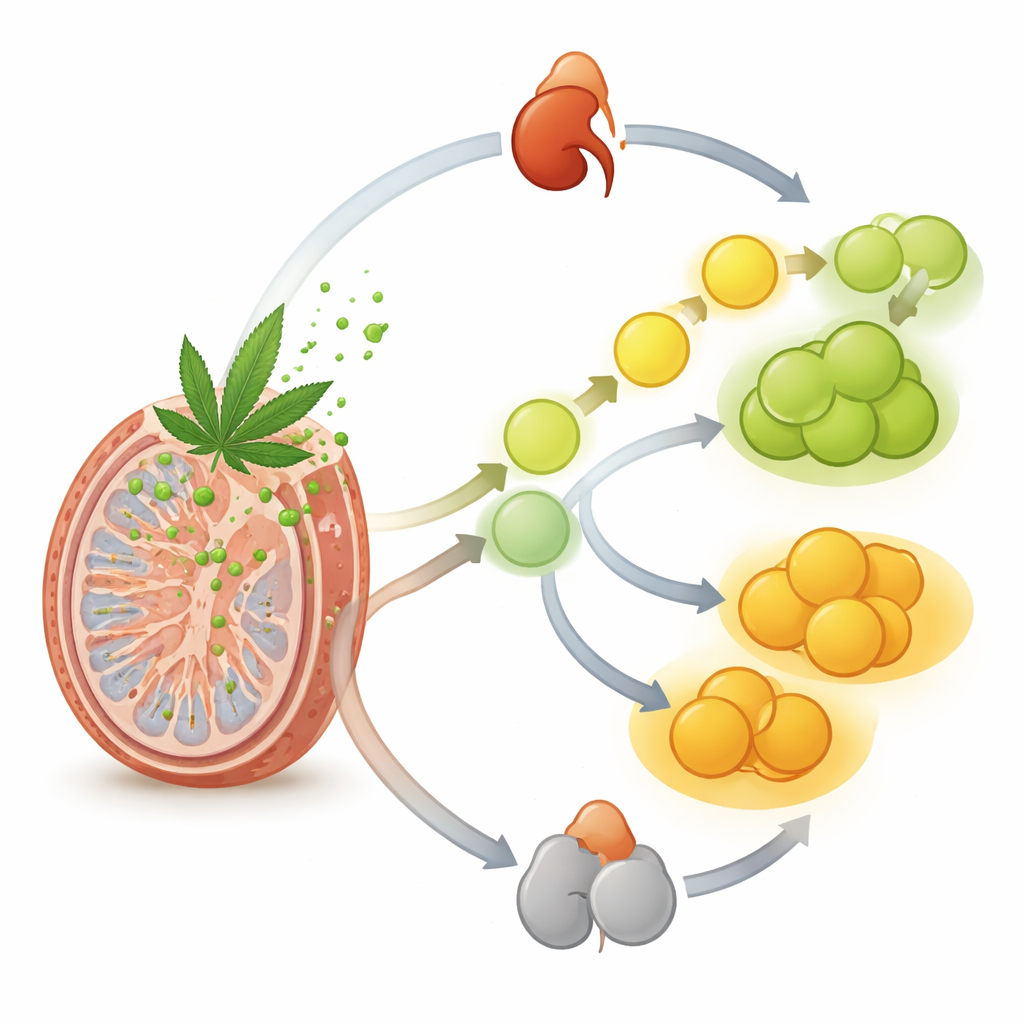
The main finding is that cannabis users had consistently higher blood levels of three important androgens made in the testes: testosterone, androstenedione, and dihydrotestosterone. These hormones are central to male sexual development and reproductive function. At the same time, a group of related androgens that mostly come from the adrenal glands, known as C11-oxy androgens, did not differ between users and non-users. This pattern points toward cannabis being linked specifically to testicular hormone production rather than to hormone output from the adrenal glands or other tissues. The results also echo several large studies from Denmark and the United States that reported higher testosterone levels in cannabis users.
Unexpected changes in progesterone-related hormones
Beyond the classic male hormones, the study uncovered strong links between cannabis use and two lesser-known breakdown products of progesterone, a hormone best known for its role in female reproduction but also important in men. These two metabolites, called 11β-hydroxyprogesterone and 5β-dihydroprogesterone, were markedly higher in cannabis users. When the researchers zoomed in on only the cannabis group and separated chronic from occasional users, 5β-dihydroprogesterone was especially elevated in chronic users and rose with higher THC exposure. This suggests it might serve both as a marker of whether someone uses cannabis and how heavily they use it, whereas 11β-hydroxyprogesterone seems to indicate exposure in a more general way.
What this could mean for male health
Putting these pieces together, the study suggests that cannabis use in young men is linked to higher levels of powerful testicular androgens and to notable shifts in progesterone metabolism, while hormones from the adrenal glands appear largely unchanged. The exact biological mechanisms remain uncertain: cannabis compounds could be acting directly on hormone-producing cells in the testes, subtly disturbing the normal control system that runs from the brain to the gonads, or influencing hormone breakdown in the liver. The authors caution that their snapshot of recent users cannot tell us about long-term consequences or effects in women or older adults, nor does it prove that cannabis causes fertility problems. Still, the work provides important clues that cannabis can meaningfully alter male hormone balance, underscoring the need for further research on how these hormonal shifts translate into real-world reproductive health.
Citation: Galmiche, M., Meister, I., Zufferey, F. et al. Cannabis consumption is associated with altered steroid metabolism in young men. Commun Med 6, 224 (2026). https://doi.org/10.1038/s43856-026-01469-x
Keywords: cannabis and hormones, testosterone in young men, male fertility, steroid metabolism, THC exposure