Clear Sky Science · en
A genome-wide association study identifies EYA2 as a contributing gene for diabetic retinopathy in type 2 diabetes
Why This Matters for People with Diabetes
Diabetic retinopathy is an eye disease caused by long-term high blood sugar and is a leading cause of blindness in working-age adults. Yet, not everyone with type 2 diabetes develops serious eye damage, even after many years. This study asks a crucial question for patients and families: are some people genetically more vulnerable to vision loss from diabetes, and can those genes point us toward better prediction and new treatments? 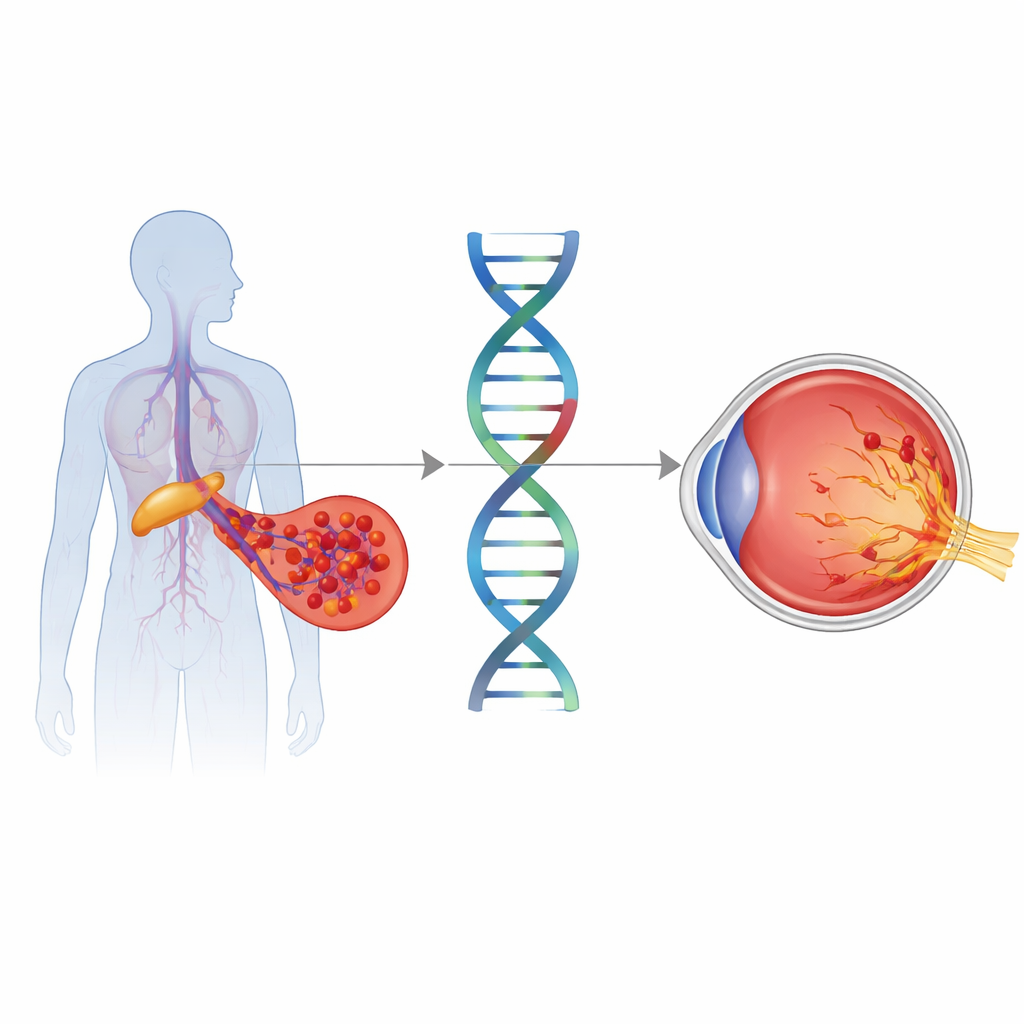
Looking Across the Entire Genome
The researchers analyzed genetic and health data from nearly 17,000 people with type 2 diabetes in the UK Biobank, a large long-term study in the United Kingdom. All participants had diabetes, but only some had been diagnosed with diabetic retinopathy, allowing the team to compare those with and without eye disease. Using a technique called a genome-wide association study, they scanned millions of DNA markers to see which variants were more common in people with damaged retinas. They adjusted for important factors such as age, sex, body mass index, and how long each person had lived with diabetes, to separate the effect of genes from the effect of lifestyle or disease duration.
A Standout Gene Linked to Eye Damage
One region of the genome clearly stood out: a stretch of DNA within a gene called EYA2 on chromosome 20. A specific genetic variant in this gene (named rs6066146) reached the strict threshold that scientists use to declare a reliable association and was then tested in four additional groups from Finland, the United States, and other European and African American populations. In three of these independent cohorts, the same variant again showed a link with diabetic retinopathy, strengthening the evidence that EYA2 is involved in the disease. Overall, inherited variation explained about 15% of the risk of retinopathy among people with type 2 diabetes, confirming that genes play a meaningful, though not exclusive, role.
From Gene to Immune Cells and the Eye
Finding a gene is only the first step; understanding what it does can reveal new biology. EYA2 belongs to a family of genes originally discovered in eye development and later shown to influence the growth of blood vessels. Earlier animal work suggested that this family promotes the formation of new vessels, a process that is harmful when it occurs in the retina of people with diabetes. In the new study, the authors combined genetic results with multiple layers of biological data, including patterns of gene activity and how distant pieces of DNA physically interact inside cells. They discovered that the EYA2 region is connected not only to the eye but also to the spleen, an organ rich in immune cells, and to pathways involving B cells, a type of white blood cell. This pointed to the surprising idea that the immune system—especially B cells in the spleen—may help determine who develops diabetic retinopathy. 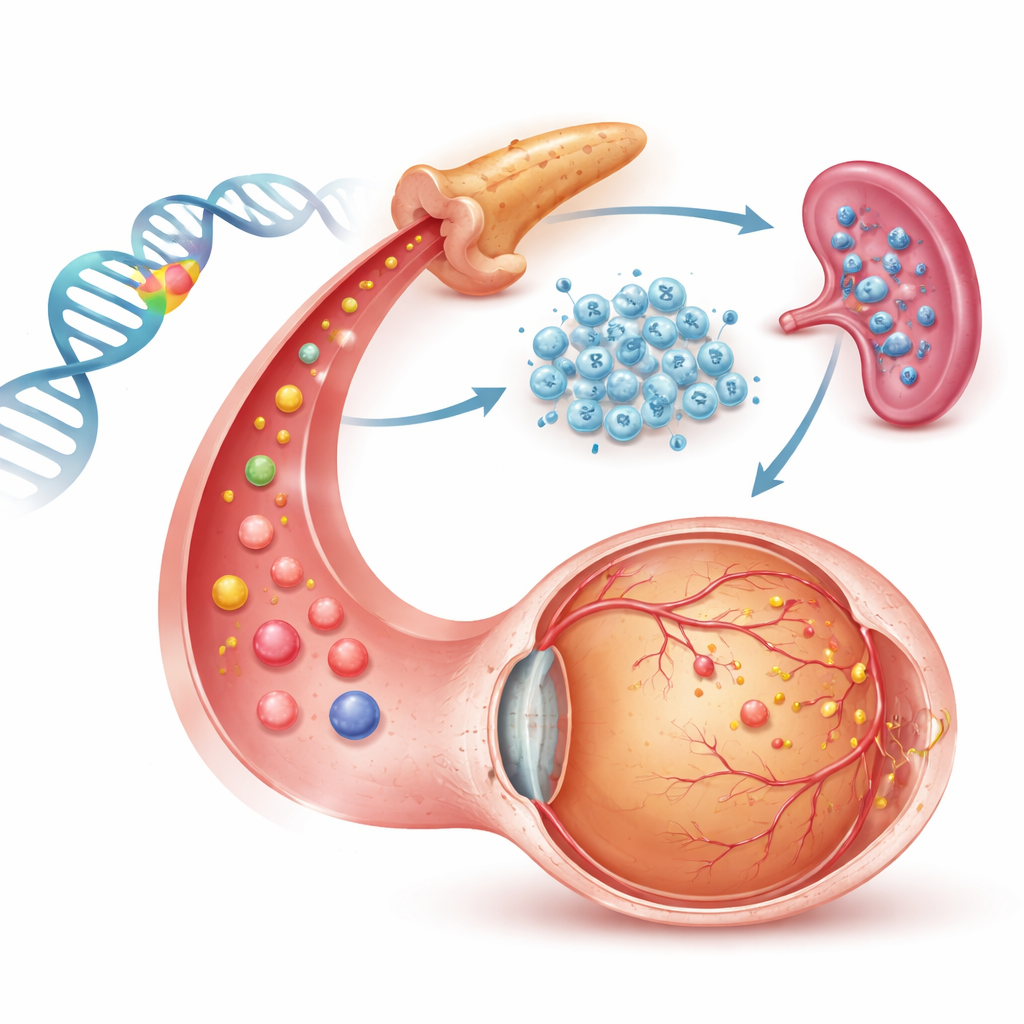
Unraveling the Role of Diabetes and Hormones
The team also used genetic tools to test cause-and-effect relationships. They asked whether the same DNA changes that raise the risk of type 2 diabetes also increase the risk of eye disease. Their analyses suggested that genetic tendencies toward diabetes do indeed push up the risk of retinopathy, and that a hormone precursor called proinsulin may be an important middle step. Variants that affect EYA2 appear to influence both diabetes and eye damage, with proinsulin and possibly changes in immune cells helping to transmit this effect. Additional analyses linked the EYA2 variant to eye pressure and blood fat levels, further supporting its broad impact on metabolism and eye health.
What This Means for Future Care
In plain terms, this work identifies EYA2 as a key genetic hotspot that helps explain why some people with type 2 diabetes are more likely to lose vision than others. The findings suggest that measuring or modulating splenic B cells, proinsulin, or the activity of the EYA2 pathway might one day improve risk prediction or guide new treatments that protect the retina. While current care still relies on controlling blood sugar, blood pressure, and regular eye screening, this study opens the door to more personalized strategies based on a person’s genetic makeup and immune profile.
Citation: Cai, T., Pan, Q., Tao, Y. et al. A genome-wide association study identifies EYA2 as a contributing gene for diabetic retinopathy in type 2 diabetes. Commun Med 6, 181 (2026). https://doi.org/10.1038/s43856-026-01465-1
Keywords: diabetic retinopathy, type 2 diabetes, genetic risk, EYA2 gene, vision loss