Clear Sky Science · en
Poleward migration of warm Circumpolar Deep Water towards Antarctica
Why the creeping warmth around Antarctica matters
The ocean waters surrounding Antarctica may seem remote, but they quietly help set Earth’s sea level and climate. This study reveals that a deep band of relatively warm water is steadily sliding closer to the Antarctic coast. That slow shift, measured over the past two decades, can increase the heat delivered to the base of floating ice shelves, potentially speeding up ice loss and contributing to future sea-level rise.
The hidden warm river in the Southern Ocean
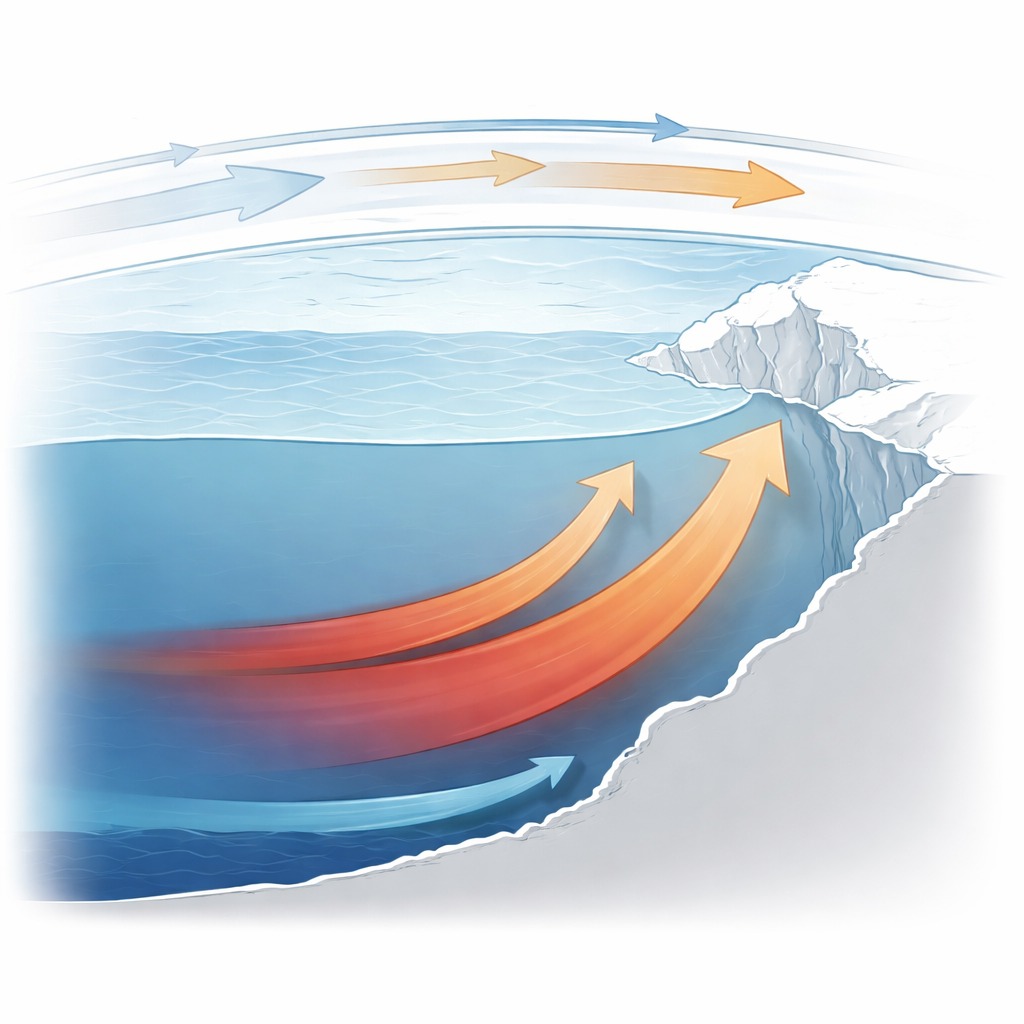
Far below the waves of the Southern Ocean flows a vast, subsurface "river" called Circumpolar Deep Water. Though only a few degrees above freezing, it is warm enough to melt ice from below when it reaches the edges of Antarctica’s ice shelves. This water mass also transports nutrients and carbon, helping regulate marine life and the global climate. Understanding where this warm layer sits, and how it moves, is crucial for predicting how quickly Antarctica’s ice might respond to a warming world.
Mapping a moving water layer
To track changes in this warm layer, the researchers combined two powerful types of observations. First, they used decades of detailed ship-based measurements that include temperature, saltiness, and chemical tracers such as oxygen and nutrients. These data allowed them to classify different water masses and build a picture of the Southern Ocean’s average structure from the surface down to the abyss. Then they trained a machine-learning model to recognize these water types using only temperature, salinity, depth and location. This model was applied to a dense, monthly record from thousands of Argo floats, which profile the upper 2000 meters of the ocean around Antarctica.
Detecting a steady slide toward the pole
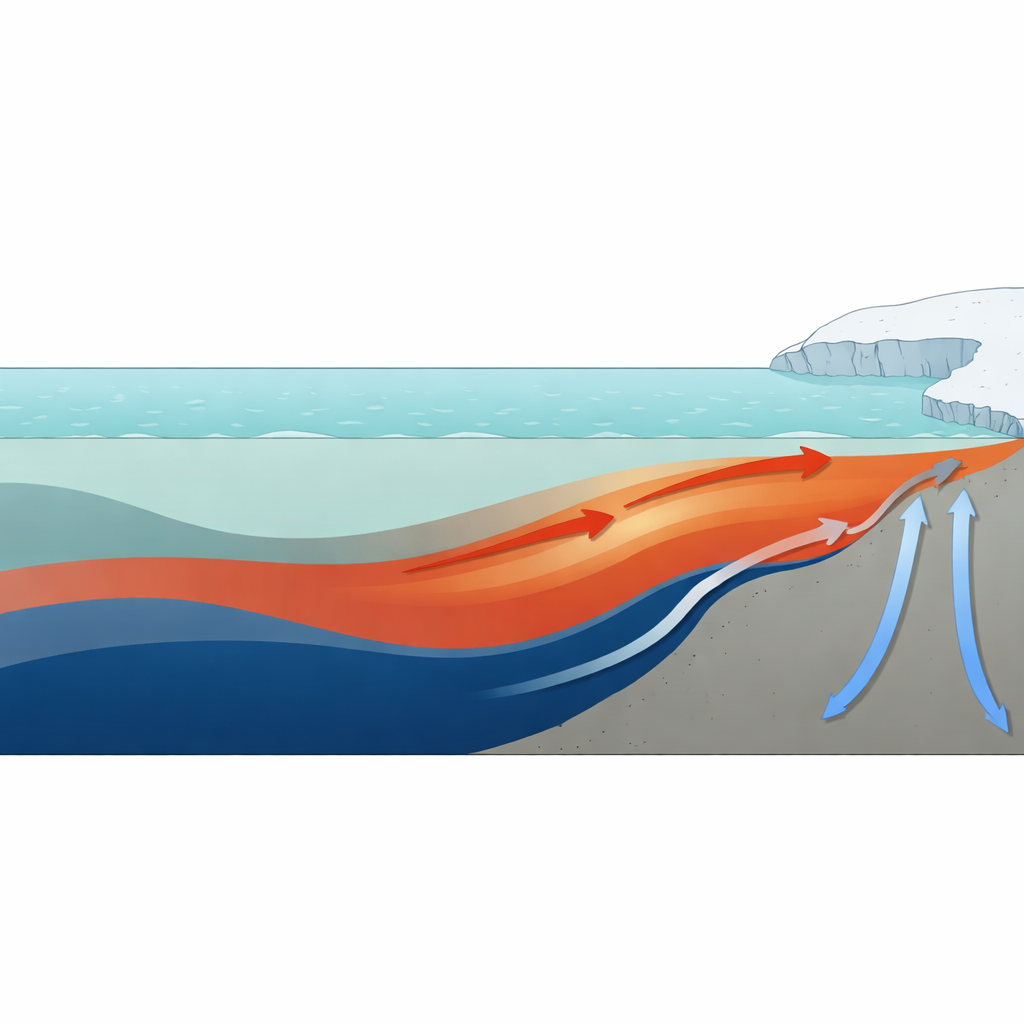
Both the traditional analysis of ship sections and the machine-learning view from Argo floats showed the same pattern. Over the last 20 years, the band of warm deep water in the upper 2000 meters has thickened and shifted closer to the Antarctic continent almost all the way around. At lower latitudes, the same warm layer has thinned. On average, the core of this warm water has migrated poleward by about 1.3 kilometers per year, with faster shifts in the Weddell Sea and East Antarctica. This rearrangement has also increased the heat stored within this layer near the continent, indicating more energy is now available to melt ice where the ocean meets the ice shelves.
Trading places with colder waters
As the warm layer moves in, other water masses must move out or shrink to make room. In regions like the Weddell Sea and parts of East Antarctica, the expansion of warm deep water is closely matched by a thinning of the very cold, dense waters that normally spill off the continental shelf and fill the deep ocean. Elsewhere, especially in the Pacific sector, the incoming warmth pushes aside an intermediate layer that usually sits between surface and deep waters. Farther from Antarctica, where the warm layer is shrinking, a lighter surface-related water type thickens instead. These patterns show that the shift is not simply a local quirk, but a broad rebalancing of the Southern Ocean’s layered structure.
What this means for ice and climate
The study concludes that warm deep water is being redistributed toward Antarctica, likely guided by changes in winds and in the production of dense bottom water. This slow but persistent rearrangement matters because it strengthens the delivery of ocean heat to the base of ice shelves, which can accelerate melting and raise global sea level. At the same time, it alters how heat and carbon are stored and circulated in the deep ocean. In short, the quiet slide of a hidden warm layer toward the pole is a warning that Antarctica’s ice and the global climate system are entering a new, warmer configuration.
Citation: Lanham, J., Purkey, S., Srinivasan, K. et al. Poleward migration of warm Circumpolar Deep Water towards Antarctica. Commun Earth Environ 7, 371 (2026). https://doi.org/10.1038/s43247-026-03426-x
Keywords: Antarctic ocean warming, Circumpolar Deep Water, Southern Ocean circulation, ice shelf melting, sea level rise