Clear Sky Science · en
Rising competition among North Sea mammalian top predators: a multi-method perspective on trophic ecology
Why seal and porpoise meals matter
The fish on a seal or porpoise’s dinner plate can tell us how healthy the sea is and whether different species are quietly competing for the same shrinking buffet. In the busy southern North Sea, gray seals, harbor seals, and harbor porpoises all hunt in the same waters, often chasing the same kinds of fish. This study looks closely at what these predators eat and where they find their food to understand whether rising gray seal numbers are squeezing the feeding space of the others.
Three hunters sharing one pantry
All three mammals are top predators that burn a lot of energy and depend mainly on fish. Harbor and gray seals tend to hunt near the seafloor, often in shallow, soft-bottom areas rich in flatfish and bottom-dwelling species. Harbor porpoises have a broader menu that includes both midwater and bottom fish. The researchers combined three types of evidence: stomach contents from stranded animals, DNA traces of prey in seal droppings, and subtle chemical fingerprints in muscle tissue that reflect long-term diet and habitat use. This multi-method approach let them see both the detailed list of recent meals and the bigger picture of foraging patterns over years.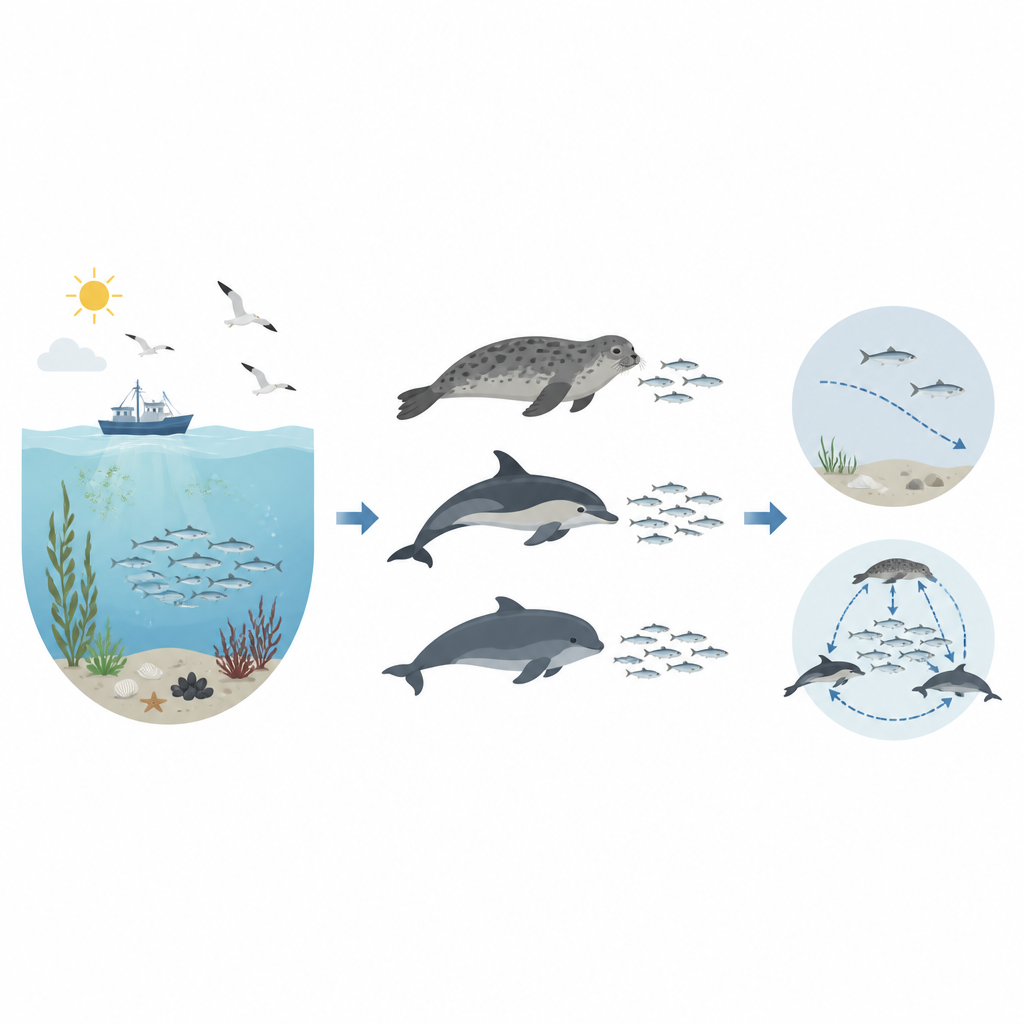
Reading chemical clues in flesh
The team measured naturally occurring forms of carbon, nitrogen, and sulfur in the predators’ muscles and in many of their fish prey. These chemical signatures vary depending on where an animal feeds in the food web and whether it forages more in coastal mudflats, offshore waters, or nearer the surface. The analysis showed that both seal species sit higher in the food chain than harbor porpoises, consistent with their focus on larger, energy-rich fish like flatfish and demersal roundfish. Importantly, they also found that the “niche space” occupied by gray seals has expanded over time, while that of harbor seals has shrunk, with harbor porpoises showing a narrower and more constrained space than either seal.
What was on the menu
By sorting thousands of fish bones and using DNA sequencing of stomach and scat samples, the researchers identified dozens of prey species. Harbor porpoises relied heavily on gadoids (such as whiting and cod), gobies, flatfish, and sandeels, gaining most of their energy from gadoids and flatfish. Harbor seals focused strongly on flatfish, which made up more than half of their reconstructed prey mass and most of their energy intake, with clupeid fish like herring also important. Gray seals, although stomachs in this dataset were often empty or sparse, showed broad prey diversity in the DNA data and chemical signatures, indicating a generalist feeding strategy that covers almost all available fish types. Overall, the overlap in prey was highest for demersal roundfish, flatfish, gobies, and sandeels.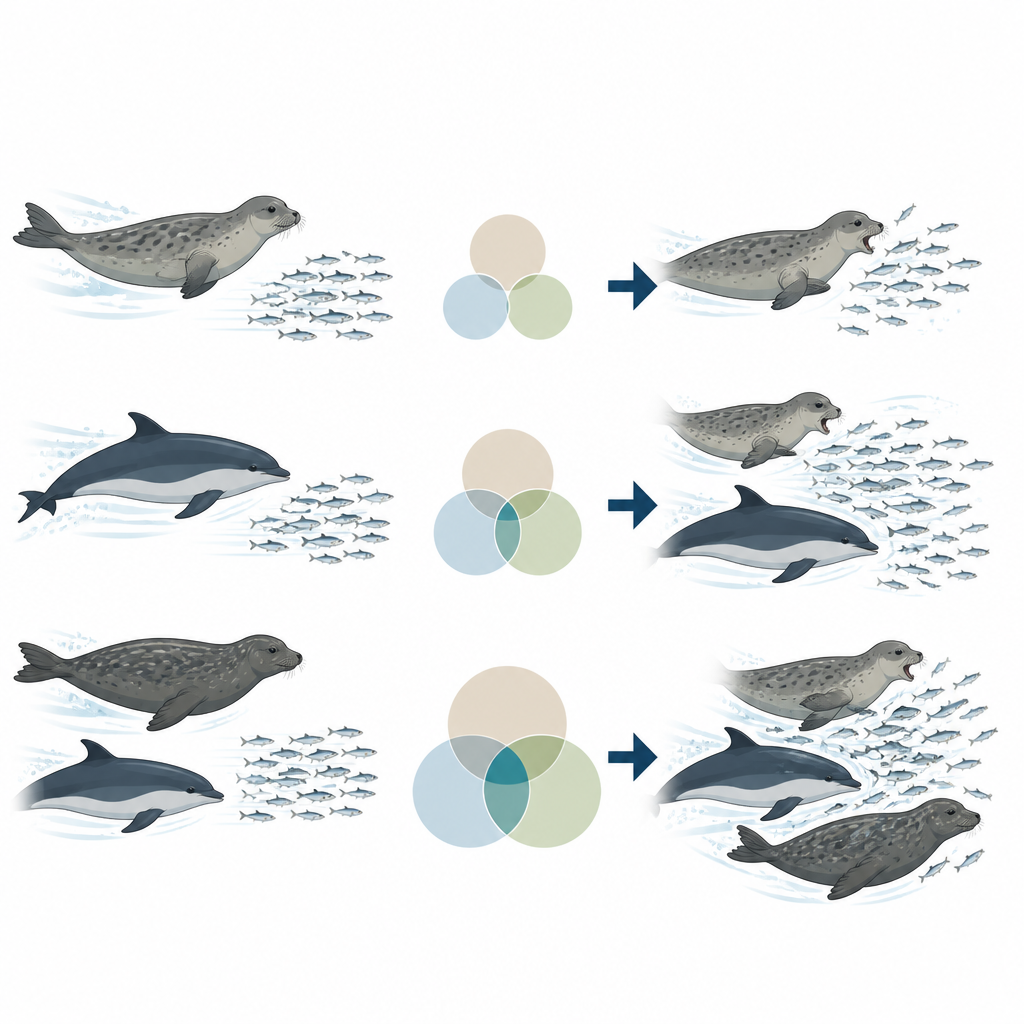
Rising overlap and falling high-energy meals
Over the two decades covered, gray seal populations in the region have grown. At the same time, the chemical niche of harbor seals and porpoises has tightened, and the overlap between gray seals and porpoises has increased, especially when looking at nitrogen and sulfur markers that track food-chain position and habitat. Stomach data revealed a marked drop in high-energy prey in harbor porpoises, including a strong decline in clupeid biomass between the early and later sampling periods. Statistical models suggested that the amount of energy-rich prey in porpoise stomachs decreased as gray seal abundance rose, even after accounting for season and age.
What this means for the North Sea
For now, food still appears adequate for gray seals, harbor seals, and harbor porpoises in the southern North Sea. But the growing diet overlap, especially for energy-packed fish like sandeels and young whiting, suggests that competition could intensify if fish stocks shift under climate change or fishing pressure. Gray seals, with their flexible diets and wider foraging range, may cope better than harbor seals and porpoises, which could face tighter energy budgets and higher risks when food becomes scarce. The study shows that combining stomach analysis, DNA tools, and chemical tracers is a powerful way to reveal such hidden tensions in marine food webs and highlights the need for continued monitoring to understand how these top predators will share the sea in a changing world.
Citation: Heße, E., Boyi, J.O., Das, K. et al. Rising competition among North Sea mammalian top predators: a multi-method perspective on trophic ecology. Sci Rep 16, 15172 (2026). https://doi.org/10.1038/s41598-026-53094-2
Keywords: North Sea seals, harbor porpoise diet, marine food webs, trophic niche overlap, predator competition