Clear Sky Science · en
Detecting age differences in prosociality using a newly developed picture-based measure
Why kindness changes as we grow older
Most of us hope to grow kinder with age, but what does that actually look like in everyday life? This study explores how younger and older adults differ in three common forms of caring for others—helping, sharing, and comforting—and introduces a new picture-based test to measure these behaviors. The findings reveal a nuanced picture: older adults are especially more willing to share material resources, and this seems to be linked to their life experience and how costly generosity feels to them.
Different ways we care for other people
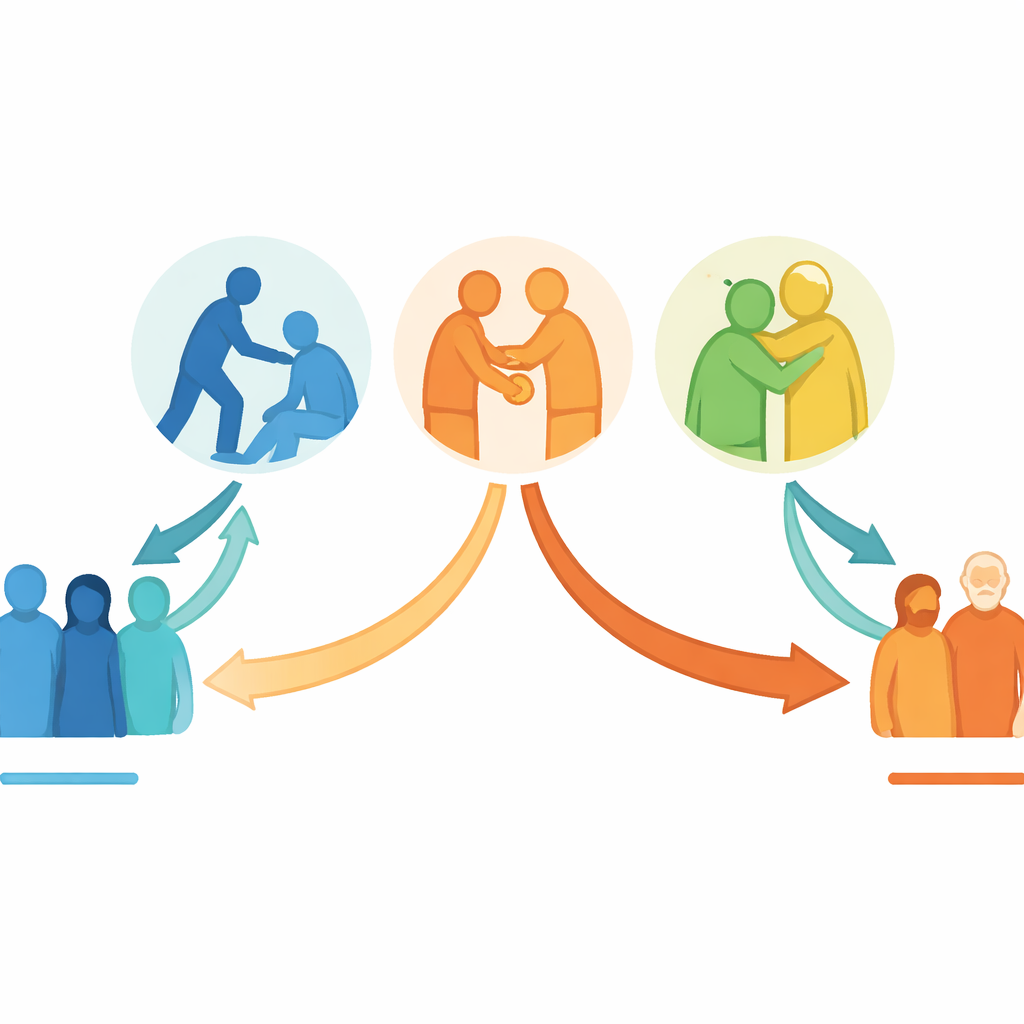
Kindness is not just one thing. The researchers focus on three everyday forms of prosocial behavior: helping (offering practical assistance, like picking something up for someone), sharing (giving away money or goods), and comforting (responding to someone’s emotional pain). These behaviors benefit both the giver and the receiver: past work shows that people who regularly help others often enjoy better mental and physical health, including lower depression and even reduced risk of chronic illness. This makes it especially important to understand caring behavior in later life, when social roles shift, social circles can shrink, and meaningful connection becomes more precious.
A new picture-based way to study kindness
Existing tools for studying kindness often rely on written stories or one-off tasks such as a single donation choice, which can miss important nuances and may be harder for people with different reading backgrounds. To address this, the team validated a new tool called the Picture-Based Measure of Prosociality (PB-Prosocial) for adults over 60. Participants viewed photographs of people in need—capturing situations of helping, sharing, or comforting—and rated how likely they would be to step in. Because the measure uses realistic images and parallel designs for each type of behavior, it can compare helping, sharing, and comforting on the same footing and with fewer demands on reading ability. Statistical tests showed that the measure was reliable and captured meaningful differences in older adults, just as it had in younger adults in earlier work.
Who is more likely to help, share, or comfort?
Using this tool, the researchers surveyed large groups of younger adults (18–35) and older adults (60–80) in Hong Kong. Overall, both age groups reported strong willingness to help and comfort others, but a clear age difference emerged for sharing: older adults said they would share more often than younger adults. This pattern remained even after taking into account factors such as social status and a general tendency to answer in a socially desirable way. In other words, the age gap in sharing could not be explained away by older adults simply wanting to look good on paper. For helping and comforting, however, younger and older adults looked surprisingly similar.
Why older adults share more
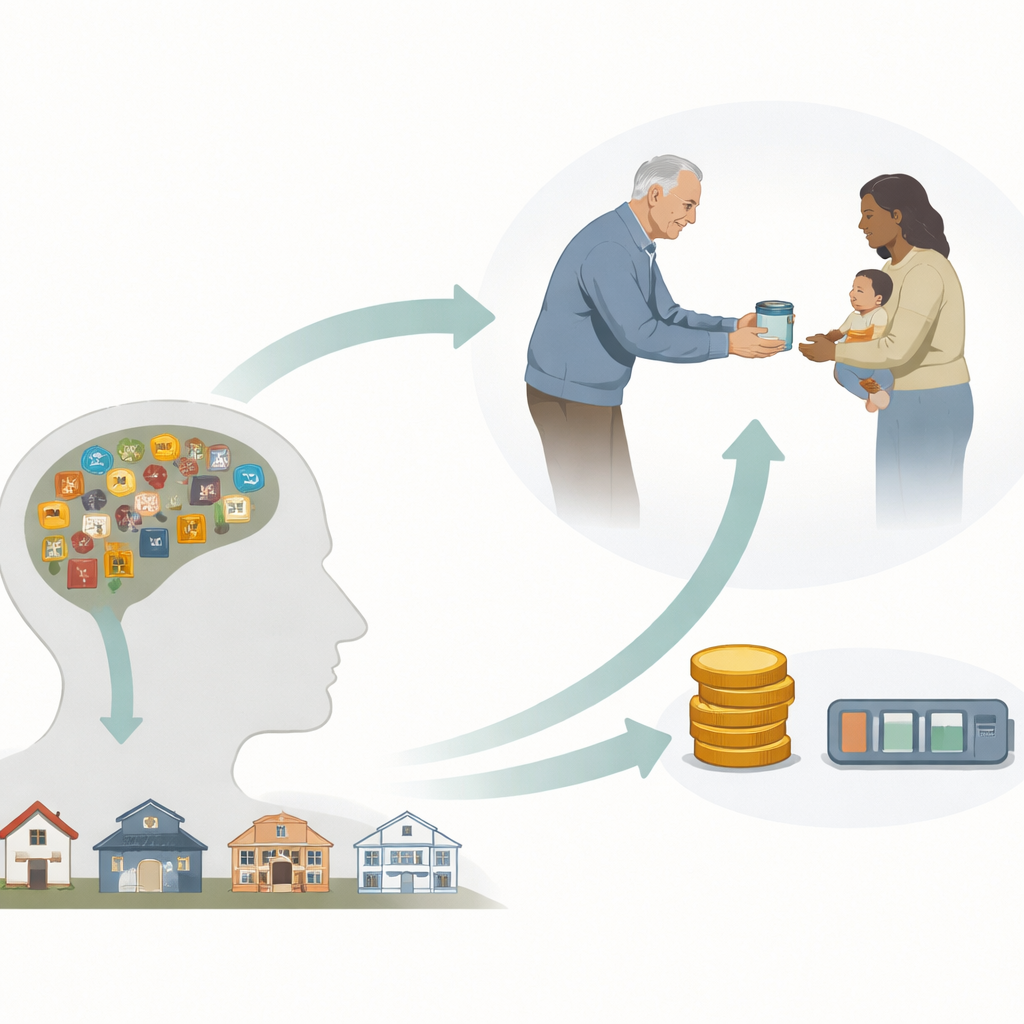
To understand why older adults are more ready to share, the study examined two potential drivers: how familiar people felt with the situations shown and how costly they thought it would be to help. Older adults reported that the sharing scenes felt more familiar, likely reflecting their broader life experience with hardship and need. They also felt that sharing would cost them less—whether in money, time, effort, or emotional strain. Both higher familiarity and lower perceived cost were strongly linked to greater willingness to share, and statistical models showed that these two factors together explained the age difference in sharing. In contrast, for comforting, older adults actually felt less familiar with many emotional-support situations and did not show higher willingness to comfort than younger adults.
What these findings mean for everyday life
The study suggests that growing older does not automatically make people more caring in every way. Instead, older adults seem particularly inclined to share tangible resources, partly because life experience makes these situations feel recognizable and because giving feels less burdensome. Helping and comforting, especially in emotionally complex situations, do not show the same age-related boost. By offering a validated picture-based tool to assess different forms of kindness, this work can help researchers, clinicians, and policymakers design programs that tap into older adults’ strengths in sharing while also finding ways to better support comforting and other forms of emotional care across the lifespan.
Citation: Li, D., Cao, Y., Hui, B.P.H. et al. Detecting age differences in prosociality using a newly developed picture-based measure. Sci Rep 16, 11747 (2026). https://doi.org/10.1038/s41598-026-47472-z
Keywords: prosocial behavior, aging, sharing, empathy, social cognition