Clear Sky Science · en
Associated factors with nutrient intake and nutritional status of HIV positive breastfeeding mothers in apac district: a cross-sectional study
Why this matters for mothers and babies
In many parts of the world, women living with HIV are encouraged to breastfeed because it gives their babies the best start in life. But breastfeeding also increases a mother’s need for energy and nutrients, and HIV itself can make it harder for her body to use those nutrients. This study from northern Uganda looks closely at what HIV positive breastfeeding mothers are actually eating, how well nourished they are, and which everyday factors help or hinder their ability to stay healthy while caring for their infants.
Life for mothers in rural northern Uganda
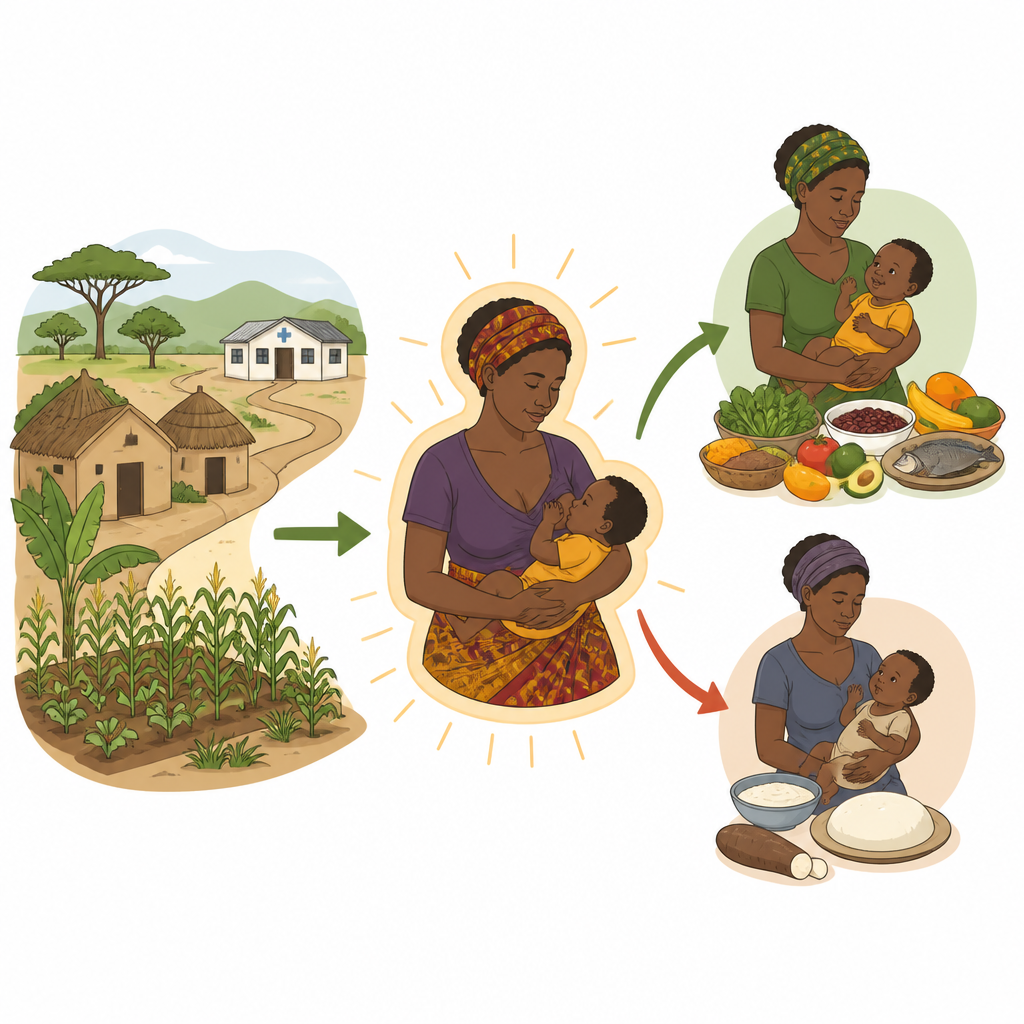
The research took place in Apac District, a mostly rural area where nearly all families live outside of towns and many depend on small farms. Two hundred and twenty HIV positive breastfeeding mothers attending routine infant care were interviewed and measured. Most women were in their late twenties, had only primary schooling, and worked as peasant farmers. Many relied on crops they grew themselves for food, with modest incomes and limited cash to buy extra items. In this setting, HIV infection, breastfeeding, heavy physical work and poverty can all pull against a mother’s ability to eat well enough for herself and her baby.
What the mothers were eating
The team used a detailed one day food recall to record everything each woman had eaten in the previous 24 hours. They then grouped foods into ten simple categories, such as grains, beans, vegetables and animal products, to calculate a dietary diversity score. On average, women ate foods from just over four out of ten groups, and one in five mothers had a poor score, meaning they ate from fewer than three groups that day. Starchy staples like cereals, roots and tubers dominated their plates, while eggs, fruits and dairy products were rarely eaten. When the researchers converted these foods into nutrients, they found that on average the mothers were only meeting about 61 percent of their recommended daily needs for key vitamins and minerals.
Hidden gaps in vitamins and minerals
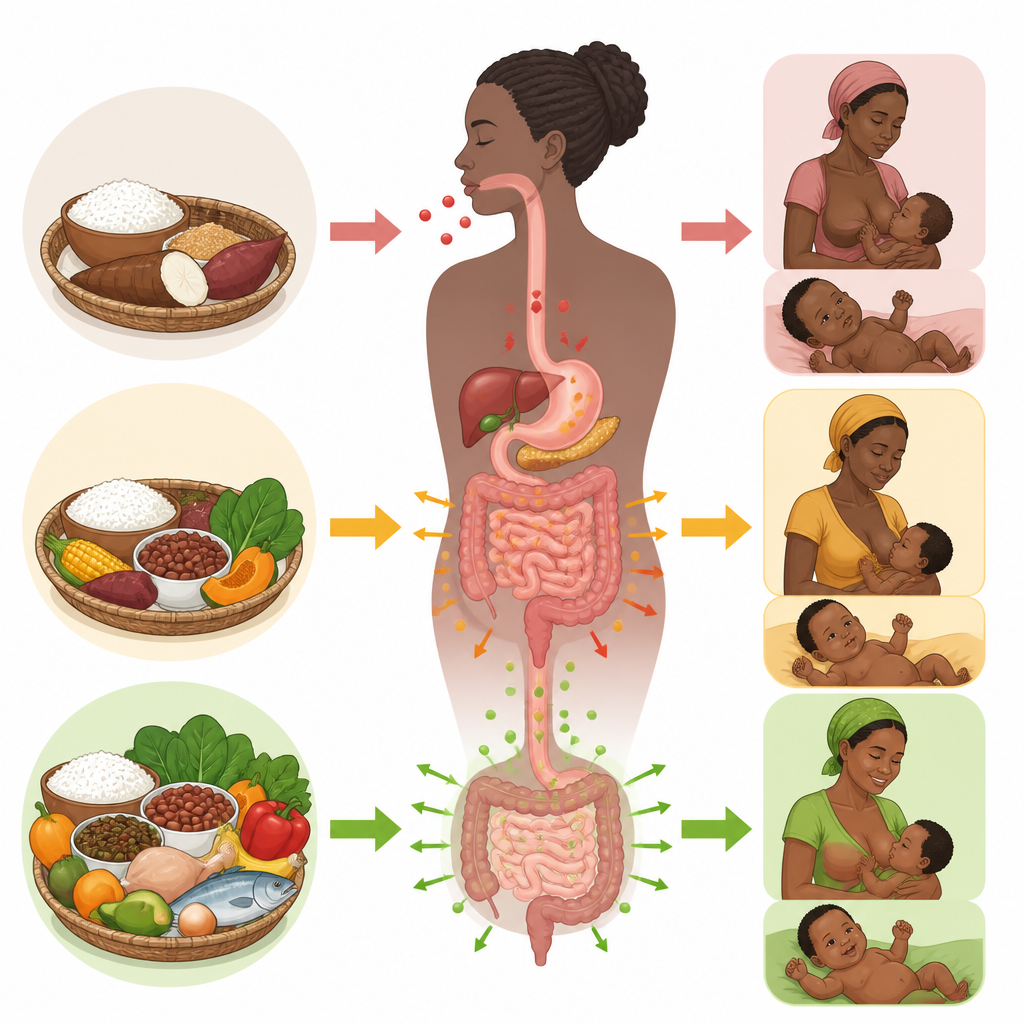
Looking closer, the study revealed worrying shortfalls in several nutrients that are important for both immune function and child growth. No mother met the recommended intake for vitamin A, and intakes of vitamins C, B6, B12, calcium and zinc were also low. Energy intake from food was slightly below the recommended level, while carbohydrates and protein tended to be high, reflecting heavy reliance on staple crops and beans. These patterns suggest that many women get enough bulk from their meals but miss the variety needed for a full mix of micronutrients. For mothers living with HIV, who already face a weakened immune system, such deficiencies may increase fatigue, infections and poor recovery, and may also reduce the quality of nutrients passed through breastmilk to their infants.
Everyday factors that shape nutrition
The study also asked which social and environmental factors were linked to women’s body weight and nutrient intake. Just over one in ten mothers were undernourished based on their body mass index, while a small number were overweight or obese, showing a double burden of malnutrition in the same community. Older mothers were more likely to be undernourished, possibly because they support larger families. Women who could buy food, rather than relying only on their own harvests, tended to be better nourished, as did those living closer to markets where a wider variety of foods is available. Cultural food taboos played a role: mothers who were restricted from eating certain foods were more likely to be undernourished. At the same time, a more varied diet was clearly linked to better overall vitamin and mineral intake, and higher income made it easier to achieve that diversity.
What this means for families and policy
For a lay reader, the message is straightforward: HIV positive breastfeeding mothers in this Ugandan district are eating plenty of basic staples but not enough of the colorful foods that supply vital vitamins and minerals. Their nutritional health depends not only on personal choices but also on age, income, local markets and cultural rules about what women may eat. The authors conclude that improving mothers’ diets will require more than individual advice. They call for community nutrition education, efforts to challenge harmful food taboos, and economic support that helps mothers afford a wider range of foods. By making it easier for these women to eat a diverse and nutrient rich diet, health services and local leaders can support both maternal wellbeing and the healthy growth of the next generation.
Citation: Atim, S.V., Opio, B., Omoko, J. et al. Associated factors with nutrient intake and nutritional status of HIV positive breastfeeding mothers in apac district: a cross-sectional study. Sci Rep 16, 15448 (2026). https://doi.org/10.1038/s41598-026-47376-y
Keywords: HIV and nutrition, breastfeeding mothers, dietary diversity, micronutrient intake, Uganda