Clear Sky Science · en
Varroa mite resistance in a hybrid honey bee (Apis mellifera) population in Southern California
Why Tough Bees Matter
Honey bees quietly support much of our food supply by pollinating crops, yet many colonies in the United States collapse each year. A major culprit is a tiny parasitic mite called Varroa destructor, which weakens bees and spreads viruses. This study explores a naturally evolving honey bee population in Southern California that seems better at living with these mites, offering clues that could help make managed hives hardier and less dependent on chemicals.
A Local Mix of World Bees
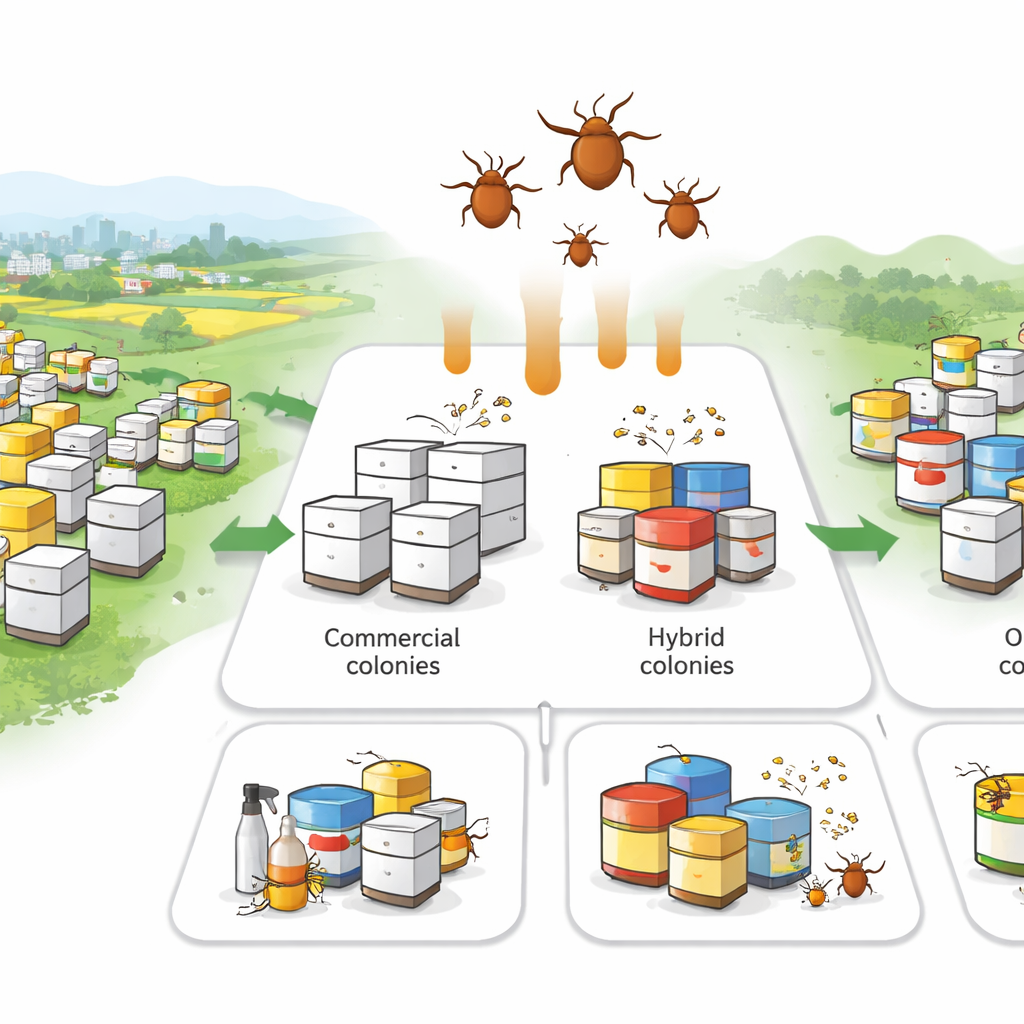
Southern California’s wild and backyard bees are not a standard commercial strain. They are an accidental blend of bees originally from Western and Eastern Europe, the Middle East, and Africa. These hybrid bees live in cities and natural areas without regular human care. Because they survive in a region where mites can reproduce year-round, the researchers wondered whether natural selection has favored bees that hold Varroa in check better than typical commercial hives.
Watching Hives Through the Seasons
To test this idea, the team monitored 236 colonies for four years, including both commercial hives and colonies headed by locally mated hybrid queens. Every few weeks they measured how many mites were present on adult workers and treated any colony that crossed a commonly used danger line. Across hundreds of inspections, the pattern was clear: commercial colonies carried several times more mites than the hybrid colonies. The hybrid hives also crossed the treatment threshold far less often, meaning they needed chemical help much less frequently even though they were managed under the same conditions.
Zooming In on Bee Babies
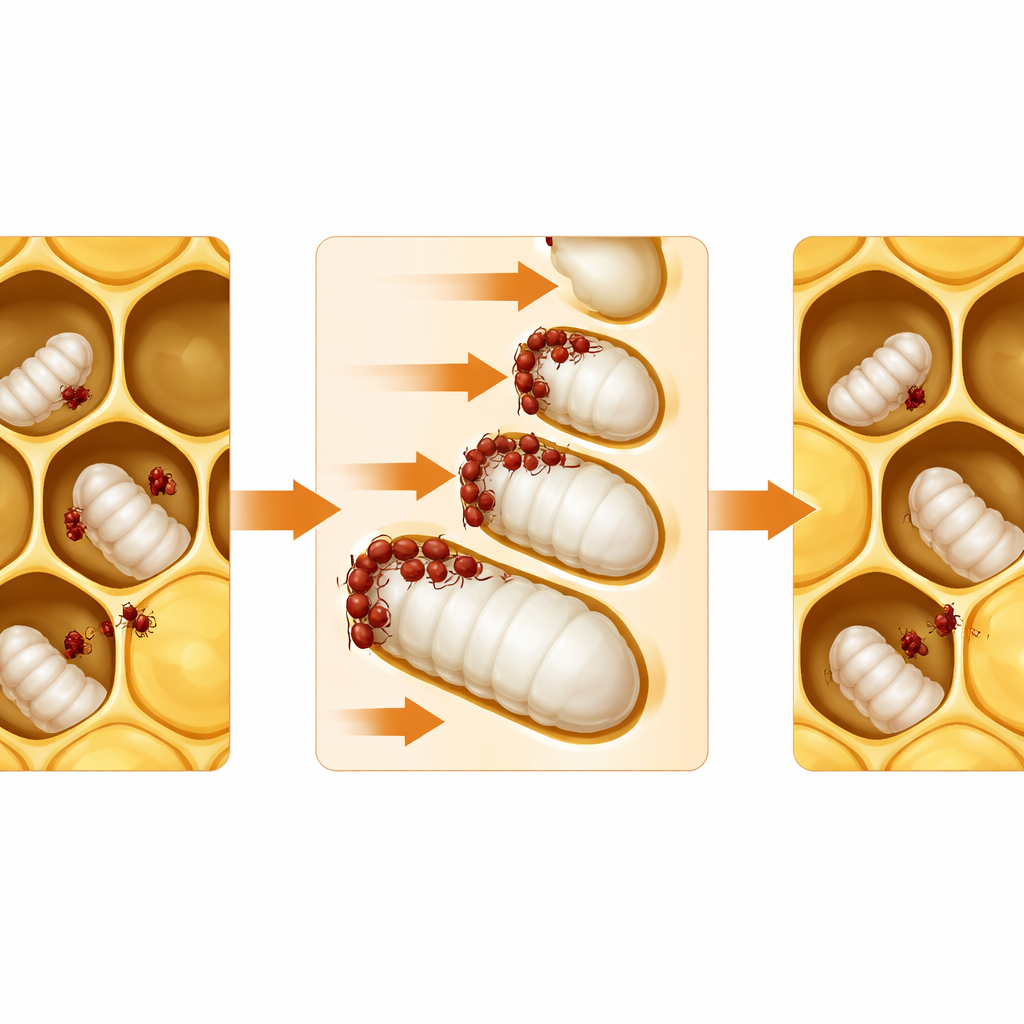
Varroa mites can only reproduce by invading the sealed cells of developing bee larvae, so the team next asked whether the brood itself differed between bee types. In the lab, they placed mites into small arenas with larvae of known ages and recorded which larvae the mites chose to climb onto. For both kinds of bees, seven-day-old larvae were generally the most attractive stage. But at every age, larvae from commercial colonies drew more mites than larvae from the Californian hybrid colonies, and seven-day-old hybrid larvae were especially unattractive. Even when mites had a direct choice between same-aged hybrid and commercial larvae, far more mites ended up on the commercial brood.
Clues to Hidden Defenses
Because adult workers were kept out of these brood tests, the differences must come from properties of the larvae themselves rather than from cleaning or grooming behavior by adult bees. The researchers suggest that hybrid larvae may give off different scents or surface chemicals that make them less tempting to mites, or that their internal responses to mite contact are different in ways that discourage mites from settling. In the wild, even modest shifts in which larvae mites prefer, or when they invade, can slow mite population growth across many brood cycles and help colonies stay healthier for longer.
What This Means for Future Bees
Overall, the study shows that the Southern California hybrid bee population keeps mite levels lower both in the field and in controlled lab tests. These bees are not mite-free, but they seem to limit infestations enough to reduce the need for frequent treatments. For beekeepers and breeders, this population is a promising source of natural resistance traits that could be studied and selectively spread without necessarily increasing aggression. For the public, it illustrates how evolution in everyday landscapes can produce tougher pollinators, potentially easing the pressure on a species that underpins much of our food system.
Citation: Chong-Echavez, G., Baer, B. Varroa mite resistance in a hybrid honey bee (Apis mellifera) population in Southern California. Sci Rep 16, 10952 (2026). https://doi.org/10.1038/s41598-026-45759-9
Keywords: honey bees, Varroa mites, bee health, parasite resistance, pollinators