Clear Sky Science · en
Dietary Spirulina platensis phycocyanin enhances growth performance, antioxidant status, and immune-related gene expression in Japanese quails (Coturnix japonica)
Why a Blue-Green Powder Matters for Your Dinner Plate
As people look for safer, more natural food, farmers are under pressure to raise animals without routine antibiotics. This study explores whether a bright blue compound from Spirulina, a nutrient-rich microalgae often sold as a health supplement, can help Japanese quails grow better and stay healthier—without the aid of drug-based growth promoters. The findings hint at how tiny algae could play a big role in cleaner poultry production and, ultimately, safer meat and eggs for consumers.
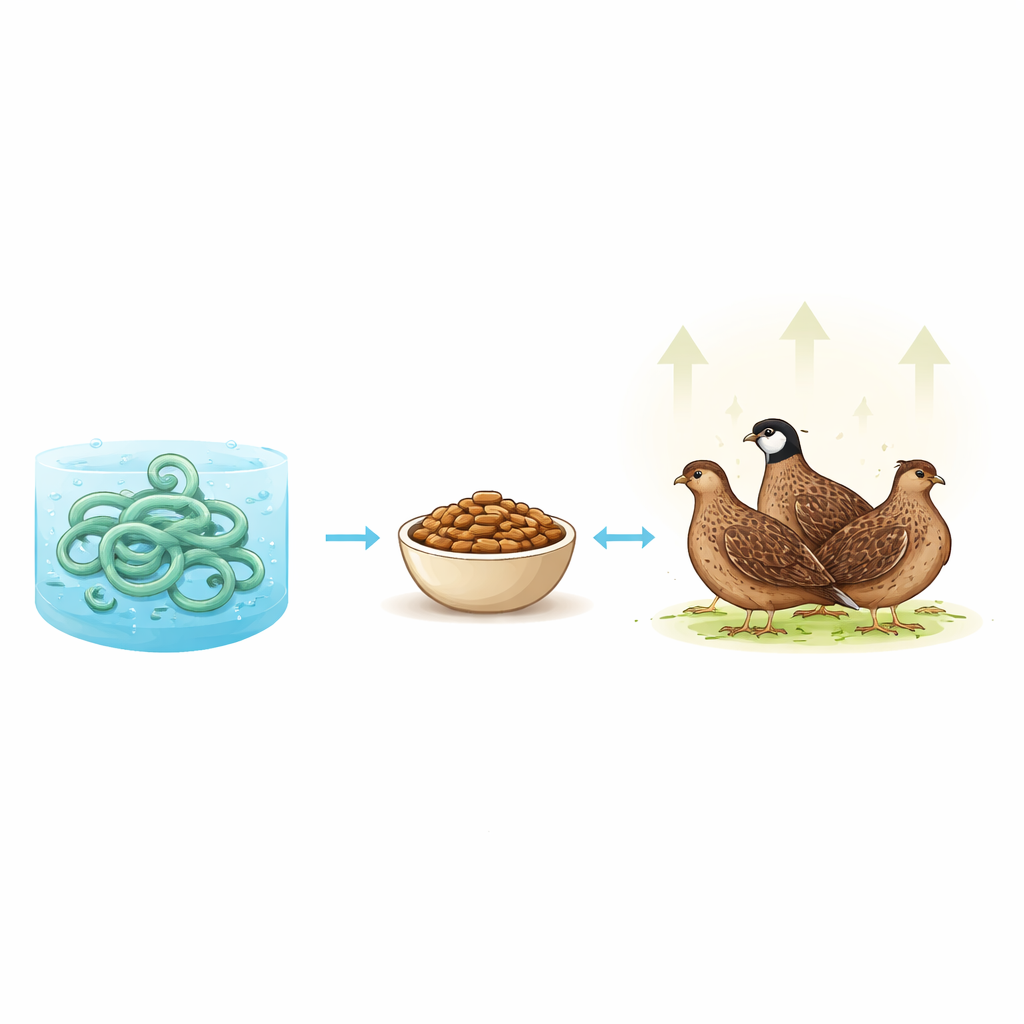
From Pond Algae to Poultry Feed
Spirulina is a microscopic, spiral-shaped algae packed with protein, vitamins, and colorful pigments. One of its major pigments, called phycocyanin, is responsible for its vivid blue color and has been linked to antioxidant and anti-inflammatory effects in laboratory studies. The researchers wanted to know whether purified phycocyanin, mixed directly into quail feed, could improve growth, blood health, and internal organ condition. They worked with 320 young male Japanese quails, dividing them into four groups that received either a standard diet or the same diet enriched with increasing amounts of Spirulina-derived phycocyanin.
Testing Different Doses on Growing Birds
Over 35 days, the quails were fed one of four diets: no phycocyanin or feed containing low, medium, or high amounts of the Spirulina pigment. The birds had free access to food and water under controlled temperature and lighting, while researchers carefully tracked body weight, how much feed they ate, and how efficiently they converted feed into growth. At the end of the trial, the team collected blood and tissue samples to measure standard health markers, check the structure of the intestine and liver under the microscope, and examine the activity of genes involved in antioxidant defense and inflammation.
Healthier Growth and Cleaner Blood Markers
Quails that ate the highest level of phycocyanin grew the fastest and needed less feed to gain each gram of weight, without eating more overall. Their blood told a similar story: key cell counts such as red and white blood cells rose in a steady, dose-dependent way, suggesting stronger oxygen-carrying capacity and immune readiness. Blood chemistry also shifted in a healthier direction. Birds receiving phycocyanin had higher total protein and beneficial globulins, while markers linked to liver and kidney strain—such as certain enzymes, urea, and creatinine—declined. Fat-related measures improved too, with lower triglycerides and more favorable cholesterol levels in supplemented groups.
Inside the Gut and Liver: Structural Upgrades
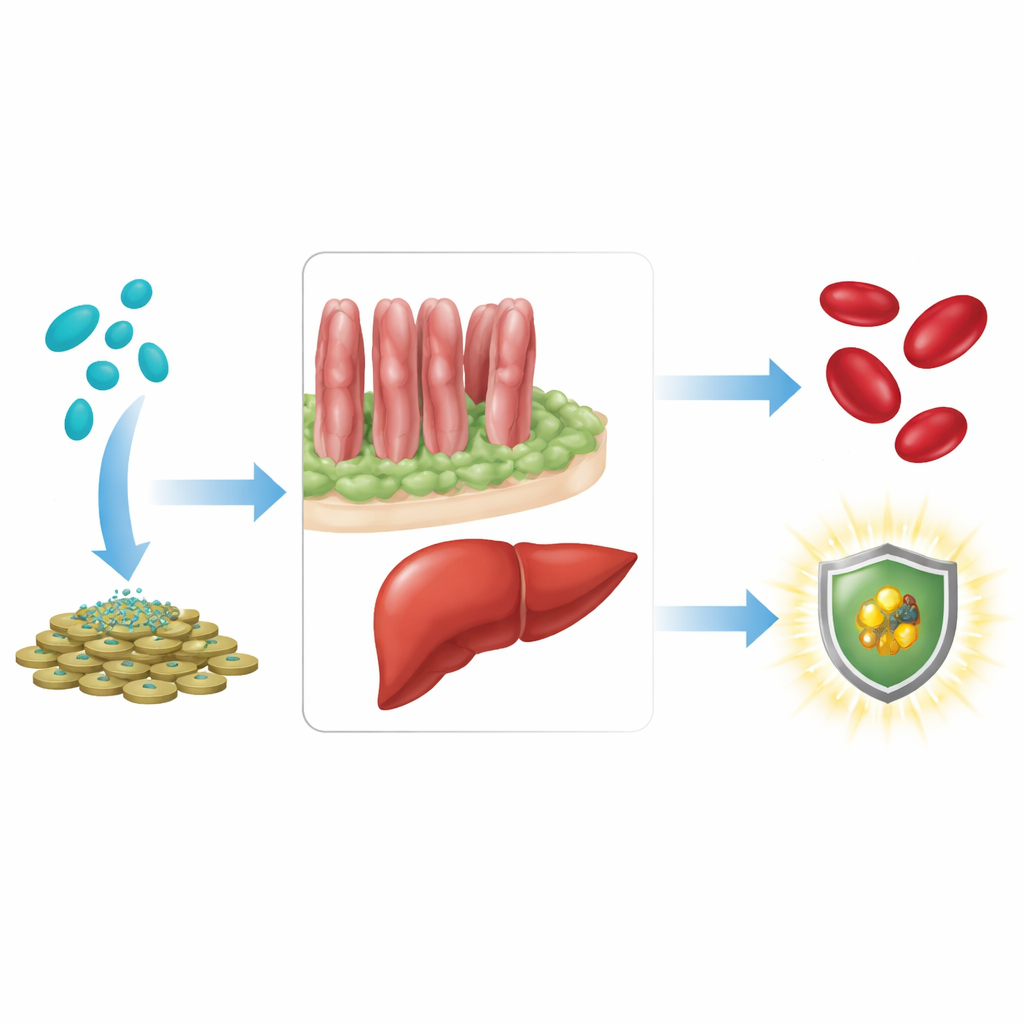
Microscope images showed that phycocyanin-fed quails had more robust digestive tracts. Their intestinal finger-like projections, called villi, were taller with a larger surface area, and the mucus-producing goblet cells were more abundant. Both features are associated with better nutrient absorption and a stronger barrier against harmful microbes. The liver, the body’s main detox organ, also appeared healthier. While control birds showed subtle signs of stress, such as vacuoles and dilated blood spaces, these changes were reduced or absent in treated groups. Special staining confirmed that collagen fibers—often increased in scarring—remained in a normal pattern, suggesting that the supplement did not trigger harmful tissue hardening.
Quieting Inflammation and Boosting Natural Defenses
On a molecular level, the Spirulina compound seemed to tilt the balance toward protection rather than damage. Birds receiving moderate to high doses of phycocyanin showed higher activity of genes that help neutralize reactive molecules produced during normal metabolism, acting like internal “rust removers.” At the same time, genes associated with inflammatory signals were dialed down. This combination—stronger antioxidant defense and calmer inflammation—offers a plausible explanation for the improvements seen in growth, blood health, and tissue structure.
What This Means for Future Poultry Farming
In everyday terms, adding a small amount of Spirulina’s blue pigment to quail feed helped the birds grow better, use their food more efficiently, and maintain healthier guts, livers, and blood, all while turning down low-level inflammation. The most effective range was around 2–3 grams per kilogram of feed. While more work is needed to pinpoint the exact active components and assess cost-effectiveness on commercial farms, this research supports the idea that carefully chosen natural supplements could reduce reliance on antibiotics in poultry production and contribute to safer, more sustainable meat and egg supplies.
Citation: Hendam, B.M., Morsy, M.H.E., Aljarari, R.M. et al. Dietary Spirulina platensis phycocyanin enhances growth performance, antioxidant status, and immune-related gene expression in Japanese quails (Coturnix japonica). Sci Rep 16, 12747 (2026). https://doi.org/10.1038/s41598-026-45365-9
Keywords: Spirulina, phycocyanin, Japanese quail, poultry nutrition, antioxidant immunity