Clear Sky Science · en
Efficient speed and voltage regulation of BLDC motor drive for EV applications using a multi-device interleaved DC–DC bidirectional converter with TIFDNFD–SFOA controller
Why smoother electric drives matter
As electric vehicles become more common, drivers expect them to be not only clean but also smooth, responsive and reliable. Behind that effortless feel is a complex chain of electronics that must juggle battery power, motor speed and voltage stability all at once. This paper explores a new way to shape that flow of energy so that a popular type of electric motor runs more efficiently, with faster response and fewer unwanted ripples in torque and speed.
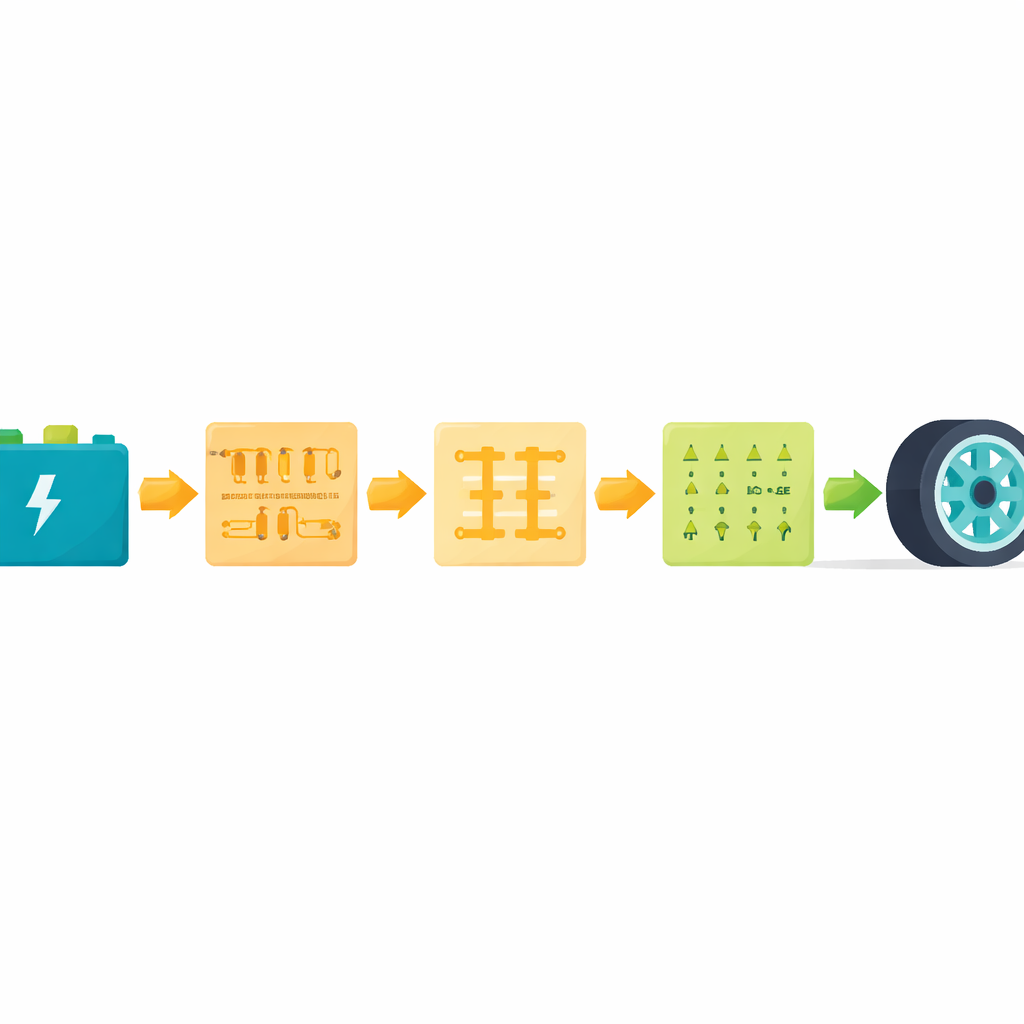
From battery to wheels
In a typical electric car, the battery delivers direct current (DC) power, which must be adjusted and then turned into alternating current (AC) to drive a brushless DC (BLDC) motor. If the voltage feeding the motor’s inverter wobbles or responds slowly to changes in demand, the vehicle can feel less smooth and waste energy. The study focuses on a particular DC–DC stage called a multi-device interleaved bidirectional converter. Instead of a single power path, this converter splits the current into several parallel branches that switch in a carefully shifted pattern, then recombine. This arrangement reduces electrical ripple, improves sharing of current between components and keeps the DC link voltage steady even as the load changes.
A smarter way to keep speed and voltage in line
Maintaining a constant motor speed while also holding the DC link voltage within a tight band is a control challenge, especially when the vehicle faces hills, accelerations or other sudden changes. Classic controllers, or even many modern machine-learning based schemes, can suffer from overshoot, slow settling or heavy computational burden. To address this, the author designs a new controller called TIFDNFD, which extends familiar control ideas with extra knobs for fine-tuning how the system reacts to errors. Instead of relying on trial-and-error tuning, the paper uses an optimization method inspired by the behavior of superb fairy-wren birds to automatically choose the controller’s many parameters.
Nature-inspired tuning under the hood
The optimization routine, modeled on how these birds grow, forage and avoid predators, explores possible controller settings and keeps the ones that make the drive behave best. Its guiding measure is how quickly and smoothly the system’s error dies out over time. In simulation, the algorithm rapidly converges to a set of settings that sharply reduce the time it takes for the motor speed to settle after a change, while also cutting down voltage wobble and torque ripple. Compared with several advanced alternatives, including sliding-mode and neural-network-based controllers, the new combination reaches the target speed faster, with much smaller overshoot and lower integrated error.
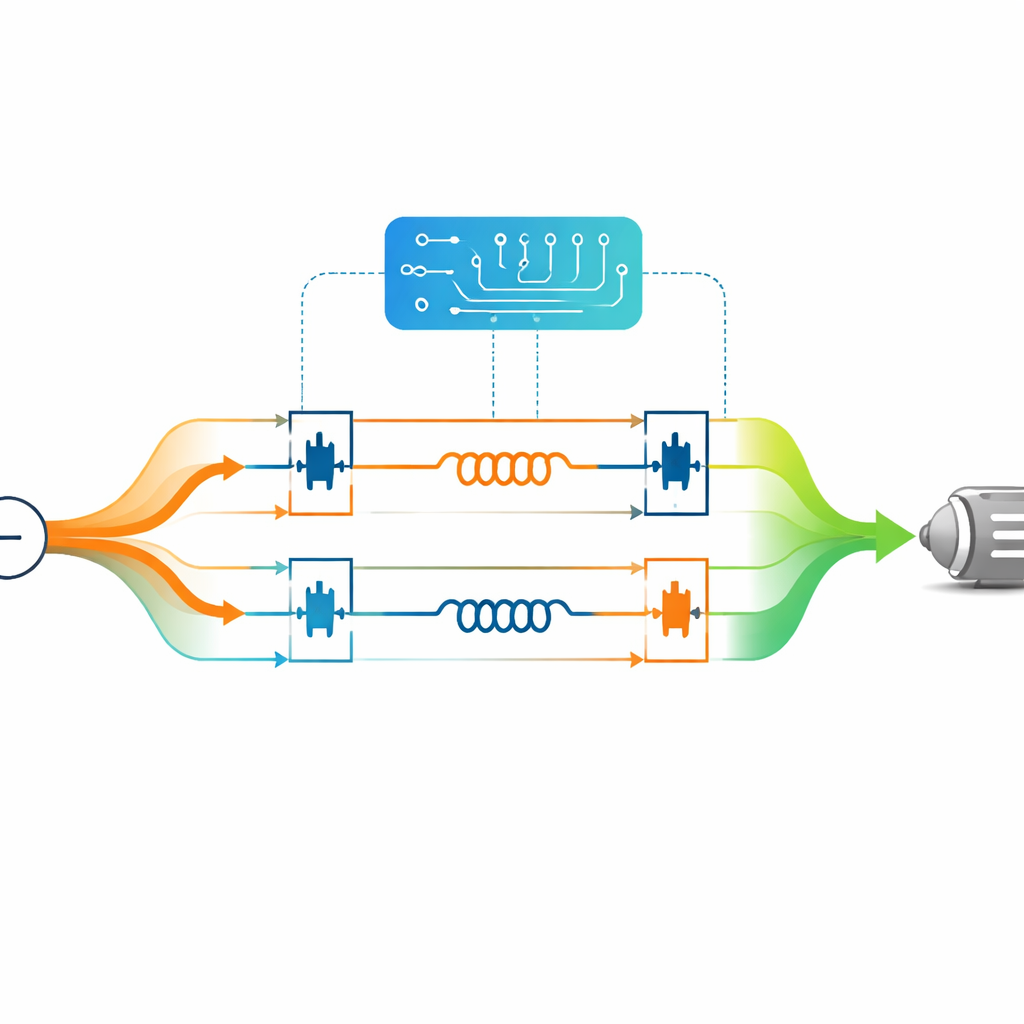
What the simulations reveal
Using detailed models in MATLAB/Simulink, the study tests the complete chain: battery, interleaved converter, inverter and BLDC motor. The converter boosts the battery’s 250 V up to roughly 480 V and holds it nearly flat once the system has started, giving the inverter a clean supply. The inverter then produces well-balanced three-phase voltages and currents. The BLDC motor quickly ramps to about 3000 rpm with only a small temporary rise above the target, then runs steadily with smooth torque. Key metrics such as peak time, settling time and a standard measure of accumulated error all improve noticeably over competing control schemes.
What this means for future electric vehicles
For a lay reader, the takeaway is that this work offers a more refined electronic “conductor” for the orchestra of components between an EV’s battery and its wheels. By pairing a ripple-reducing power converter with an automatically tuned, highly flexible controller, the system can react quickly to driver demands while keeping voltage and speed tightly regulated. In practice, this could translate into EV drives that feel smoother, waste less energy and put less stress on hardware. While the results are from simulations rather than road tests, they suggest a promising path toward more efficient and responsive propulsion systems in both vehicles and industrial electric drives.
Citation: Alwabli, A. Efficient speed and voltage regulation of BLDC motor drive for EV applications using a multi-device interleaved DC–DC bidirectional converter with TIFDNFD–SFOA controller. Sci Rep 16, 14584 (2026). https://doi.org/10.1038/s41598-026-44960-0
Keywords: electric vehicles, BLDC motor drives, DC–DC converters, advanced motor control, power electronics