Clear Sky Science · en
Hierarchical ordered logistic regression analysis of urban rail transit driver fatigue determinants: impact of emotion regulation and sleep patterns
Why tired train drivers matter to city life
Millions of people rely on urban rail systems every day, trusting that the person at the controls is alert and focused. Yet driving a train for long hours through tunnels and dense stations can quietly drain mental energy in ways that are hard to see. This study looks beneath the surface to ask a simple but vital question: how do a driver’s sleep habits and ability to handle emotions shape their risk of becoming dangerously fatigued on the job?
Looking inside the cab, not just at the tracks
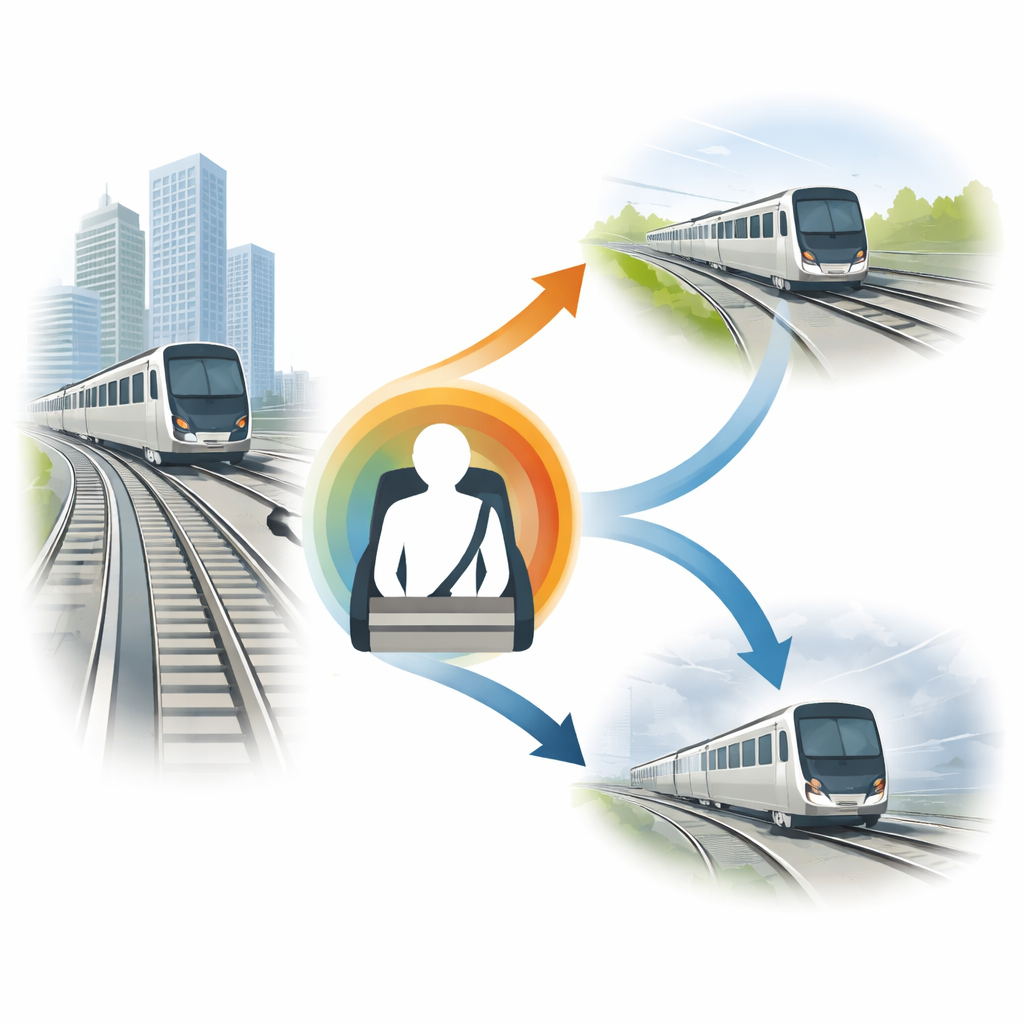
Most earlier research on train and metro safety has focused on what can be easily measured from the outside, such as physical tiredness or reaction time in simulators. The authors of this paper argue that this leaves out a crucial piece of the story: mental fatigue. Unlike drooping eyelids or slowed movements, mental fatigue can hide behind an apparently calm face while still undermining concentration and decision making. To capture this hidden state, the researchers surveyed 185 professional drivers from the Lanzhou urban rail system in China. Each driver rated how fatigued they felt on 19 specific track segments, creating 3,515 records that link feelings of tiredness to both the driving environment and the driver’s own inner state.
How feelings and sleep were measured
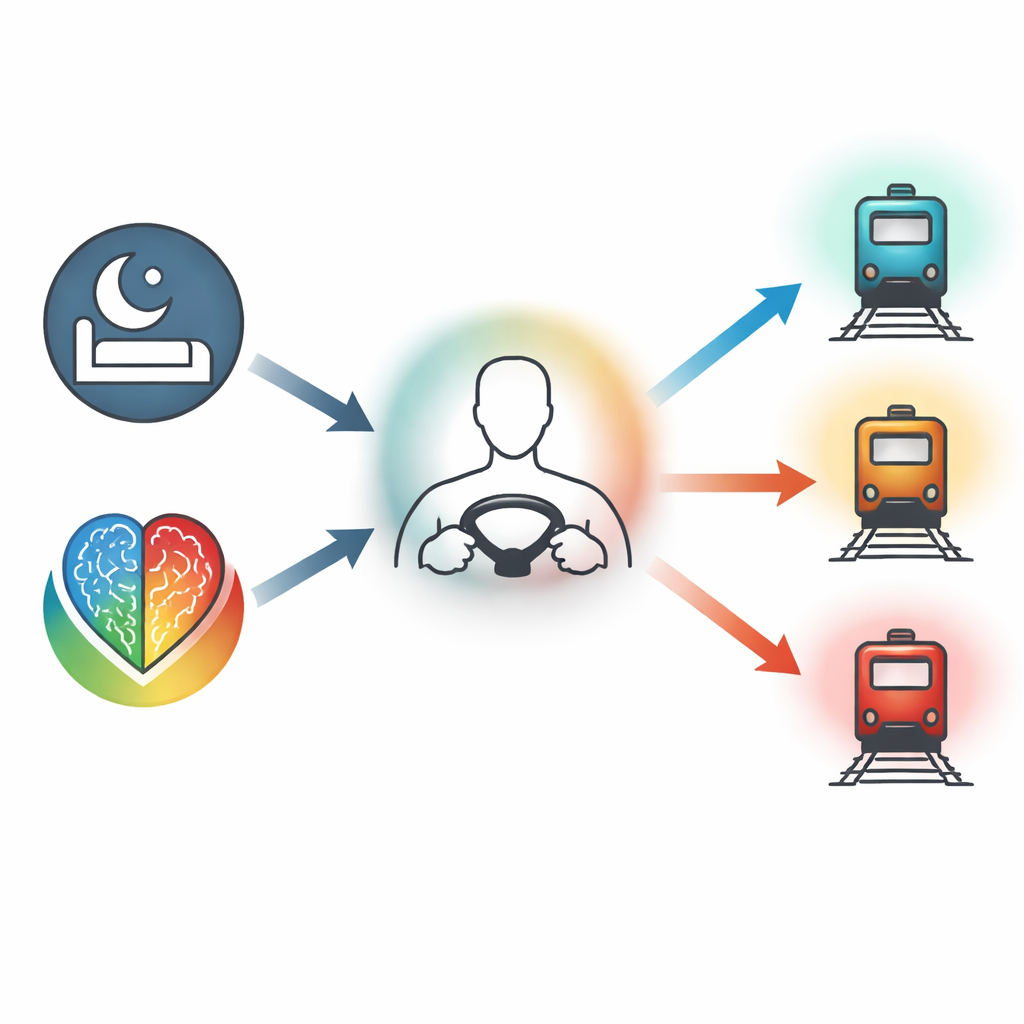
The team focused on two broad influences inside the driver: emotion regulation and sleep patterns. Emotion regulation was broken into four everyday abilities: noticing one’s emotions, using emotions to stay engaged, understanding what they mean, and managing them constructively. Sleep was described through how easily drivers fell asleep, how good their sleep felt, how satisfied they were with it, and how long they slept. All of these were rated on ordered scales, much like a typical satisfaction survey. Because each driver reported fatigue multiple times on different pieces of track, the data naturally had two layers: repeated segments within a single person. The researchers used a statistical method that respects this nesting and separates the effects of track features, such as curves and slopes, from the more personal factors like feelings and sleep quality.
What shapes fatigue during a shift
The analysis showed a clear pattern: both emotional skills and sleep status strongly influenced how tired drivers felt. When drivers were better at recognizing and especially managing their emotions, they were substantially more likely to report low fatigue and less likely to report moderate or severe fatigue. In practical terms, skillful emotional management acted as a built-in buffer that helped drivers keep their mental energy steady even when the job was demanding. Sleep told a similar story. Drivers who fell asleep more easily, slept more soundly, and felt satisfied with their rest were much more likely to feel fresh at the controls. Poor sleep, by contrast, sharply raised the chances of higher fatigue levels. Among the sleep indicators, overall sleep quality had the greatest impact, underscoring the importance of deep, restorative rest rather than just time in bed.
Different needs for newer and seasoned drivers
The study also found that experience changes how these factors matter. For less-experienced drivers, emotional skills were especially powerful. Improving the ability to notice and use emotions brought large drops in the probability of feeling moderately or severely fatigued. This suggests that newer drivers, who are still learning routes and procedures and facing heavier mental loads, benefit greatly from tools that help them read and manage their feelings. For seasoned drivers, sleep patterns stood out instead. When these drivers improved how quickly they fell asleep, how well they slept, and how satisfied they felt with their sleep, their chances of high fatigue dropped sharply. Over time, experienced drivers may develop their own ways of coping emotionally, but remain vulnerable if their rest is short or poor.
What this means for safer rides
For the average passenger, the message is straightforward: safe rail service depends not only on sturdy trains and well-designed tracks, but also on how well drivers sleep and how they handle stress. The authors conclude that rail operators should tailor their safety efforts. Newer drivers need training and support that build emotional awareness and coping skills, while veteran drivers need schedules, rest facilities, and health checks that protect sleep quality. Although the study is based on one city and relies on self-reported data, it offers a practical roadmap: by paying attention to what happens inside the cab—both in the mind and during off-duty nights—cities can make daily commutes calmer and safer for everyone.
Citation: Du, J., Sun, Z. & Jiang, C. Hierarchical ordered logistic regression analysis of urban rail transit driver fatigue determinants: impact of emotion regulation and sleep patterns. Sci Rep 16, 14320 (2026). https://doi.org/10.1038/s41598-026-44865-y
Keywords: urban rail safety, driver fatigue, sleep quality, emotion regulation, public transport