Clear Sky Science · en
Next-generation platelet concentrate: Alb-PRF outperformed PRP and H-PRF in promoting endothelial function and wound healing
Why better blood-based bandages matter
For stubborn wounds—such as diabetic ulcers, surgical sites, or slow-healing injuries—simply closing the skin is not enough. The body must quickly rebuild tiny blood vessels to bring oxygen and nutrients to the damaged area. Doctors already use blood-based products made from a patient’s own platelets to speed this process, but these mixtures are still being refined. This study introduces a new version, called Alb-PRF, and shows that it may outperform older products in helping blood vessel cells survive, move, and repair damage, especially under inflammatory stress.
A new twist on using your own blood
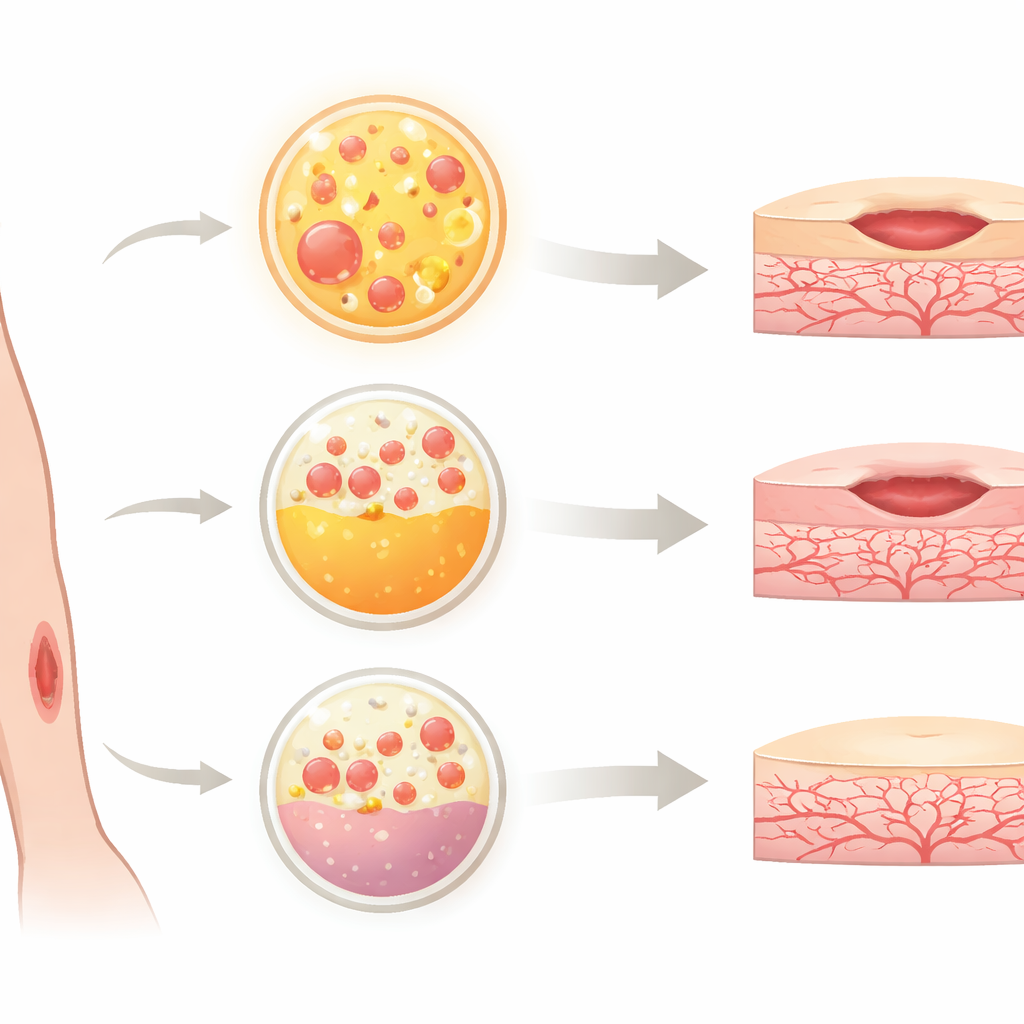
Traditional platelet-rich plasma (PRP) is made by spinning a patient’s blood to concentrate platelets, which release growth factors that support healing. However, PRP requires anticoagulants and complex preparation, and its benefits may be short-lived. A more recent product, platelet-rich fibrin (PRF), avoids anticoagulants and forms a natural mesh that slowly releases growth factors. Building on this, researchers developed Alb-PRF by combining a fibrin-rich fraction of blood with heat-treated albumin from the same plasma. This creates a more stable gel-like membrane that can last longer and potentially deliver healing signals in a more sustained way, making it an attractive candidate for regenerative medicine.
How the new material was put to the test
To see how Alb-PRF compares with PRP and a modern form of PRF known as horizontal PRF (H-PRF), the team used cells that line blood vessels, called human umbilical vein endothelial cells. These cells are a widely used model for studying blood vessel growth and repair. The researchers exposed the cells to media conditioned with each blood product and checked several key features: whether the cells stayed alive, how fast they multiplied, how their internal scaffolding and shape changed, and how well they migrated to close an artificial “wound” in a dish. They also simulated inflammation by adding bacterial components that normally injure vessel cells, then asked which product offered the best protection.
Helping vessel cells grow and move
All three blood products proved safe, with no meaningful differences in cell death under normal conditions. Yet Alb-PRF stood out in how strongly it supported cell growth: endothelial cells exposed to Alb-PRF multiplied more than those treated with PRP or H-PRF. Under the microscope, Alb-PRF-treated cells showed more elongated shapes and denser internal filaments, signs that the cells were actively organizing their structure for movement and repair. In scratch-like wound assays, Alb-PRF led to the fastest closure of the gap, with nearly complete coverage after twelve hours, clearly outperforming the other two treatments. These results point to Alb-PRF as a particularly powerful trigger for the cell behaviors needed to rebuild tiny blood vessels.
Shielding blood vessels from inflammatory damage
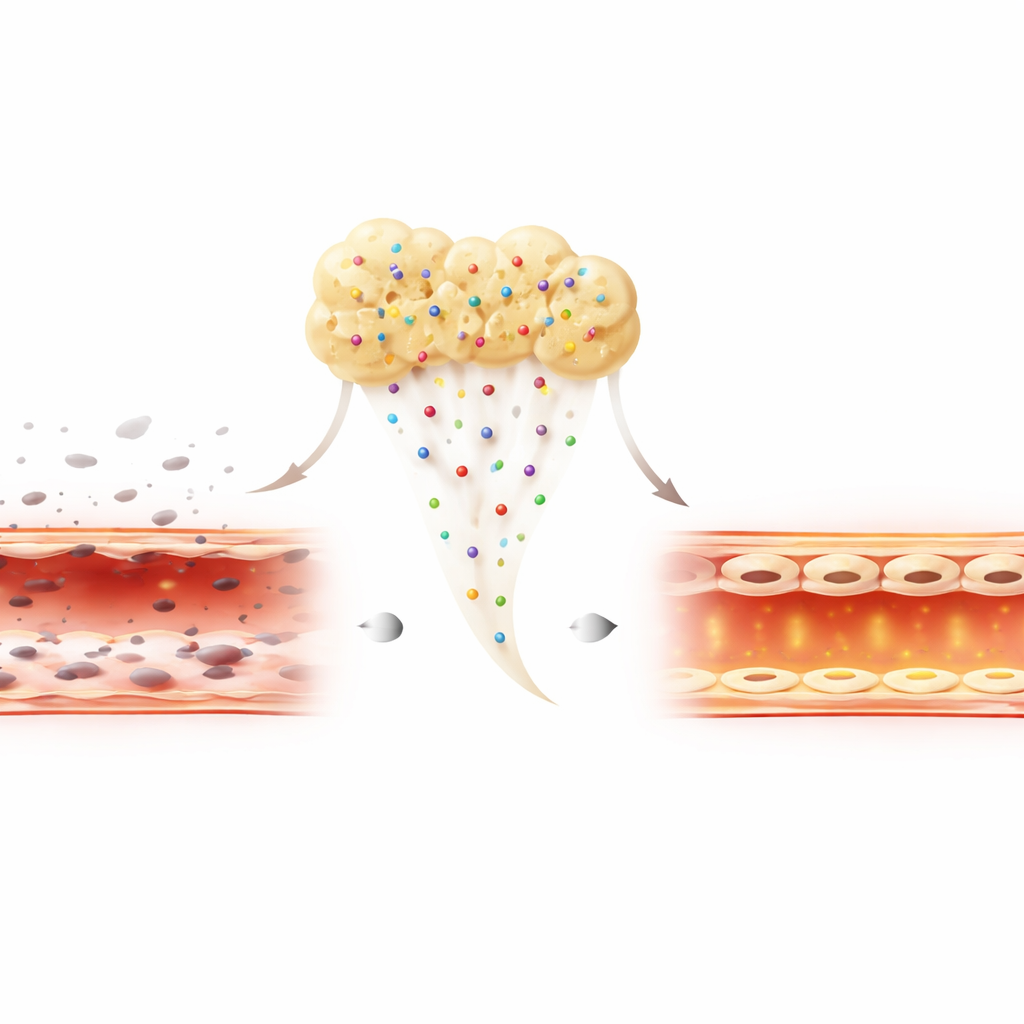
Real-world wounds often exist in an inflamed, hostile environment. To mimic this, the researchers exposed the vessel cells to a bacterial toxin that normally kills cells and disrupts their barrier. Under this stress, all three preparations offered some protection, but H-PRF and especially Alb-PRF sharply reduced cell death compared with PRP. Alb-PRF-treated cells not only survived better but also showed higher levels of a key surface protein, CD31, which helps neighboring cells stick together and maintain a tight, leak-resistant vessel wall. This suggests that Alb-PRF does more than keep the cells alive; it actively supports the rebuilding of a healthy, well-sealed lining even when inflammation is present.
What this could mean for future wound care
Taken together, the findings show that Alb-PRF combines the safety of existing platelet-based treatments with stronger support for blood vessel cell growth, movement, and resilience in the face of inflammation. While these tests were done in laboratory dishes and will need to be confirmed in animal studies and clinical trials, the results suggest that Alb-PRF could become a next-generation autologous “biological bandage.” By helping vessels regrow and stay intact, it may offer patients faster, more reliable wound healing and better outcomes in a range of regenerative therapies.
Citation: Shen, F., Chai, J., Wei, M. et al. Next-generation platelet concentrate: Alb-PRF outperformed PRP and H-PRF in promoting endothelial function and wound healing. Sci Rep 16, 13934 (2026). https://doi.org/10.1038/s41598-026-44659-2
Keywords: wound healing, platelet concentrates, angiogenesis, regenerative medicine, endothelial cells