Clear Sky Science · en
Voltage-gated calcium channels as key regulators of neuronal differentiation in the immortalized dorsal root ganglion neuronal cell line F11
Why tiny calcium gates matter for nerve health
Our brains and nerves rely on a delicate balance of electrical signals and chemical messengers. Among the most important are tiny gateways in the cell membrane that let calcium ions rush in. This study looks at how one family of these gateways, called voltage-gated calcium channels, helps immature nerve-like cells grow into more mature, neuron-like cells—and how too much activity through these channels may backfire, damaging the cells instead. Understanding this balance could open new paths to treat chronic pain and neurodegenerative diseases, where nerve cells are often stressed or dying.
From simple cells to branching nerve-like networks
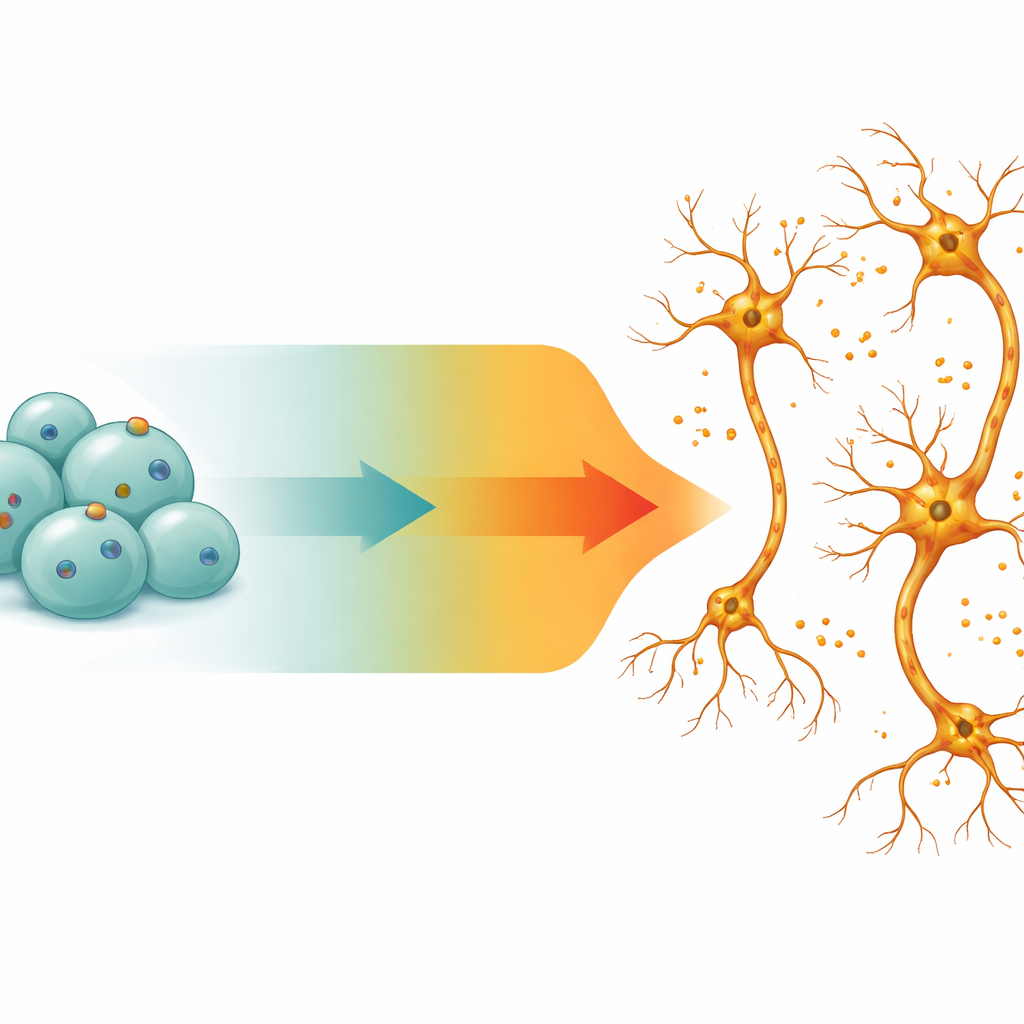
The researchers worked with F11 cells, a widely used laboratory model that mixes properties of spinal sensory neurons with a cancer cell line. Under normal conditions, F11 cells divide and look fairly simple. When exposed to a cocktail that raises a messenger molecule called cAMP, they stop dividing and start behaving more like real sensory neurons, growing long extensions known as neurites. The team confirmed that during this shift, the cells showed stronger calcium surges when they were briefly depolarized with potassium, and they fired more spontaneous electrical spikes. In other words, as the cells matured, their electrical and calcium signaling machinery became more active, mirroring what happens during the development of true nerve cells.
Calcium channels as growth switches
To find out which calcium channels were responsible, the scientists measured the activity of genes encoding different channel subtypes. They discovered that eight types of channels became more abundant as F11 cells differentiated, with a striking rise in the gene for a particular L-type channel known as CaV1.3. Using drugs that selectively block L-type channels, they showed that shutting down these channels during the 72-hour differentiation period sharply reduced the potassium-evoked calcium signals and shortened neurites, without killing the cells. Other channel blockers, aimed at T-type or various high-voltage channels involved in synaptic transmission, had little effect. Imaging confirmed that two L-type channels, CaV1.2 and especially CaV1.3, were more plentiful on the surface of differentiated cells, supporting the idea that these channels are key drivers of the calcium signals that help build neuron-like features.
When helpful calcium turns harmful
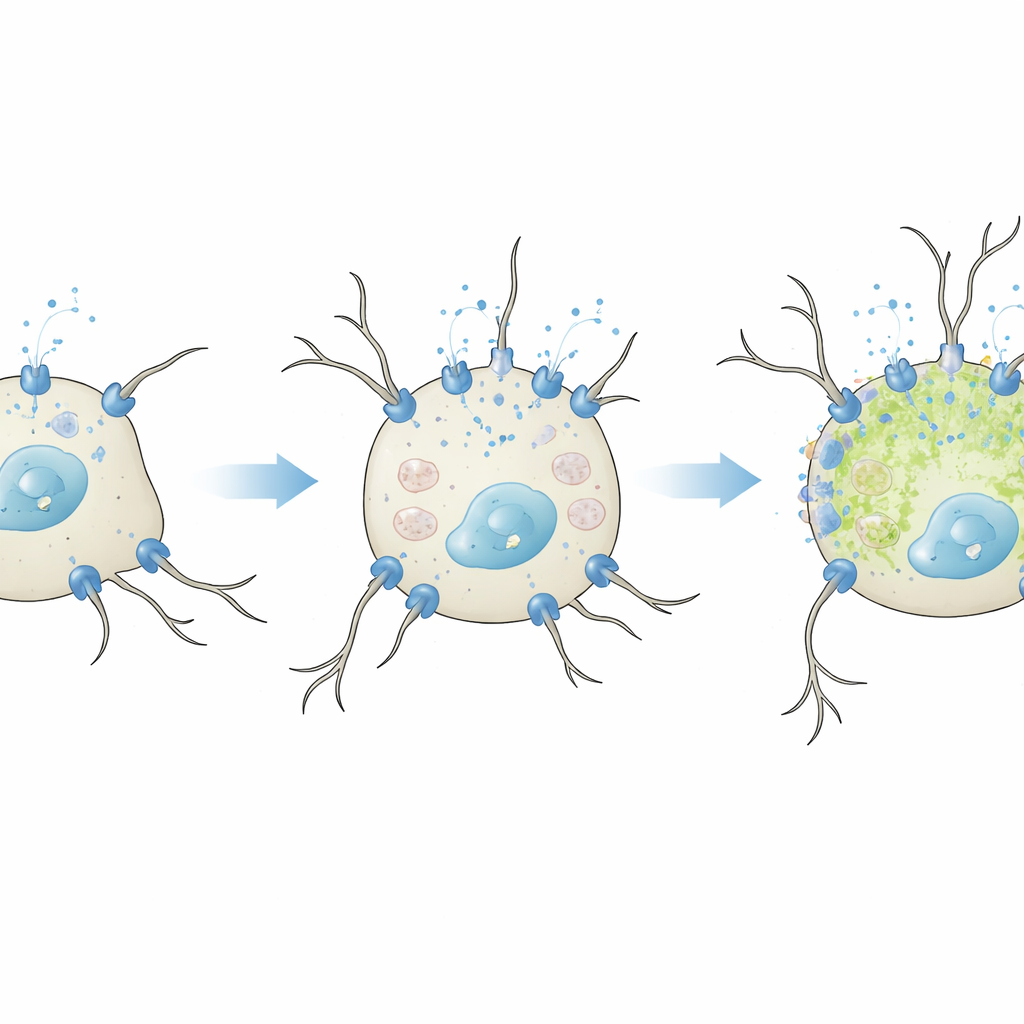
The team then asked what happens if these L-type channels are artificially boosted. Under mild, non-differentiating conditions with reduced serum, adding extra CaV1.2 or CaV1.3 made the cells respond more strongly to potassium with larger calcium surges. Only CaV1.3, however, enhanced neurite outgrowth, consistent with earlier work suggesting that this subtype is particularly good at activating growth-related pathways in neurons. Importantly, at this stage there was no rise in markers of oxidative stress, showing that a moderate increase in calcium entry could safely promote neuronal traits. The picture changed under full differentiation conditions. When CaV1.2 or CaV1.3 were overproduced while the cells were already being pushed to mature, neurites became shorter and the cells accumulated more reactive oxygen species—a sign of oxidative damage. The effect was strongest for CaV1.3, which activates at lower voltages and can support prolonged calcium entry.
A fine line between growth and damage
Taken together, the results reveal a double-edged role for L-type calcium channels in this sensory neuron–like model. Normal upregulation of CaV1.2 and CaV1.3 appears necessary for F11 cells to acquire key neuronal properties: longer neurites, stronger calcium responses, and more active electrical signaling. Yet pushing these channels too far, particularly CaV1.3 in an already calcium-loaded environment, tips the balance toward oxidative stress and stalled maturation. This balance between supportive and harmful calcium signaling is highly relevant to conditions such as neuropathic pain and neurodegenerative disease, where both channel activity and oxidative stress are often disturbed. Because F11 cells mimic many features of pain-sensing neurons and can be probed with automated imaging and calcium measurements, this work strengthens their value as a practical testbed for future drugs that aim to fine-tune calcium entry and protect vulnerable nerves.
Citation: López, D., Brea, J., Barro, M. et al. Voltage-gated calcium channels as key regulators of neuronal differentiation in the immortalized dorsal root ganglion neuronal cell line F11. Sci Rep 16, 14621 (2026). https://doi.org/10.1038/s41598-026-44595-1
Keywords: calcium signaling, neuronal differentiation, voltage-gated calcium channels, neuropathic pain, oxidative stress