Clear Sky Science · en
The impact of employees’ constrictive deviance on job performance: The roles of ethical conflict and moral identity
When Breaking the Rules Feels Like the Right Thing
Many workers occasionally bend a rule to help a customer, protect someone’s privacy, or keep a project on track. These small acts of “rule-breaking for good reasons” can look heroic, but they may quietly drain the people who carry them out. This study investigates what happens to employees’ performance when they violate company rules in order to do what they believe is morally right, and why such brave choices can sometimes backfire on the rule-breakers themselves.
Good Intentions, Broken Rules
The authors focus on a behavior known as “constructive deviance” — actions that go against organizational rules but are meant to protect the organization or uphold higher moral standards. Picture an employee who ignores a rigid data-sharing procedure to prevent a client’s private information from being exposed. Earlier research has mostly asked what leads people to engage in this kind of behavior, such as certain personality traits or leadership styles. Much less is known about what happens afterward, especially for the employee’s own job performance. The researchers argue that to understand these consequences, we must look not just at broken rules but also at the moral beliefs that drive such choices.
When Morals Collide at Work
Using ideas from moral psychology, the study introduces the notion of ethical conflict — clashes that arise when people disagree about what is right or wrong in a situation. Employees who break rules for moral reasons may see themselves as doing the right thing, yet coworkers or managers can see the same act as irresponsible or even immoral simply because it violates established procedures. This mismatch in moral viewpoints can spark tension, strained relationships, and internal self-doubt. To explore this process, the authors surveyed 244 employees from multiple Chinese companies at three different times, measuring their constructive deviance, experiences of ethical conflict, sense of themselves as moral people (moral identity), and later job performance. 
How Inner Tension Saps Performance
The results reveal a clear pattern: employees who more often engaged in constructive deviance reported more ethical conflict, and those who felt more ethical conflict tended to perform worse in their jobs. The researchers interpret this through the lens of personal “resources” such as energy, attention, and emotional balance. Ethical conflict consumes these resources in several ways. Workers must spend time and mental effort defending their choices, managing tense interactions, and wrestling with their own doubts. Negative emotions such as anger, frustration, or confusion make it harder to concentrate and remain motivated. Ethical disputes can also damage trust and cooperation within teams, making daily tasks more difficult. Altogether, this emotional and social strain helps explain why well-meant rule-breaking is linked to lower job performance.
Why Strong Morals Can Hurt More
Not everyone is affected equally. The study finds that moral identity — how central being a “moral person” is to someone’s sense of self — changes the impact of ethical conflict. For employees who strongly define themselves by their moral traits, clashes over right and wrong are especially painful. They are more likely to stand their ground, argue their case, and distance themselves from those they see as less ethical. This stubbornness may protect their values but also intensifies conflict and uses up more psychological resources. In the data, ethical conflict had a much stronger negative link to job performance for high–moral identity employees than for those who were more flexible about moral issues. As a result, the indirect harm of constructive deviance on performance through ethical conflict was significantly larger among employees with strong moral identities. 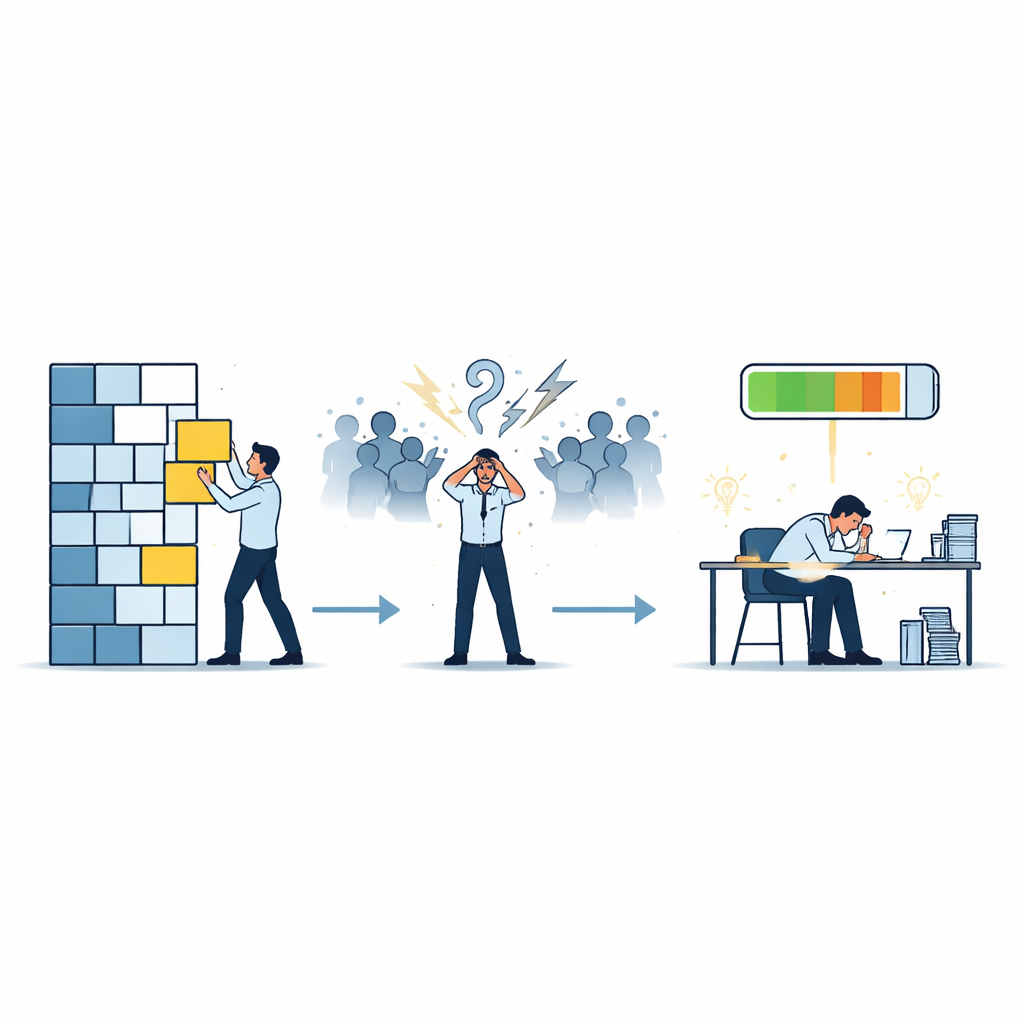
What This Means for People and Organizations
Overall, the study concludes that breaking rules for good reasons can still come at a personal cost. When employees violate procedures to serve higher moral goals, they are more likely to end up in moral disputes with others, which drains their energy and time and ultimately reduces their work performance. This pattern is especially pronounced for people who see morality as central to who they are. For organizations, the message is not to suppress ethics or initiative, but to update outdated rules, listen carefully to employee concerns, and openly address moral disagreements before they harden into damaging conflicts. For individual workers, the findings highlight the importance of finding channels to raise ethical concerns without having to bear the burden of being a lone “moral rebel” whose good deeds quietly undermine their own success.
Citation: He, W., Sun, Y. The impact of employees’ constrictive deviance on job performance: The roles of ethical conflict and moral identity. Sci Rep 16, 13651 (2026). https://doi.org/10.1038/s41598-026-44262-5
Keywords: constructive deviance, ethical conflict, moral identity, job performance, workplace ethics