Clear Sky Science · en
Plasma lipids connecting olfaction with cognition and physical function
Why your sense of smell matters for healthy aging
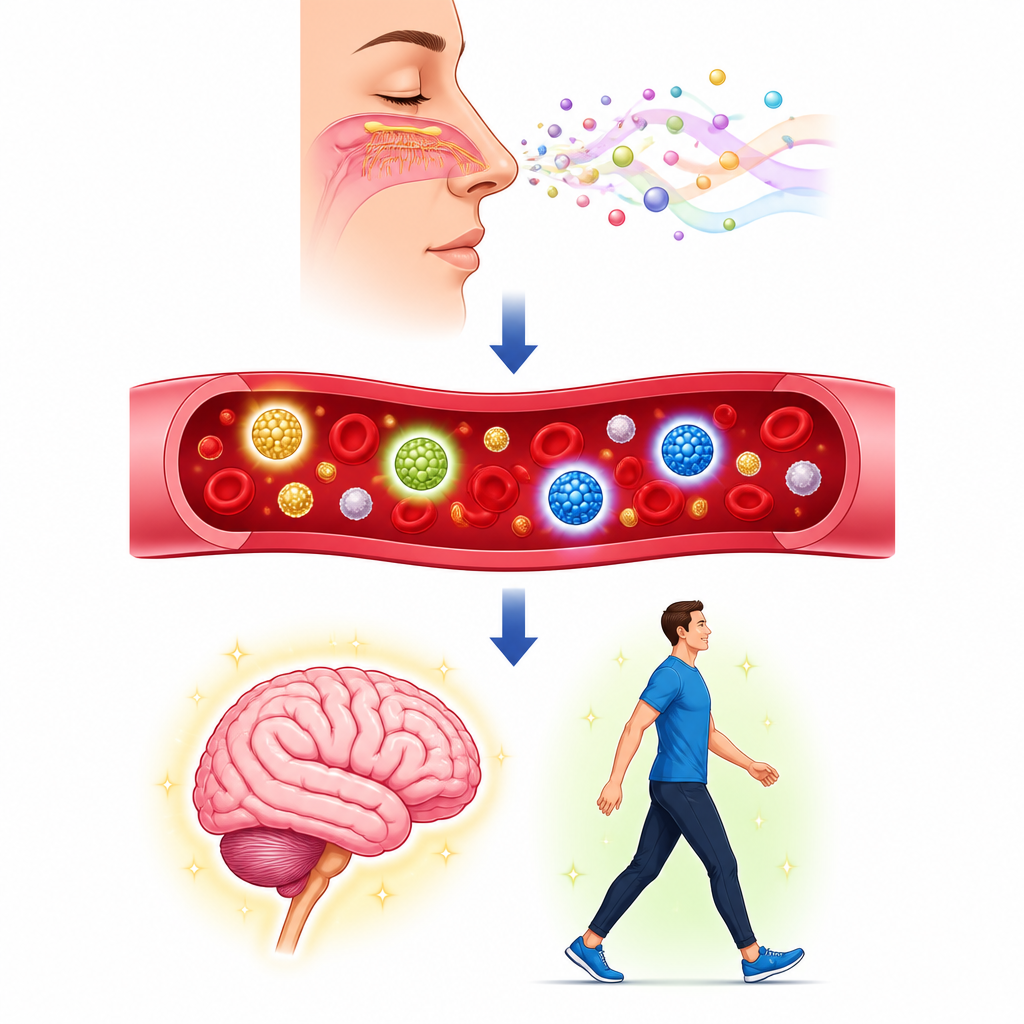
Many people notice their sense of smell fading with age and may shrug it off as a minor annoyance. Yet loss of smell often appears years before memory problems or slowing walking speed, hinting at deeper changes in the brain and body. This study asks a simple but important question: are there substances in our blood that link how well we smell to how well we think and move? By looking at specific blood fats in older adults, the researchers begin to connect the dots between the nose, the brain, and physical function.
Smell, thinking tests, and walking speed
The researchers drew on data from 656 adults in the long running Baltimore Longitudinal Study of Aging, most in their early seventies. Participants completed a smell test using scented pens, memory and thinking tasks such as recalling word lists and matching symbols, and physical tests including walking speed, a 400 meter walk, and chair stands. As seen in earlier work, people who identified more odors tended to have better scores on several thinking tests and walked faster, while those with poorer smell were more likely to show signs of cognitive impairment and slower movement.
A closer look at fats in the blood
Next, the team examined hundreds of lipid molecules in fasting blood samples, grouping them into families based on their chemical makeup and the length of their carbon chains. They focused on six main classes of lipids and asked which ones were related both to smell and to brain and physical function. Two closely related groups stood out: sphingomyelins and glycosylceramides, especially those with long or very long carbon chains. Higher levels of these lipids were linked with better odor identification, sharper performance on attention and processing speed tests, nimble hand movements, and stronger walking and balance scores.
How these lipids might link nose and brain
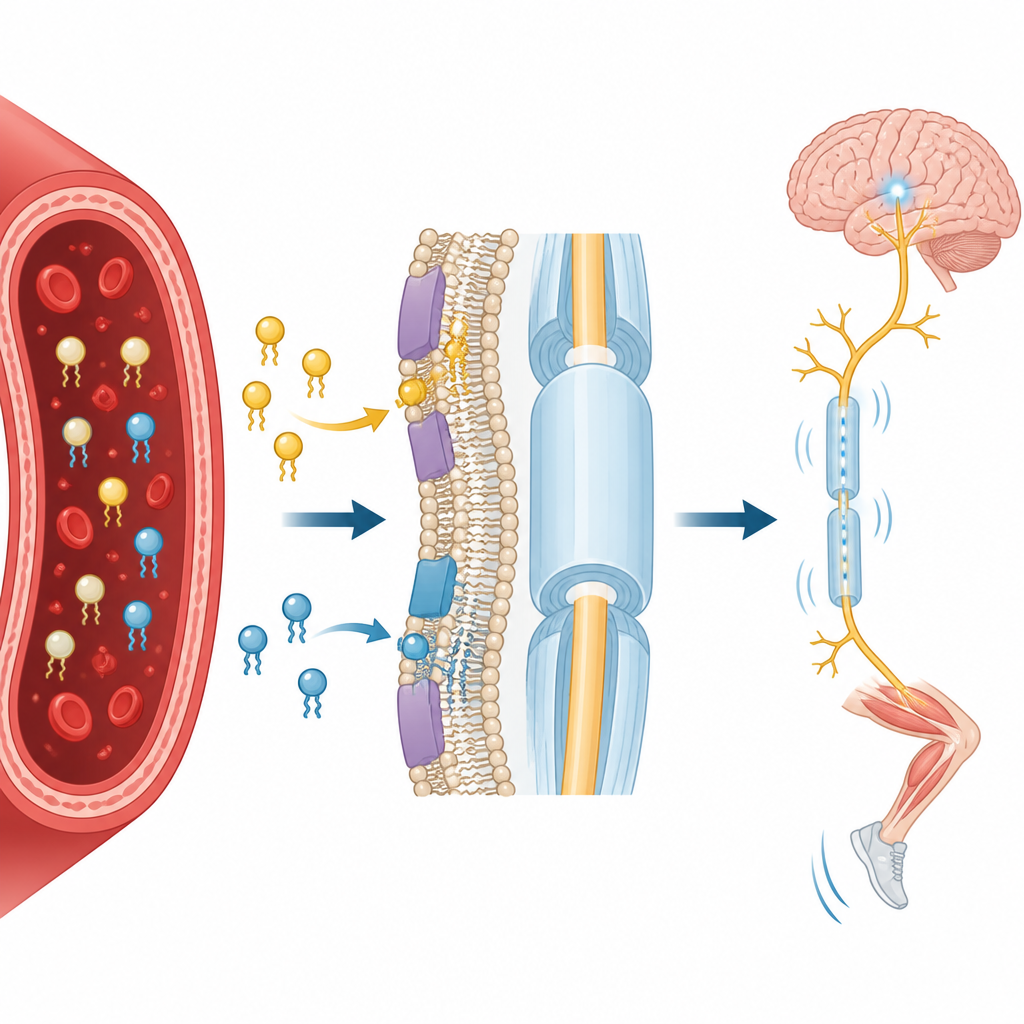
Sphingomyelins and glycosylceramides are key building blocks of cell membranes, including the membranes of smell sensing cells in the nose and the insulating coating, or myelin, that wraps nerve fibers in the brain. The study found that very long chain versions of these lipids partly reduced the strength of the connection between smell scores and both thinking and movement measures. In simple terms, once the level of these lipids was taken into account, smell was still related to function, but not as strongly. Additional analyses suggested these lipids may sit along the pathway that connects smell with cognitive and physical outcomes.
Clues from brain wiring, diet, and body fat
To probe possible mechanisms, the researchers looked at brain scans, diet surveys, and abdominal fat scans in subsamples. Higher levels of the identified lipids were associated with better white matter integrity in tracts important for memory and movement, such as connections involving the hippocampus and major highways linking the two sides of the brain. These lipids also showed modest links with healthier eating patterns and lower deep belly fat, though these factors did not fully explain the findings. Together, the results hint that blood lipids may reflect the health of nerve insulation and signal flow that support both smell and everyday functioning.
What this means for aging well
This study suggests that specific blood fats, particularly very long chain sphingomyelins and glycosylceramides, may help explain why a fading sense of smell often travels alongside declines in thinking and physical ability. While the work is cross sectional and cannot prove cause and effect, it points to lipids as promising markers of brain and body health in later life. Future research using broader biological tools and long term follow up may show whether tracking or modifying these lipids could one day help identify or slow age related declines.
Citation: Greig, E.E., Resnick, S.M., Ferrucci, L. et al. Plasma lipids connecting olfaction with cognition and physical function. Sci Rep 16, 15168 (2026). https://doi.org/10.1038/s41598-026-43857-2
Keywords: olfaction, blood lipids, cognition, physical function, aging