Clear Sky Science · en
The association between serum follicle-stimulating hormone and luteinizing hormone levels and congestive heart failure in postmenopausal women: a cross-sectional study
Why Hormones and Heart Health Matter After Menopause
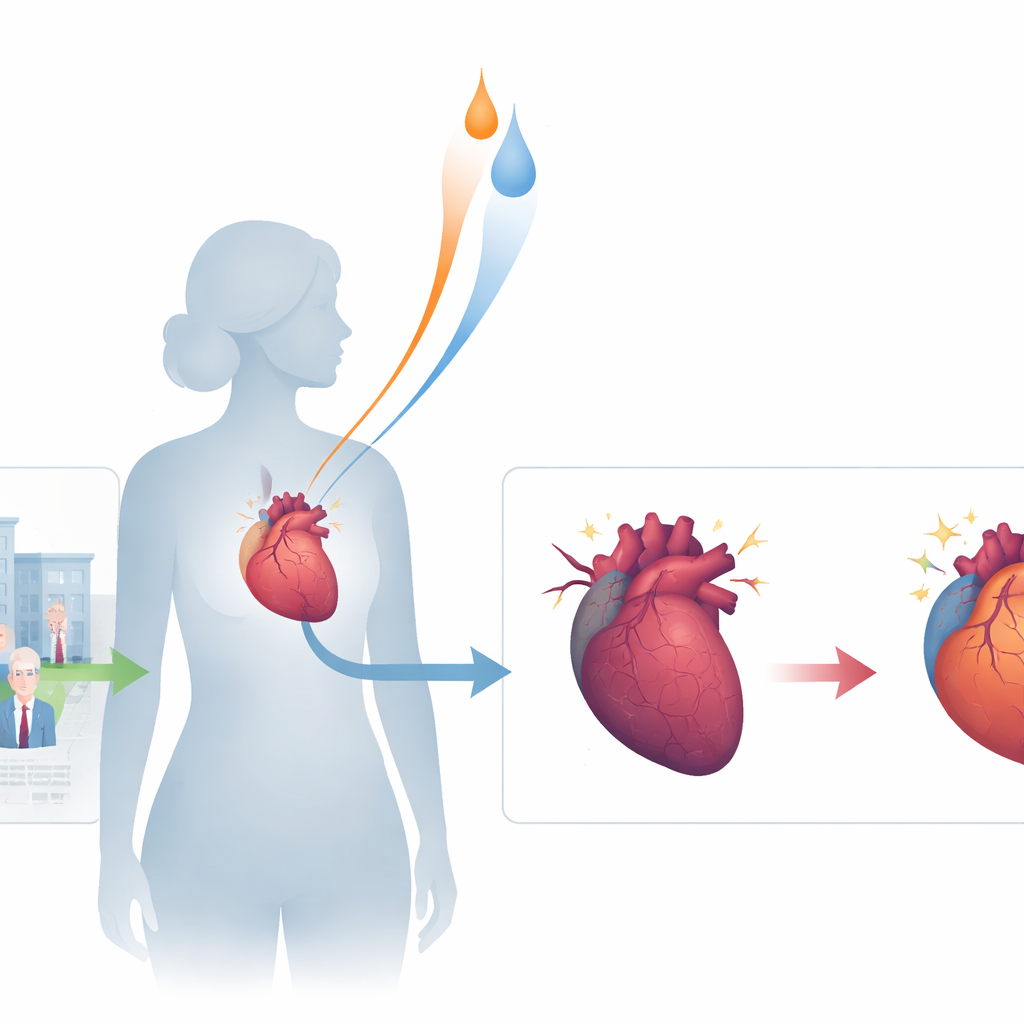
As women age and move past menopause, their risk of developing heart failure rises sharply. Doctors usually blame this on factors like blood pressure, diabetes, or blocked arteries. But this study asks a different question: could the reproductive hormones that change so dramatically after menopause also help signal which women are most likely to develop serious heart problems? By examining routine blood tests in thousands of patients, the researchers explored whether two hormones made by the brain—follicle-stimulating hormone (FSH) and luteinizing hormone (LH)—are linked to congestive heart failure in postmenopausal women.
Looking at Hormones in Everyday Hospital Patients
The team analyzed medical records from 2,853 postmenopausal women who visited a large hospital in Xinjiang, China, between 2018 and 2023. All of these women had already stopped having periods and had hormone levels consistent with menopause. The researchers checked which women had been diagnosed with congestive heart failure, a long-term condition in which the heart cannot pump blood effectively, causing symptoms such as breathlessness, fatigue, and swollen ankles. They then compared blood levels of FSH and LH between women with and without heart failure, while also taking into account age, blood pressure, body weight, kidney function, cholesterol, smoking, alcohol use, and histories of diabetes, high blood pressure, and coronary heart disease.
Higher Hormone Levels, Lower Heart Failure Risk
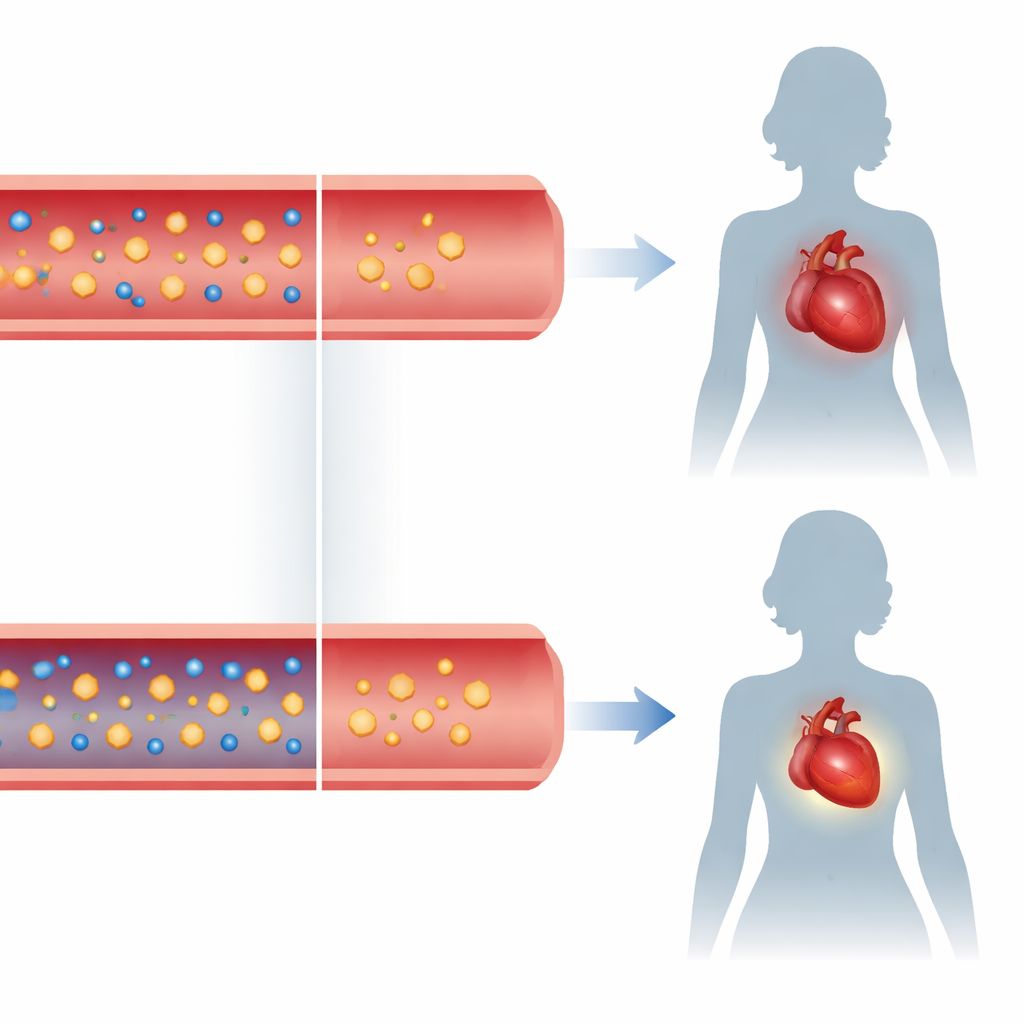
The results revealed a clear pattern: women with lower FSH and LH levels were more likely to have heart failure. When the researchers grouped hormone levels into thirds, those in the lowest FSH or LH group had the highest proportion of heart failure, while those in the highest group had the lowest. After adjusting for many other health factors, every typical step upward in FSH level was linked to about a 25% lower chance of having heart failure, and a similar—though slightly weaker—relationship was seen for LH. When they used more flexible statistical models, they found that this protective link only held up to certain cutoff points. Below roughly 69 mIU/mL for FSH and 26 mIU/mL for LH, higher hormone levels were associated with a markedly lower risk. Above those levels, the relationship flattened out and no longer showed clear protection.
Digging Into How Hormones Might Be Connected
FSH and LH are best known for controlling the ovaries, but their receptors also appear in blood vessels, liver, fat tissue, and other organs, hinting at broader roles in metabolism and inflammation. To see whether their link to heart failure was simply a stand‑in for other sex hormones, the researchers tested whether estrogen, progesterone, or testosterone explained the relationship. For FSH, the association with heart failure remained even after taking these hormones into account, suggesting that FSH itself—or processes it reflects—may be independently related to heart health. For LH, estrogen and progesterone appeared to carry part of the effect, indicating a more complex pathway where LH may influence heart failure risk partly through these downstream hormones.
Pregnancy History and What the Numbers Can Predict
The team also asked whether certain subgroups of women showed stronger patterns. One striking finding was that the link between low FSH and LH and heart failure was most pronounced in women who had given birth to two or more children. Previous research suggests that more pregnancies are associated with both lower later-life FSH levels and higher cardiovascular risk, and this study echoes that connection. In addition, the researchers tested how well FSH and LH could help distinguish women with heart failure from those without. Measures of prediction accuracy showed that these hormones alone had fair ability to separate the two groups, and adding them to standard clinical models slightly improved the ability to identify women with heart failure, suggesting they may have practical value as part of a risk assessment toolkit.
What This Means for Women After Menopause
This cross-sectional study cannot prove that hormone levels cause or prevent heart failure, and it was limited to patients from a single hospital. Still, the findings point to a consistent pattern: in postmenopausal women, especially those with multiple pregnancies, lower blood levels of FSH and LH are linked to a higher likelihood of having congestive heart failure, up to specific threshold values. FSH seems to have an influence that is not fully explained by estrogen, while LH may act partly through estrogen and progesterone. In everyday terms, routine hormone tests that doctors already order for other reasons could also help flag women who might warrant closer heart evaluation. Larger, long-term studies will be needed to confirm whether monitoring—or even carefully adjusting—these hormone levels could one day play a role in preventing or managing heart failure in older women.
Citation: Zhou, H., Xierzhati, S., Adili, D. et al. The association between serum follicle-stimulating hormone and luteinizing hormone levels and congestive heart failure in postmenopausal women: a cross-sectional study. Sci Rep 16, 12802 (2026). https://doi.org/10.1038/s41598-026-43697-0
Keywords: postmenopausal heart failure, follicle-stimulating hormone, luteinizing hormone, women’s cardiovascular health, gonadotropins and heart disease