Clear Sky Science · en
Effective of local morphine, ketorolac, and bupivacaine in pediatric tendon surgery: a randomized controlled trial
Why easing children’s pain after surgery matters
When children need leg surgery to correct tight or misaligned tendons, the operation is only part of the story. The hours and days afterward can be intensely painful, which can frighten young patients, slow their recovery, and even raise the risk of complications from lying still too long. Doctors often try to blunt this pain by numbing the surgical wound with medicines, but it is not clear whether adding more drugs to the mix truly helps. This study tested whether a more complex cocktail of pain medicines around the wound works better than a single standard numbing drug for children having tendon surgery in the lower leg.
Two different numbing strategies
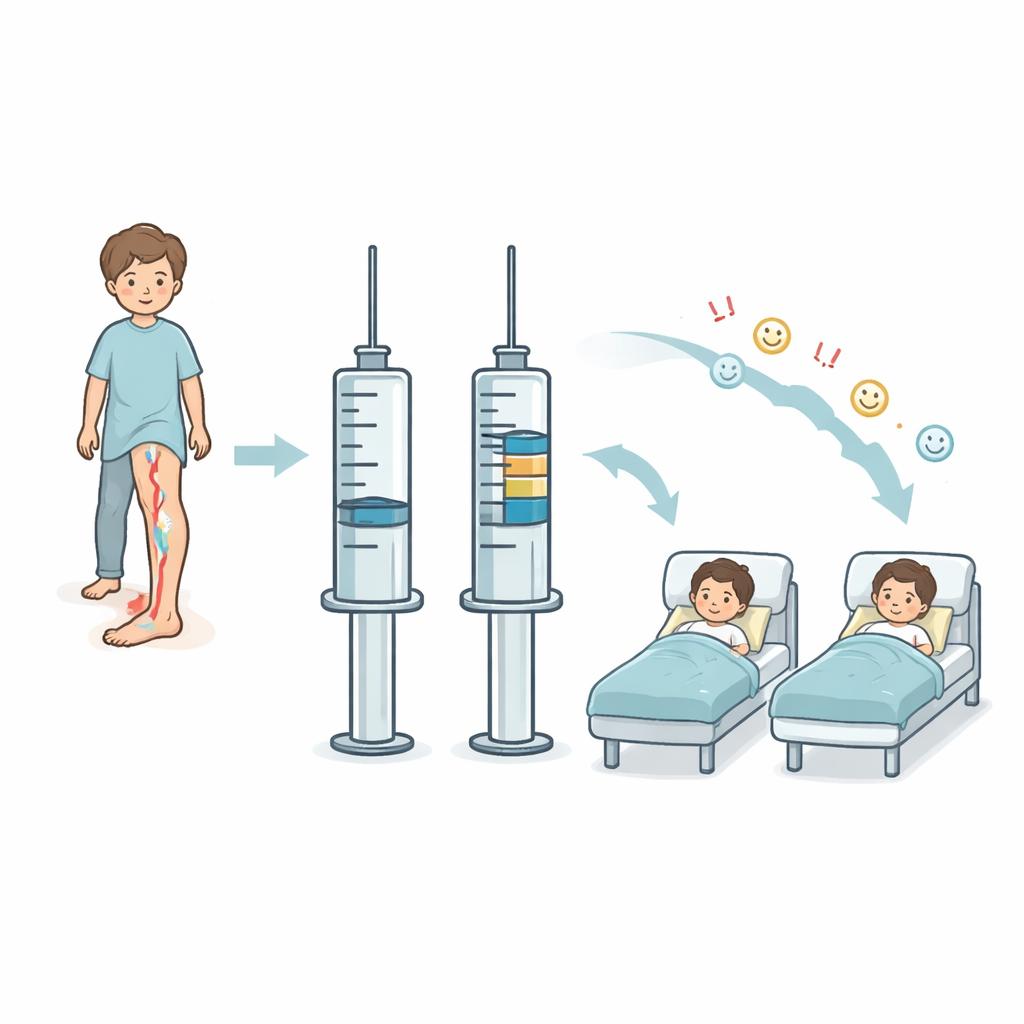
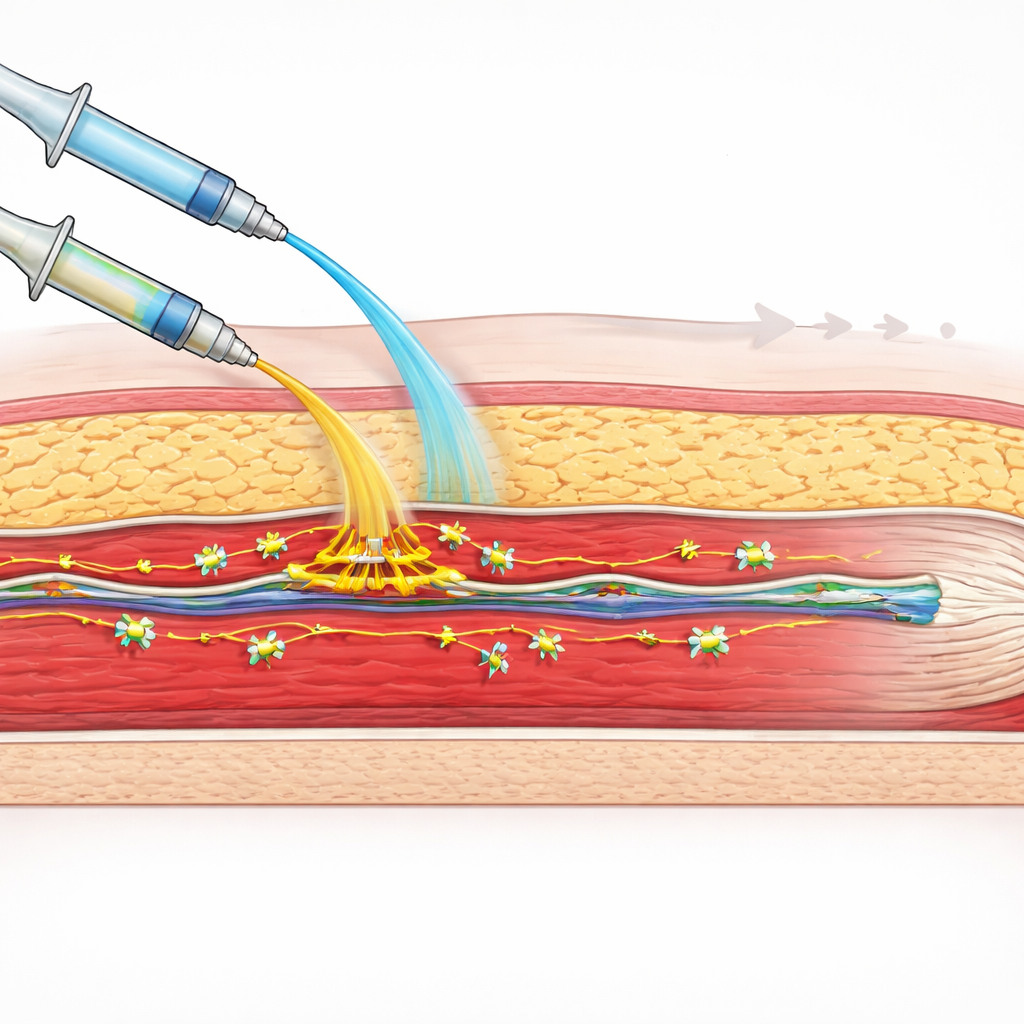
The researchers focused on 40 children, aged 1 to 17, who were having operations on the tendons of the lower leg and foot, such as lengthening the Achilles tendon or transferring a tendon to a new position. All surgeries were done without bone work, to keep the group medically similar. At the end of the operation, just before the skin was closed, surgeons injected medicine directly into the tissues around the wound. Half of the children received only one drug, bupivacaine, a long-acting local anesthetic commonly used to numb surgical areas. The other half received a “multimodal” blend: the same bupivacaine plus ketorolac, an anti-inflammatory pain reliever, and morphine, a strong opioid painkiller.
Measuring pain in kids of different ages
Because a toddler cannot describe pain the way a teenager can, the team divided the children into two age bands and used age-appropriate tools. For those aged 1 to 6, nurses rated behaviors such as crying, facial expression, and leg movement to calculate a pain score. For those aged 7 to 17, nurses used a simple 0–10 rating where the child pointed to a number matching their pain. Pain was recorded every four hours for two full days after surgery. If a child’s pain score crossed a preset threshold, nurses gave an extra dose of morphine through a vein, and every dose was carefully logged.
What the study found about pain and morphine
Across both age groups, pain levels declined steadily over the 48 hours after surgery, regardless of which numbing strategy had been used. When the researchers compared the chance of having “adequate” pain control between the single-drug and three-drug injections, the odds were essentially the same. More detailed analyses that looked at exact pain scores over time told the same story: the lines for the two groups were very close together, and any differences were too small to be meaningful in everyday care. When the team added up pain over the full two days to get an overall burden of discomfort, the results again differed only slightly, well below what is considered a noticeable change for patients. Morphine use followed a similar pattern: the group receiving the more complex injection did not require less opioid overall.
Safety and limits of the approach
Reassuringly, the researchers did not see any major safety problems in either group. Only one child, out of 40, developed a minor side effect—itching—which resolved with treatment. However, the study did have limits. The original plan called for more than 100 participants, but pandemic-related disruptions forced the team to stop at 40. That smaller number makes it harder to spot very modest benefits. The children also underwent a variety of tendon procedures, and all received standard pain medicines like ibuprofen and acetaminophen in addition to the wound injections, which may have softened any advantage of one injection strategy over the other.
What this means for children and families
For families and clinicians, the main takeaway is that, in this setting, a simple numbing injection with a single local anesthetic worked just as well as a more complicated mixture that added an anti-inflammatory drug and morphine. The more complex cocktail did not clearly lower pain scores or reduce the need for extra opioid doses in the first two days after surgery. This suggests that children can often be kept comfortable with the simpler, well-known approach, sparing them exposure to additional drugs without losing pain relief. Larger future studies may refine these findings, but for now, the results support using straightforward local numbing as a reliable part of pain control after pediatric tendon surgery.
Citation: Wongcharoenwatana, J., Adulkasem, N., Ariyawatkul, T. et al. Effective of local morphine, ketorolac, and bupivacaine in pediatric tendon surgery: a randomized controlled trial. Sci Rep 16, 12795 (2026). https://doi.org/10.1038/s41598-026-43677-4
Keywords: pediatric postoperative pain, tendon surgery, local anesthesia, opioid use, ketorolac