Clear Sky Science · en
The value of coagulation index in thromboelastography for predicting early pregnancy loss in in vitro fertilization (IVF)/intracytoplasmic sperm injection (ICSI) cycles
Why this matters to hopeful parents
For many couples, in vitro fertilization (IVF) or intracytoplasmic sperm injection (ICSI) represents a hard‑won chance at parenthood. Yet even after a pregnancy test turns positive, there remains a real risk that the pregnancy will end in the first weeks. This study asks a practical question with clear emotional stakes: can a simple blood‑clotting test done on the day embryos are transferred help doctors identify which pregnancies are more likely to be lost early, and which are more likely to continue? 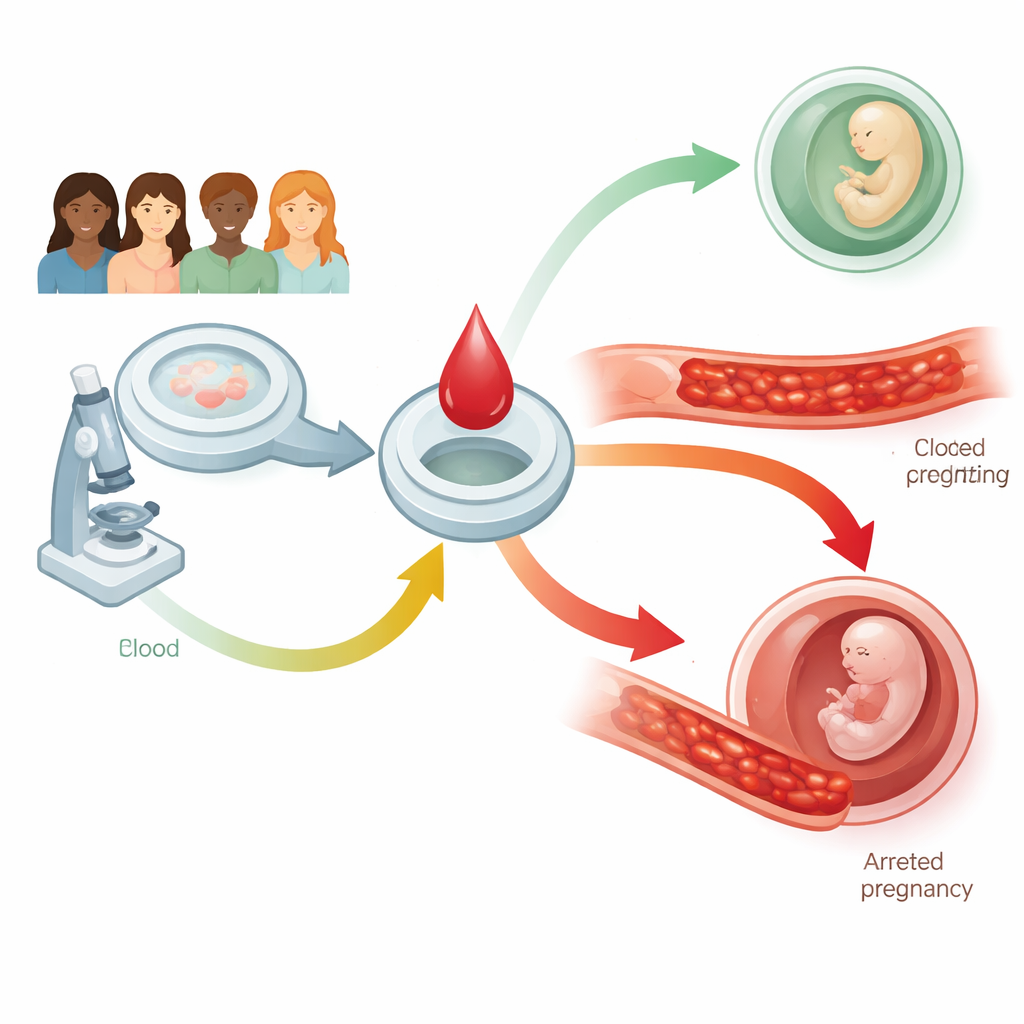
Looking for early warning signs
Early pregnancy loss, defined as miscarriage before 12 weeks, is common both in natural conception and after fertility treatment. In IVF and ICSI cycles, it may affect roughly one in five clinical pregnancies. Chromosome problems in the embryo explain many of these losses, but not all. Growing evidence suggests that how easily a person’s blood clots may influence whether the early placenta can develop a healthy blood supply. The authors focused on women undergoing frozen embryo transfer and asked whether a whole‑blood clotting test called thromboelastography, and especially its combined measure known as the coagulation index, could flag an increased risk of early loss.
How the study was done
The researchers followed 463 women who became pregnant after IVF or ICSI at a single reproductive medicine center. All had a single baby on the way (no twins) and received high‑quality blastocyst embryos. On the day of embryo transfer, each woman had a thromboelastography test. This test records, over time, how a small sample of blood clots and then begins to break down, producing several numerical readings that reflect the speed and strength of clot formation. The team also collected extensive clinical information, including age, previous births, history of hormone or thyroid problems, and causes of infertility. They then tracked the pregnancies to see which ended in early loss and which resulted in live birth.
What the researchers found
Among the 463 clinical pregnancies, 129 ended in early loss, a rate of nearly 28 percent. When the researchers compared women who lost their pregnancies with those who delivered, they found differences in several clotting measures, including the reaction time of clot formation, maximum clot strength and, most notably, the overall coagulation index. Using statistical models that took many factors into account at once, they identified four key features linked with higher odds of early loss: a history of ovulation problems, thyroid or other endocrine disorders, having previously given birth, and a higher coagulation index on the transfer day. Each step up in coagulation index corresponded to a measurable rise in risk, suggesting that a more “sticky” blood‑clotting state may be hazardous for very early pregnancy. 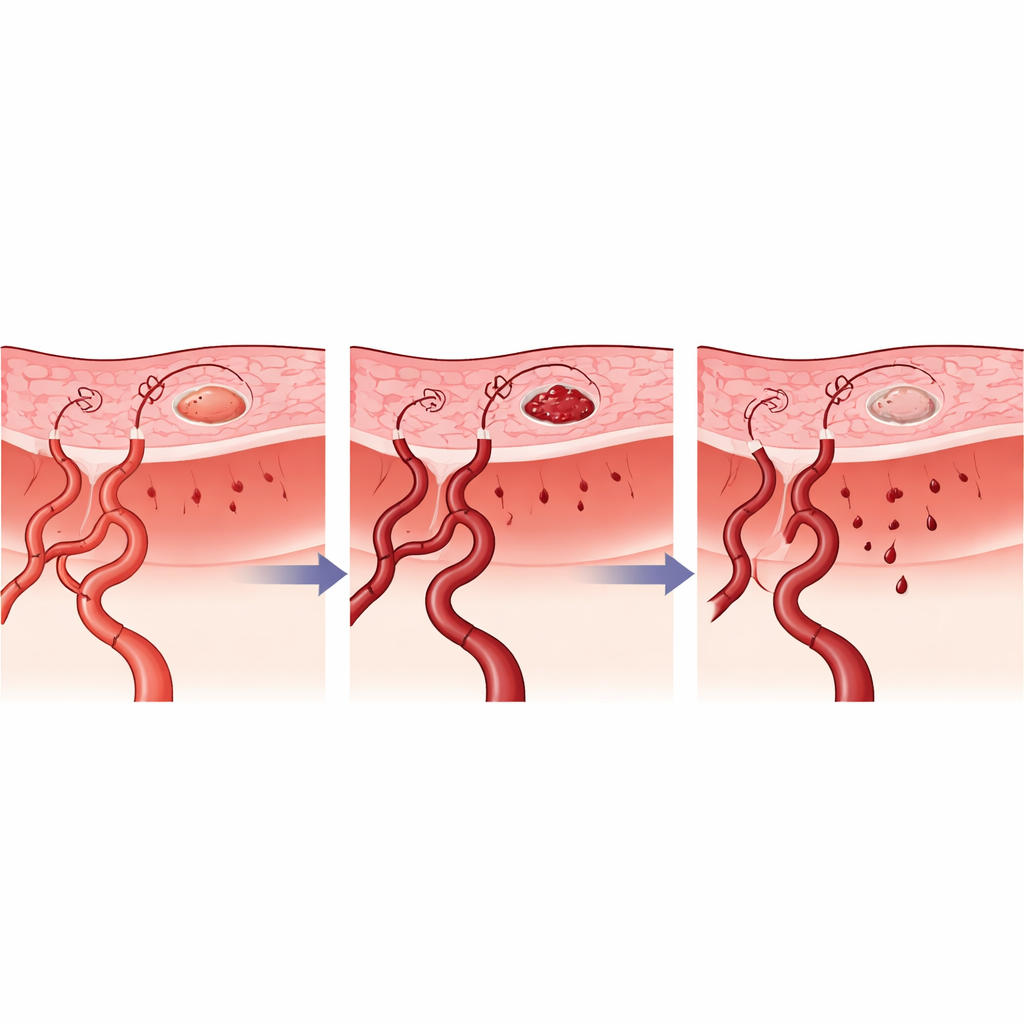
A practical cutoff for risk
To translate these findings into something useful in the clinic, the team looked for a threshold value of the coagulation index that best separated higher‑risk from lower‑risk pregnancies. They found that a value above 0.75 on the transfer day was associated with an increased chance of early loss. While this single measure alone was only a modest predictor, combining it with the other three clinical factors improved performance. The authors built a visual risk‑scoring tool, called a nomogram, that allows doctors to add up a woman’s scores for these factors and estimate her personal risk of early loss after IVF or ICSI.
What this could mean for care
For patients, the study does not offer a guarantee, but it does point to a possible way of spotting trouble sooner. A woman whose coagulation index is above 0.75 on the day of embryo transfer may benefit from closer follow‑up in early pregnancy and more active management of related conditions such as thyroid or hormone disorders. In theory, carefully chosen blood‑thinning treatments might help some high‑risk patients, though existing trials have not yet shown clear benefits for everyone. The authors stress that their work was done at a single center with a moderate number of patients, so the cutoff they propose must be tested in larger, more diverse groups. Still, the study suggests that paying attention to how the blood clots at the very start of pregnancy could become one piece of a broader effort to reduce miscarriages after fertility treatment.
Citation: Zheng, Y., Shi, X., Wang, N. et al. The value of coagulation index in thromboelastography for predicting early pregnancy loss in in vitro fertilization (IVF)/intracytoplasmic sperm injection (ICSI) cycles. Sci Rep 16, 10736 (2026). https://doi.org/10.1038/s41598-026-43675-6
Keywords: early pregnancy loss, IVF, blood clotting, thromboelastography, miscarriage risk