Clear Sky Science · en
Evaluating repellence properties of a catnip essential oil-based mosquito repellent using the human landing catch method in Eastern Uganda
Why a Common Herb Matters for Mosquito Bites
Mosquitoes are more than a nuisance: they spread malaria, dengue, and other serious diseases, especially in regions like sub-Saharan Africa. Many people cannot easily afford imported repellents based on the chemical DEET, and some worry about using synthetics on children or during pregnancy. This study asks a simple but powerful question: could an everyday plant, catnip, grown locally in Eastern Uganda, provide an effective and affordable way to keep disease-carrying mosquitoes from landing on people in the first place? 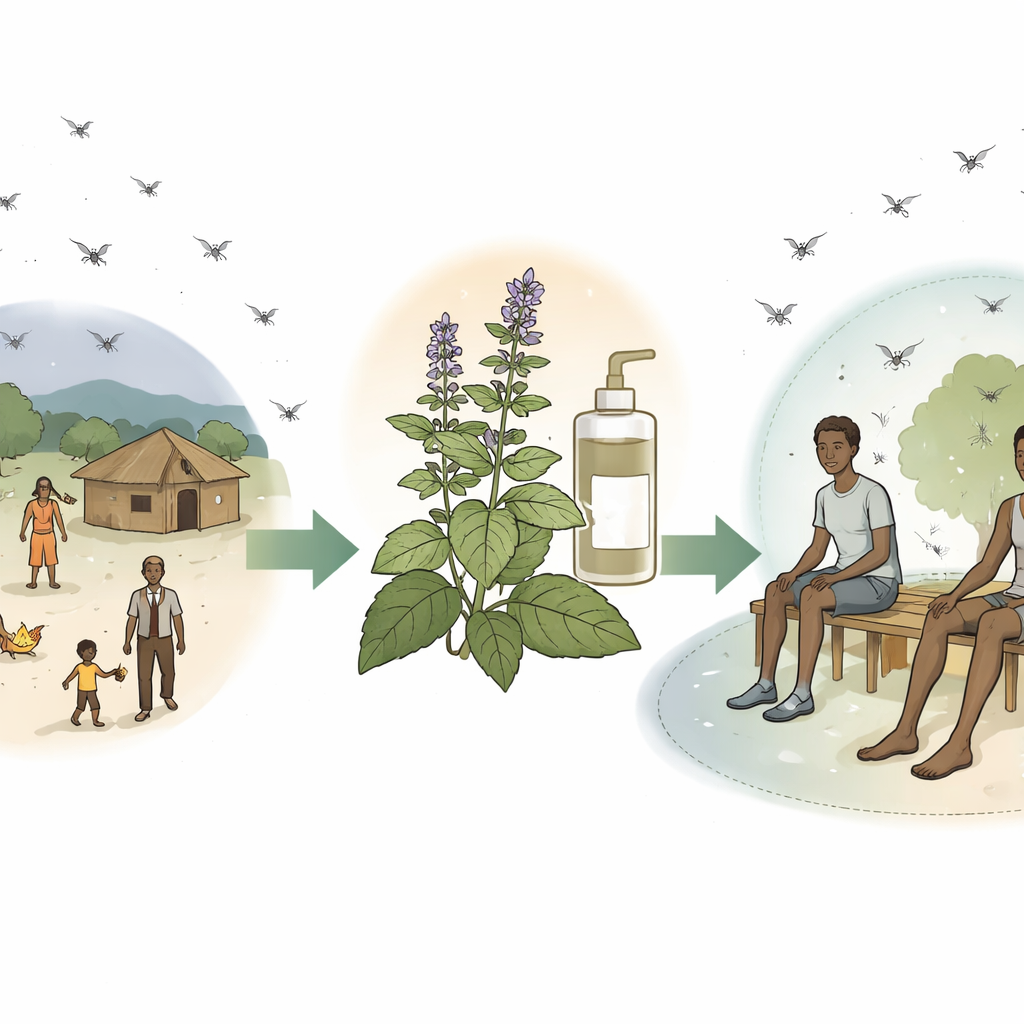
A Plant Best Known to Cats Takes on Mosquitoes
Catnip, a mint-family herb famous for its odd effect on cats, produces an essential oil rich in a compound called nepetalactone. Laboratory work has shown that this oil can strongly repel mosquitoes and even other biting pests such as ticks and mites. The researchers behind this paper previously identified a catnip variety with very high nepetalactone content and confirmed, in controlled lab tests, that low amounts of the oil could deter mosquitoes from approaching. The next step was to leave the lab and test a real product—catnip-oil lotion—on real people exposed to wild mosquitoes under typical evening conditions in rural Eastern Uganda.
How the Field Trials Were Run
To measure mosquito repellence in the real world, the team used the "human landing catch" method, considered a gold standard in mosquito research. Adult volunteers in two rural subcounties, Mugiti and Kamonkoli, sat outdoors from 6 p.m. to 10 p.m., the hours when people commonly work or socialize and when many mosquitoes are active. Each participant’s lower leg was either covered with a lotion containing 2% catnip oil, 6% catnip oil, a standard commercial cream with 15% DEET, or a plain lotion with no catnip. The rest of the body was covered with clothing. Whenever a mosquito landed on the exposed leg, volunteers carefully sucked it into a small tube with a handheld aspirator, allowing technicians to count and identify the insects later. The trials were repeated on three evenings in May and again in June 2025 at both locations, providing a broad snapshot of performance across different days, weather, and mosquito populations.
What the Mosquito Counts Revealed
Across all trials, the pattern was remarkably consistent. In the control group wearing plain lotion, volunteers typically experienced around 10 to more than 20 mosquito landings per evening, sometimes much higher. In sharp contrast, those using any repellent—2% catnip, 6% catnip, or 15% DEET—had only one to three landings on a typical night. When the scientists calculated protection based on median landings, the 2% catnip lotion cut landings by roughly 70–90% compared with the control, depending on the trial and site. The 6% catnip lotion and 15% DEET performed even better and were essentially indistinguishable, each blocking roughly 80–95% of mosquito landings. Importantly, a separate “placebo” lotion made with a different essential oil but no catnip did not reduce landings at all, suggesting that the strong protection in the main trials truly came from catnip oil rather than from scent, texture, or participant expectations. 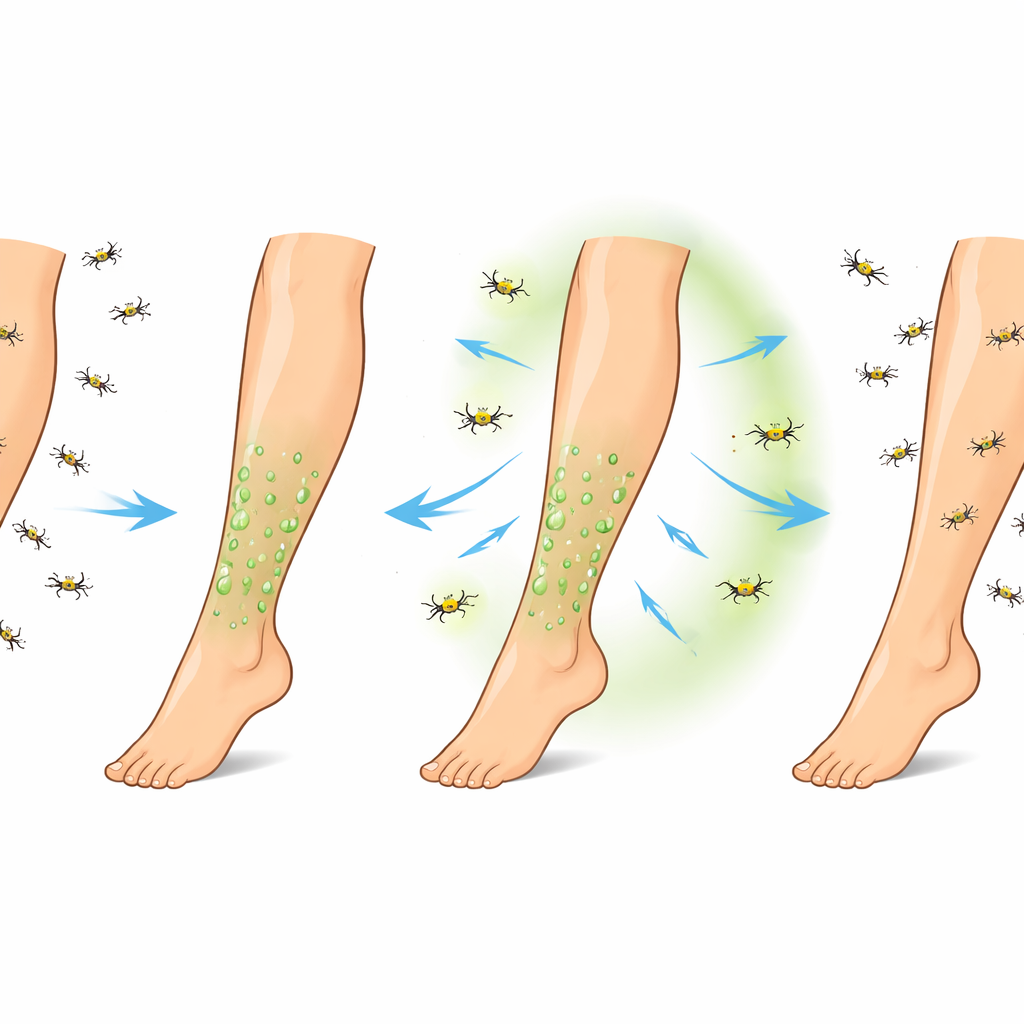
Real-World Use and Community Impressions
Because a successful repellent must be both effective and acceptable to users, the researchers also surveyed 119 community members—trial participants and their families—about a 6% catnip lotion. Respondents overwhelmingly reported that mosquitoes were a serious problem in their households and that malaria had recently affected many families. When they tried the catnip repellent, almost everyone said they liked the way it looked, smelled, and felt on the skin, and they felt it reduced mosquito bites. Nearly all indicated they would use the product and would be willing to buy it at prices that could be feasible if the lotion were produced locally. Together with strict safety checks and ethical oversight of the field trials, these responses suggest that a catnip-based repellent could realistically be adopted in the communities most at risk.
What This Means for Everyday Protection
To a non-specialist, the takeaway is straightforward: a lotion made with oil from locally grown catnip plants kept mosquitoes from landing on people almost as well as a widely used DEET product, over a four-hour evening window. Because the effective catnip concentration was relatively low, farmers would not need huge amounts of plant material to supply a community, making local production more practical and potentially cheaper than importing branded repellents. While catnip does not replace bed nets or other measures, it could add a valuable, plant-based line of defense for people who must be outdoors in the evening. In regions where mosquito-borne diseases are common and resources are limited, turning a familiar herb into an effective shield against bites may offer a promising, homegrown alternative.
Citation: Batume, C., Ssegujja, I., Kongai, G. et al. Evaluating repellence properties of a catnip essential oil-based mosquito repellent using the human landing catch method in Eastern Uganda. Sci Rep 16, 13272 (2026). https://doi.org/10.1038/s41598-026-42618-5
Keywords: mosquito repellent, catnip oil, nepetalactone, Eastern Uganda, malaria prevention