Clear Sky Science · en
Long-term associations between animal-source food consumption and breast and prostate cancer incidence based on cointegration and ARIMAX models
Why our everyday meals might matter decades later
Most of us think about tonight’s dinner in terms of taste, price, or nutrition labels, not what it could mean 15 or 20 years from now. This study asks a simple but far-reaching question: could long-term habits of eating meat and dairy be tied to how often breast and prostate cancers appear in a population many years later? By sifting through six decades of Italian data with tools usually used in economics, the authors look for slow-moving links between what a country eats and how often these two common cancers are diagnosed.
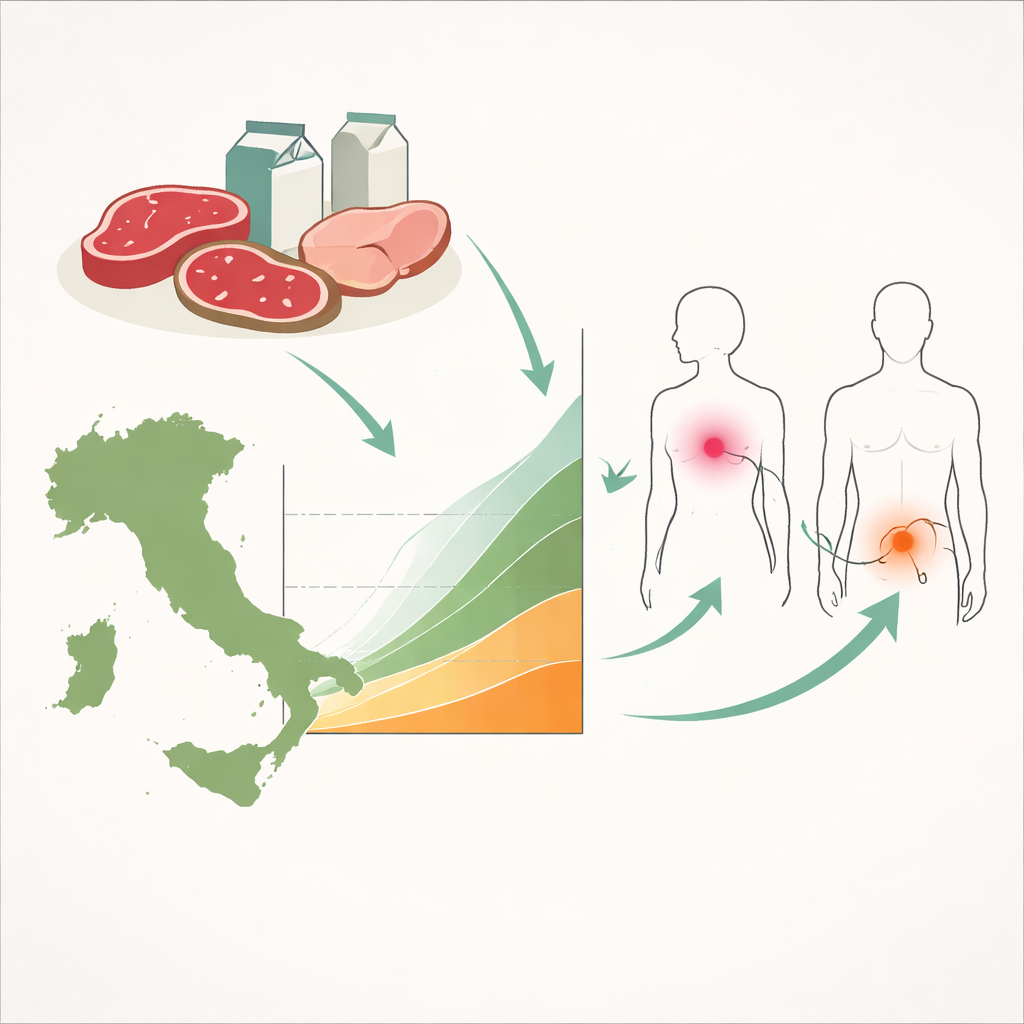
Following a country’s changing plate
Italy offers a natural test case because its diet has transformed dramatically over the past century. Earlier generations followed a largely plant-based Mediterranean pattern. From the 1960s onward, economic growth brought a rapid rise in meat and dairy intake. At the same time, breast and prostate cancer—both influenced by sex hormones—have become increasingly common. Instead of brief follow-up studies of individuals, the authors collected long national time series: meat and dairy consumption from 1961 to 2020 and cancer incidence rates from 1984 to 2020. They combined the meat and dairy figures into a single "animal product" index, making it easier to compare broad shifts in diet with cancer trends over time.
Looking for hidden long-term links
Simply lining up two rising curves can be misleading, because unrelated factors often increase together over decades. To avoid such false signals, the researchers used an approach borrowed from econometrics, the field that studies long-term movements in markets. First, they tested whether the diet index and the cancer rates moved together in a stable long-run pattern rather than just drifting upward on their own. For both breast and prostate cancer, they found evidence of such a shared long-term relationship. Next, they built forecasting-style models that let cancer incidence depend on its own past values plus earlier values of the diet index, searching specifically for delays of 8 to 20 years—the kind of time span needed for cancers to develop after long-term exposures.
Delays between diet and diagnosis
The models pointed to clear time lags. For breast cancer, changes in animal product consumption 18 years earlier were strongly and positively linked with current incidence. For prostate cancer, the best-fitting lag was 15 years, and the association was even stronger. In both cases, higher meat-and-dairy consumption decades before went along with higher cancer rates later, even after the models accounted for their own short-term ups and downs. The match between model predictions and the observed data was good, especially up to the early 2000s, suggesting that these delayed relationships capture a real part of how population-level risk has evolved.
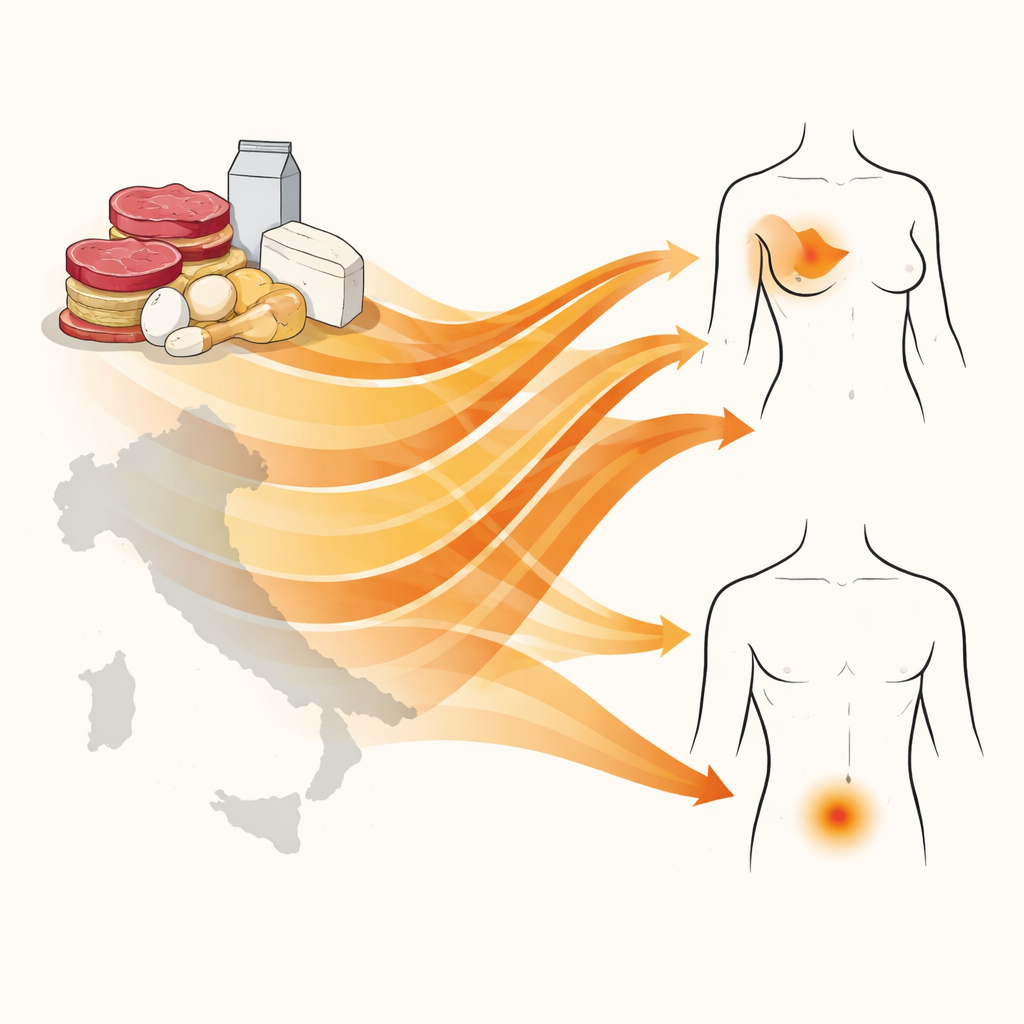
Piecing together possible biological stories
What might explain these patterns? The authors point to hormones and hormone-like substances naturally present in animal-source foods, especially estrogens, which are already known to influence the development of breast tumors and may also act early in prostate cancer. Long-term exposure through diet could help create a bodily environment that favors the growth of hormone-sensitive tumors, while interacting with other shifts in lifestyle such as rising obesity and sedentary behavior. The estimated delays of roughly one and a half to two decades fit with broader evidence that many cancers take years to progress from the first cellular changes to a diagnosable disease.
What we can and cannot conclude
Because this analysis relies on national averages rather than individual histories, it cannot prove that eating a certain food causes cancer in a given person. Important influences such as screening practices, new treatments, and other behaviors like smoking or alcohol use were not directly included, in part because the cancer data series are relatively short. Even so, the strength and consistency of the delayed links suggest that shifts in animal-based foods have been part of the backdrop shaping breast and prostate cancer patterns in Italy. For readers, the takeaway is not panic over individual meals, but an appreciation that long-term dietary choices—alongside other lifestyle factors—may quietly shape cancer risks many years down the line, and that carefully applied statistical methods can help reveal these slow-moving connections.
Citation: Spada, A., Tomaiuolo, M., Amorusi, E.P. et al. Long-term associations between animal-source food consumption and breast and prostate cancer incidence based on cointegration and ARIMAX models. Sci Rep 16, 11243 (2026). https://doi.org/10.1038/s41598-026-42068-z
Keywords: animal-source foods, breast cancer, prostate cancer, diet and cancer, time series analysis