Clear Sky Science · en
Effects of climate change on pollen season features of herbaceous species in the Milan area, Northern Italy
Why longer pollen seasons matter to you
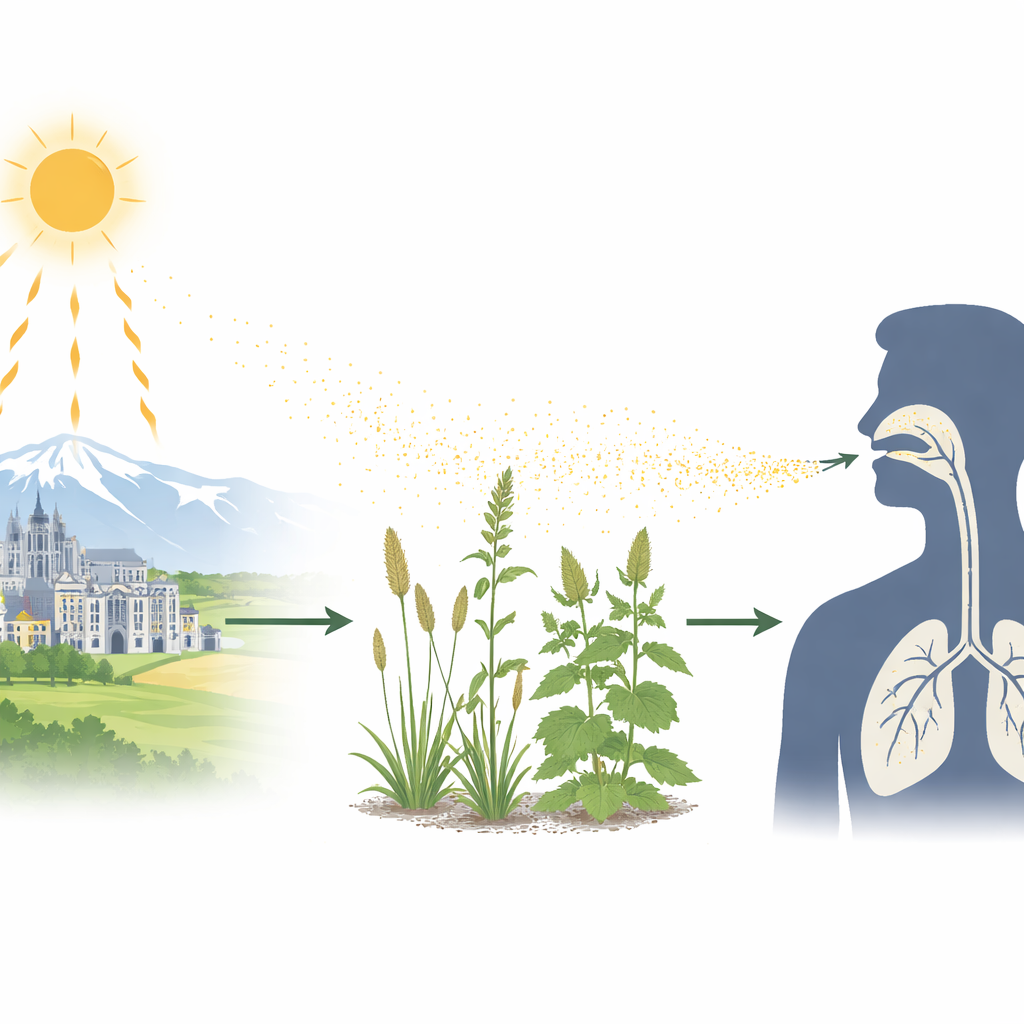
For millions of people with hay fever or asthma, the first sneeze of spring now seems to arrive earlier and linger longer each year. This study looks closely at one hotspot near Milan, in Northern Italy, to see how a warming climate is reshaping the timing and length of pollen seasons for common grasses and weeds. By pairing almost 30 years of pollen measurements with detailed weather records, the researchers show that rising temperatures are already altering when allergenic plants release their pollen—and may further extend and intensify exposure in the decades ahead.
Watching the air above Milan
Since 1995, an aerobiological station in Legnano, northwest of Milan, has been quietly sampling the air with a specialized pollen trap. Technicians count the captured grains under a microscope and track them day by day for key herbaceous plant groups that are important allergy triggers in Europe: grasses (Poaceae), nettles (Urticaceae), ragweed (Ambrosia), mugwort and its relatives (Artemisia), and a few smaller families. For each year and plant group, the team defined the “main pollen season” using when cumulative pollen totals crossed fixed percentage thresholds, then calculated the start and end dates, duration, peak day and level, and how many days pollen was clearly detectable. These biological measures were then compared with daily temperature, humidity, rainfall, wind, and solar radiation from a high‑resolution European climate reanalysis.
How warmer weather shifts the calendar
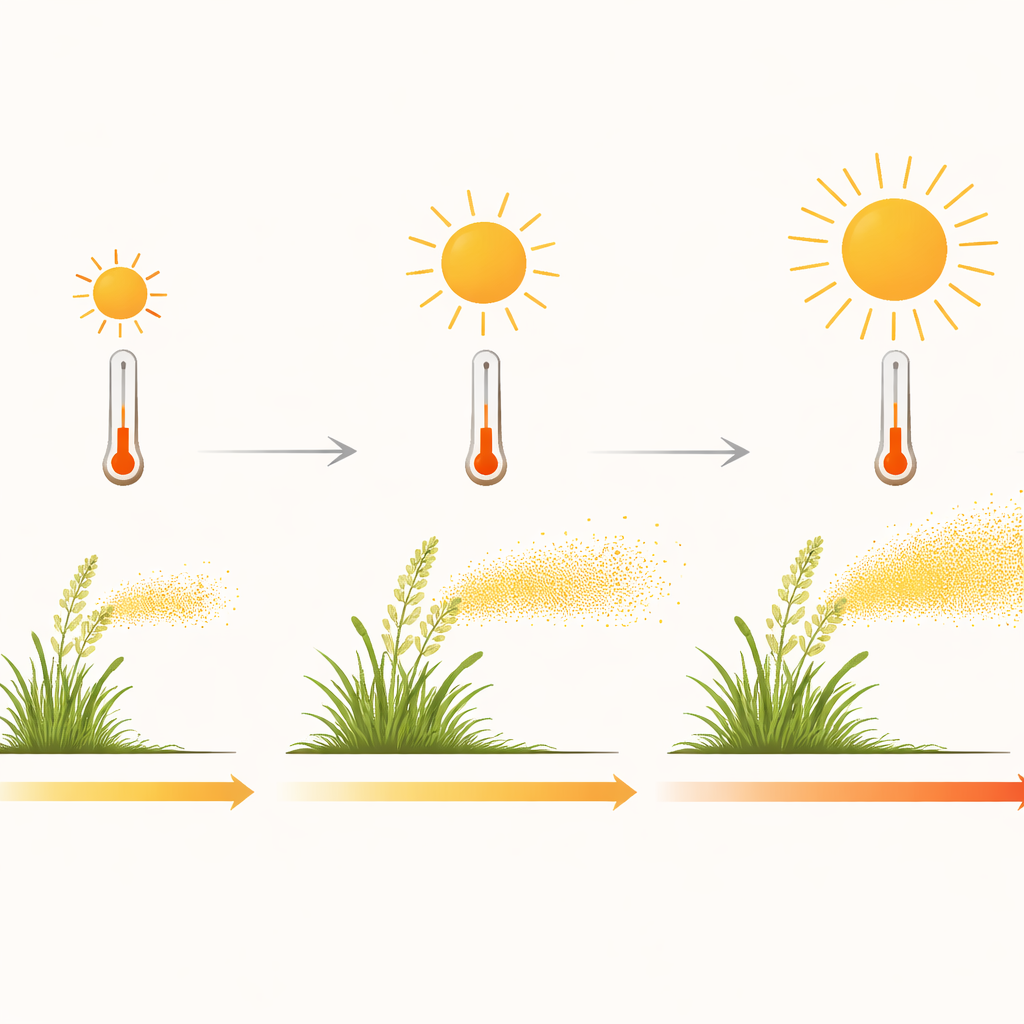
The clearest story to emerge was the role of temperature. In the Legnano area, annual average temperatures have risen sharply since the mid‑1970s, and simple trend models suggest they could climb roughly 3 °C more over the next 60 years. This warming is already linked to pollen arriving earlier: for grasses and nettles, higher seasonal temperatures were consistently associated with an earlier start of the pollen season. For some weeds, such as ragweed and nettles, warmer years also tended to mean longer seasons, particularly when combined with higher levels of sunlight and lower humidity. The researchers found that other weather factors—like rainfall and humidity—mainly influenced when the season ended, with wetter, more humid conditions generally bringing an earlier close for certain weeds like Artemisia and Ambrosia.
Projecting future pollen seasons
To explore what might lie ahead, the team used simple linear relationships between weather and pollen timing, together with the observed climate trends, to build scenarios 20, 40, and 60 years into the future. Under a continued warming of about 3 °C, the main pollen season for grasses and nettles in the Milan area is projected to start roughly 12 to 16 days earlier than in 2022. For nettles, the total season could lengthen by nearly three weeks, with more days each year when pollen is present in the air. Weed genera such as Artemisia and Ambrosia also show signs of lengthening seasons under hotter, drier conditions, though rainfall can shorten their airborne period by washing pollen out of the atmosphere or altering plant growth. Overall, the projections point toward earlier and often longer windows of exposure for several important allergenic plants.
Local twists in a global story
Although temperature emerged as the dominant driver, the study also highlights how local ecology and human activity complicate the picture. For example, the response of Artemisia pollen to warming in Northern Italy differs from that seen in cooler, wetter regions such as Poland, likely because different species thrive under different moisture and light conditions. In the Milan area, invasive Artemisia species that favor dry, sunny sites may benefit from climate trends, contributing to later‑season pollen peaks. Management efforts also matter: regional campaigns to mow ragweed before flowering, as well as accidental introduction of a beetle that feeds on this weed, have reduced its pollen in some years, dampening straightforward links between weather and airborne counts.
What this means for public health
By showing that pollen seasons near Milan are already starting earlier and often lasting longer, and by projecting shifts of up to two weeks over coming decades, the study underscores that climate change is not just an abstract temperature curve—it is reshaping the daily exposure of people with allergies. Longer and earlier seasons for grasses and weeds mean more days when sensitive individuals may experience symptoms and seek medical care, increasing both personal discomfort and healthcare costs. While the authors caution that their projections are based on simple, linear assumptions and cannot capture every ecological twist or future policy change, their findings point to a clear need for sustained monitoring networks and better local forecasts. Such systems can help clinicians, public health agencies, and patients anticipate high‑risk periods and adapt to a world where allergy seasons increasingly reflect our changing climate.
Citation: Bonini, M., Cardarelli, E., Faccini, M. et al. Effects of climate change on pollen season features of herbaceous species in the Milan area, Northern Italy. Sci Rep 16, 11260 (2026). https://doi.org/10.1038/s41598-026-41641-w
Keywords: climate change, pollen season, allergic rhinitis, ragweed and grasses, Northern Italy