Clear Sky Science · en
In vitro dietary analysis of tropical browses and pasture consumed by goats
Feeding Goats in a Warming World
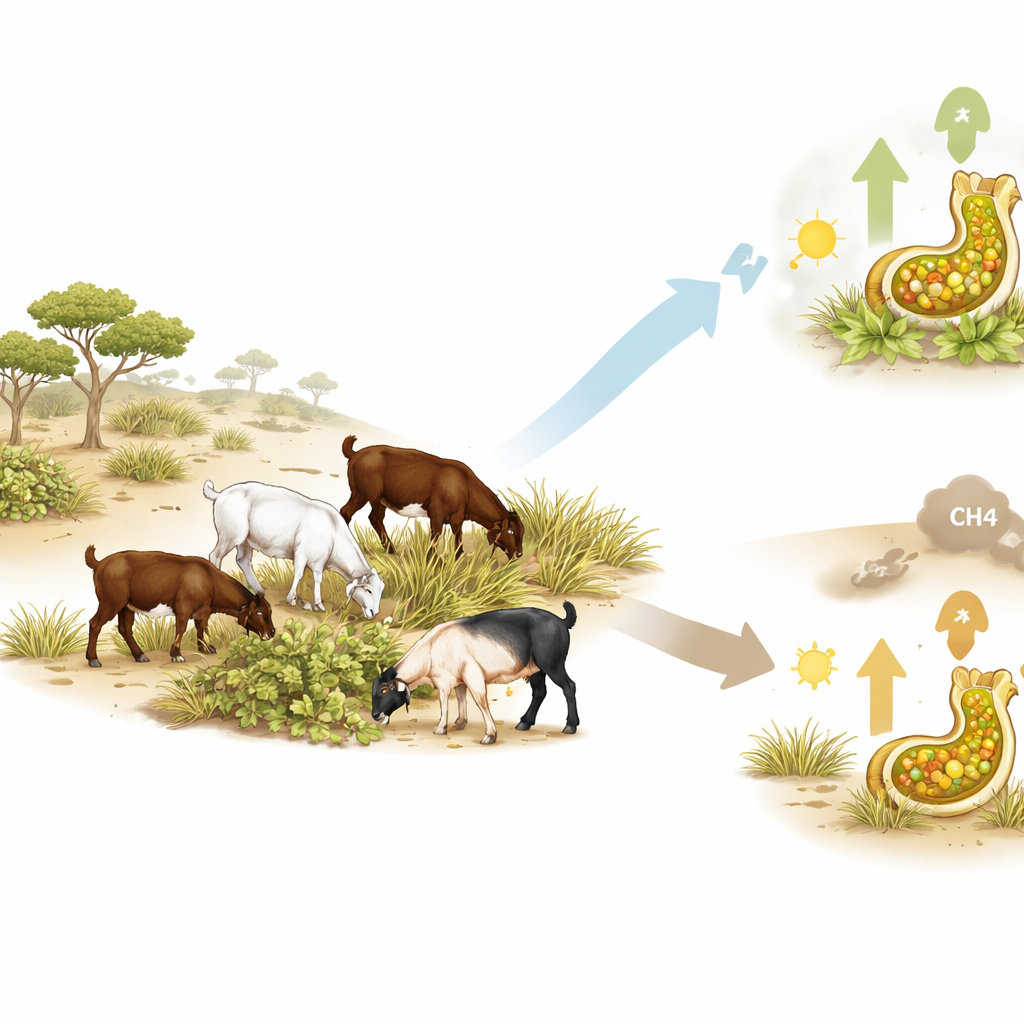
As the planet warms and dry regions spread, goats are becoming one of the most important farm animals for supplying meat and milk. Goats thrive on tough shrubs and coarse grasses where few other livestock can survive. But like all grazing animals, they release methane, a potent greenhouse gas, when their feed is digested. This study asks a simple but powerful question: can we choose the right mix of shrubs and pasture so that goats stay productive while their stomachs generate less methane?
What the Researchers Wanted to Find Out
The team focused on goats living in tropical, dry parts of Queensland, Australia—regions expected to expand as climate change advances. In these landscapes, goats commonly browse woody plants as well as graze grasses. The scientists collected 17 types of browse (shrubs and trees) and eight pasture grasses that goats typically eat. Using a laboratory system that mimics the goat’s stomach, they measured how well each plant was broken down, how much gas and energy-rich fermentation products were formed, and how much methane was released.
Testing Shrubs and Grasses Side by Side
Not all plants behaved the same in the artificial “goat stomach.” Among the shrubs, Owenia acidula and Eucalyptus coolabah stood out. They supported good digestion and produced lots of the short-chain acids that fuel the animal, yet generated relatively little methane for the amount of feed digested. Among the grasses, a fresh green oat forage (Avena sativa) and a hardy tropical grass called Chloris gayana (sold as the Reclaimer variety) had the most promising balance of high digestibility, strong energy output, and comparatively lower methane intensity. Other species, particularly some Acacia shrubs and poorer-quality grasses, were harder to digest and tended to give off more methane per unit of useful feed.
Mixing Feeds for Better Outcomes
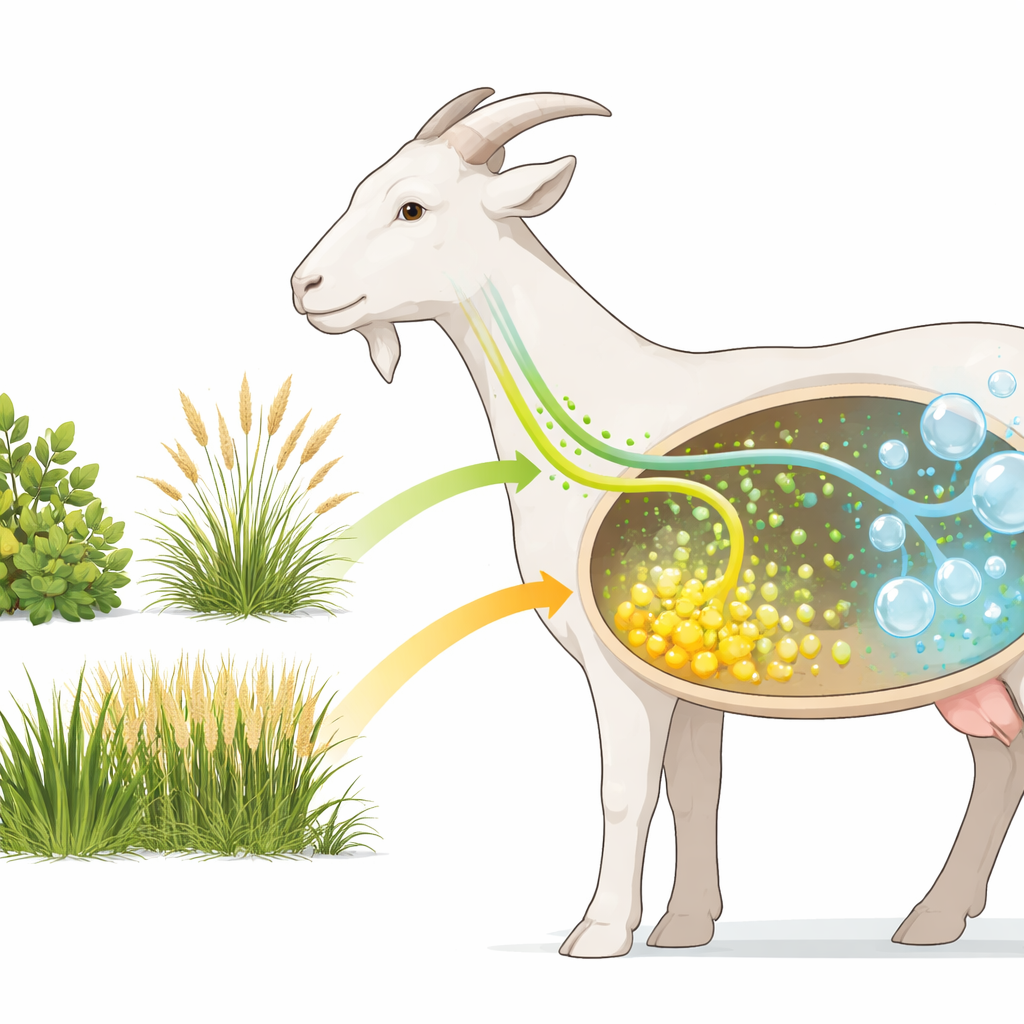
Real goats rarely eat a single plant, so the researchers created mixed diets in the lab. They combined the two best shrubs (Owenia acidula and Eucalyptus coolabah) with the two best grasses (Avena sativa and Chloris gayana Reclaimer) in different proportions, then repeated the digestion tests. Blends that paired fresh oat forage with Owenia acidula, especially at 75:25 and 50:50 ratios, were the clear winners. These mixtures were digested more completely, produced more energy-rich acids, and—crucially—released much less methane for each gram of digested feed. Some combinations that were heavy in Eucalyptus coolabah or the fibrous Chloris grass, by contrast, slowed digestion and either suppressed fermentation overall or produced disproportionately high methane per unit of useful feed.
Why Shrubs Can Help Cut Emissions
The study also hints at why certain browses help rein in methane. Shrubs generally contained more protein and fats and less tough fibre than the grasses, but their chemistry was more complex. Many tropical shrubs, including Eucalyptus and Acacia species, are rich in tannins and other plant chemicals that can reshape the community of microbes in the rumen. These compounds may both curb gas production and shift fermentation toward pathways that yield more useful energy and less methane. However, too much of some compounds or too much fat can also depress digestion, so the key is finding the right balance between shrubs and grasses rather than relying on any one species alone.
What This Means for Goat Farmers and the Climate
For farmers in hot, dry regions, the findings suggest that smartly designed “silvopasture” systems—where goats graze both shrubs and grasses—could boost productivity while shrinking the climate footprint of each animal. In particular, mixes that include Owenia acidula with good-quality forages like fresh oats, or practical stand-ins such as resilient Chloris gayana Reclaimer, appear especially promising. If future on-farm trials confirm these laboratory results, choosing the right shrubs and pasture could help turn goats into even more climate-smart livestock, delivering meat and milk with less methane released into the atmosphere.
Citation: Moradi, M., Ni, M., Beasley, A.M. et al. In vitro dietary analysis of tropical browses and pasture consumed by goats. Sci Rep 16, 11079 (2026). https://doi.org/10.1038/s41598-026-41322-8
Keywords: goat nutrition, tropical pastures, methane emissions, silvopasture, rumen fermentation