Clear Sky Science · en
Novel SLC16A2 mutations impair thyroid hormone transport and drive neurodevelopmental deficits in Chinese patients with allan-herndon-dudley syndrome
When a Hormone Highway to the Brain Breaks
Thyroid hormones are best known for controlling weight and energy, but they are also critical architects of the developing brain. This study examines why some children with a rare condition called Allan–Herndon–Dudley syndrome grow up with profound movement and learning difficulties. By uncovering how specific genetic changes block thyroid hormone from reaching the brain, the researchers shed light on the hidden chemistry of early brain wiring and point to new ways future treatments might be designed.
A Rare Childhood Disorder in Focus
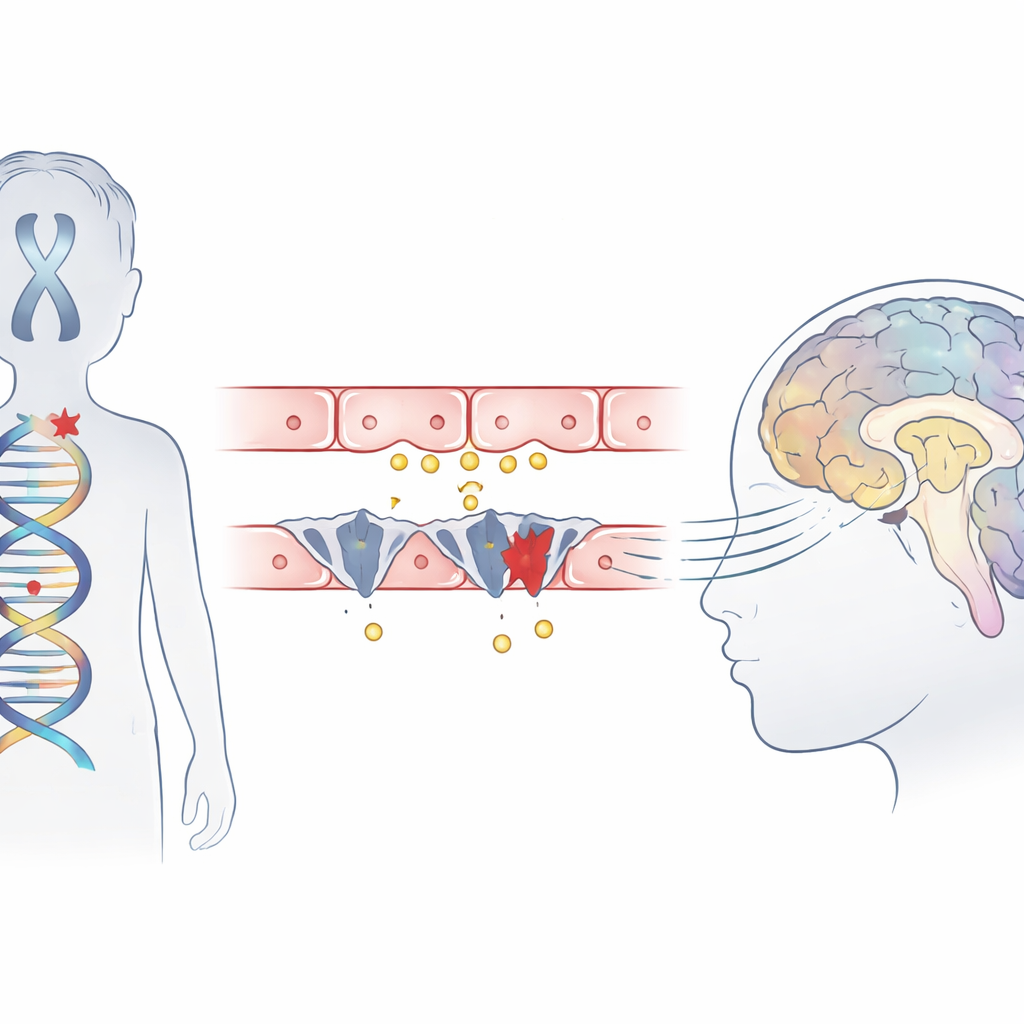
Allan–Herndon–Dudley syndrome is an inherited condition that mainly affects boys and leads to severe intellectual disability, inability to sit or walk independently, and delayed brain wiring seen on MRI scans. Although blood tests show an unusual thyroid hormone pattern, the gland itself is not the main problem. Instead, earlier work suggested that a transporter protein, called MCT8, which normally ferries the active hormone into brain cells, is missing or faulty. This study reports three boys from unrelated Chinese families who all showed classic symptoms of the syndrome and explores exactly how their mutations interfere with hormone entry into the brain.
Genes That Block the Hormone Gate
Using exome sequencing, the team searched the children’s DNA and identified damaging changes in a single gene, SLC16A2, which encodes the MCT8 transporter. Two boys carried newly discovered “truncating” mutations that cut the protein short, and the third had a mutation at a key splice site where gene segments are normally joined. Computer models of protein structure suggested that one of these changes chops off part of a critical helical segment that helps create the hormone-binding pocket, preventing the transporter from working. All three variants were absent from large population databases and lay in parts of the gene that are strongly conserved across many species, strengthening the case that they are truly harmful.
Signals in Blood Cells Reveal a Starving Brain
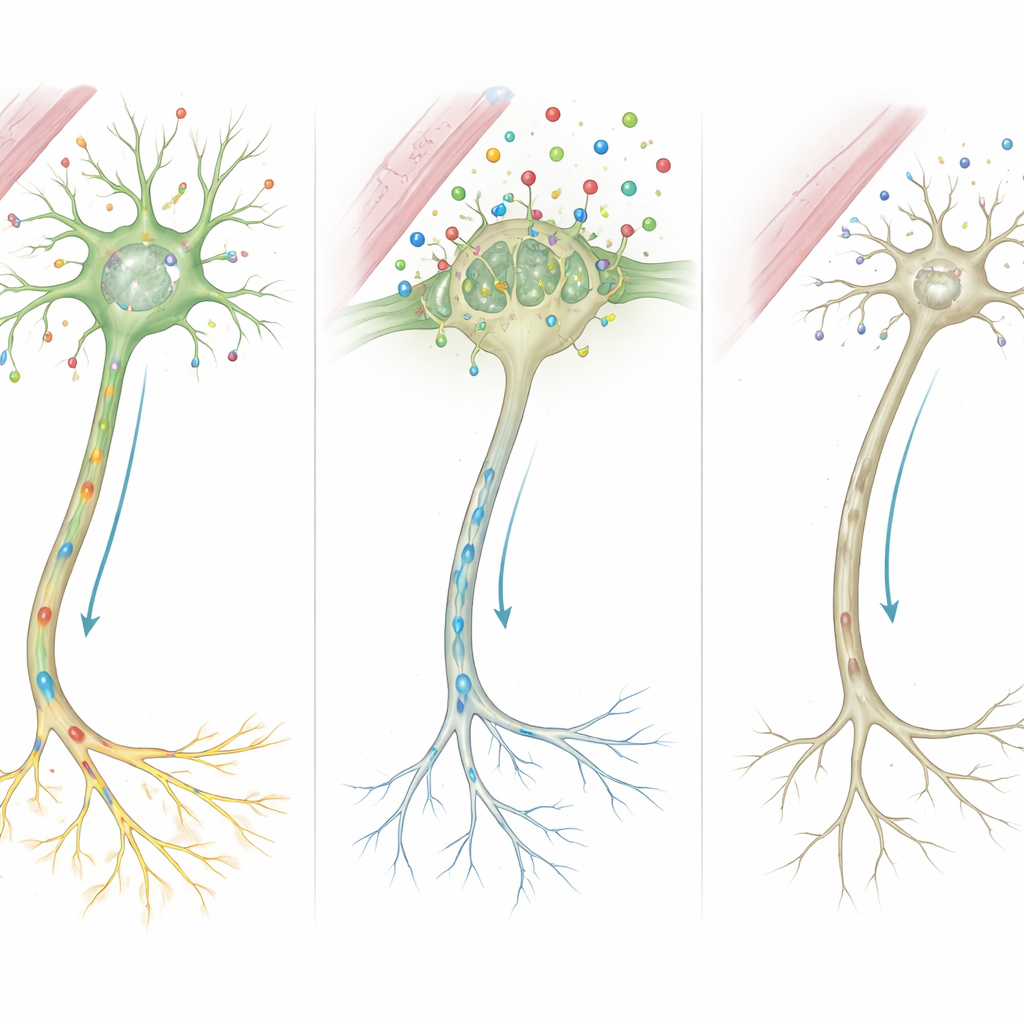
To see how these mutations play out in living cells, the researchers measured gene activity in blood cells from the children, their parents, and healthy controls. The SLC16A2 gene itself was expressed at much lower levels in the affected boys, consistent with the defective protein being degraded. At the same time, other genes that respond to local thyroid hormone levels showed a telltale pattern: DIO2 and HR, which often ramp up when cells sense too little hormone, were increased, while Nrgn and KIF9, which help guide nerve growth, synapse formation, and myelination, were sharply reduced. Together, these shifts paint a picture of tissues trying to compensate for poor hormone entry, yet failing to support normal brain development.
From Molecules to Miswired Circuits
Putting these clues together, the authors propose a detailed chain of events. Because MCT8 is missing or truncated, far less thyroid hormone crosses into brain cells during crucial periods of growth. Starved of this signal, the cell’s control center cannot properly switch on genes that shape the skeleton of nerve fibers and the strength of synapses. Supporting cells that wrap nerves in insulating myelin, and those that recycle chemical messengers, also function poorly. Over time, these microscopic defects accumulate into the visible features seen in patients: delayed myelination on MRI, stiff or weak muscles, movement disorders, and severe cognitive impairment.
Building a Platform for Future Therapies
Beyond describing three new mutations, the study reinforces a clear link: the more severely the SLC16A2 gene is damaged, the more profound the disability. It also establishes a toolbox for future work, including patient-derived stem cell lines that can be turned into nerve cells in the lab. For non-specialists, the key takeaway is that the brain depends on timely delivery of thyroid hormone through a specific molecular gate. When that gate fails, development can be permanently derailed. Understanding this pathway in such depth offers hope that one day therapies—perhaps targeting the blood–brain barrier, boosting alternative transporters, or correcting the gene itself—could restore at least part of this vital hormone highway.
Citation: Sun, X., Wang, C., Lin, L. et al. Novel SLC16A2 mutations impair thyroid hormone transport and drive neurodevelopmental deficits in Chinese patients with allan-herndon-dudley syndrome. Sci Rep 16, 11476 (2026). https://doi.org/10.1038/s41598-026-40703-3
Keywords: Allan-Herndon-Dudley syndrome, thyroid hormone transport, MCT8 deficiency, neurodevelopmental disorders, SLC16A2 mutations