Clear Sky Science · en
Flyway population increase and emergence of new wintering grounds with climate change in an Arctic-breeding goose
Why winter geese matter to us
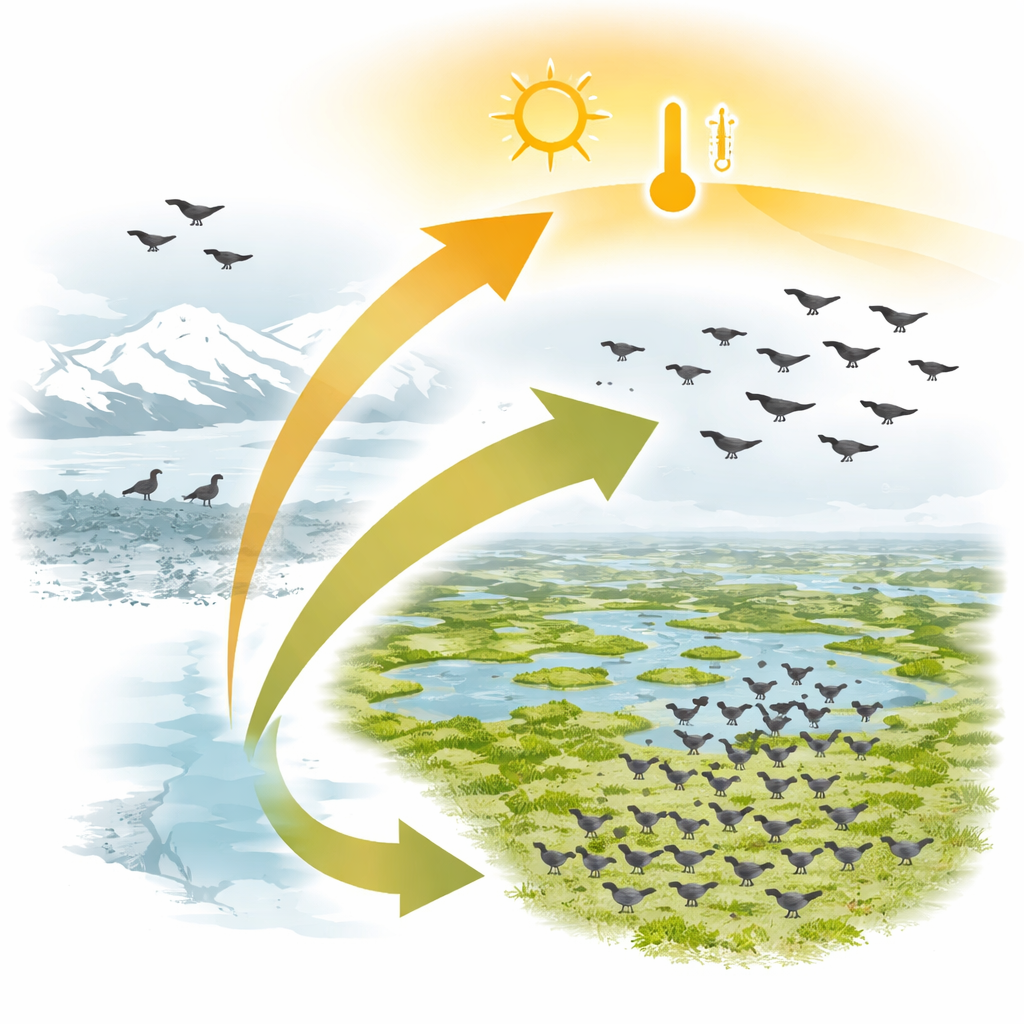
On winter mornings in eastern Hungary, the sky over the steppe now darkens with tens of thousands of geese where only a few thousand flew three decades ago. This study asks a simple but far-reaching question: why are so many more Arctic-breeding geese now stopping and even spending the whole winter in one particular wetland, and what does that tell us about a warming climate and changing landscapes?
A long watch over a famous goose stop
Researchers followed the greater white-fronted goose, a widespread Arctic species, along one of its key migration routes known as the Pannonic flyway. These geese breed in northern Siberia and travel thousands of kilometers to winter in central Europe. Hortobágy National Park in eastern Hungary, a vast mosaic of grasslands, marshes and fishponds, is the first major wetland they encounter after crossing the Carpathian Mountains. From 1989 to 2019, one observer counted geese every two weeks as they left their night roosts on fishponds at dawn and returned at midday, building an unusually detailed 31‑year record of how many birds used the site in autumn, winter and spring.
More birds and a new winter home
The counts revealed a dramatic rise in goose numbers. Spring peaks grew from fewer than 2,000 birds at the beginning of the study to well over 15,000 in most years after 2008, while autumn peaks climbed from a few thousand to more than 25,000 birds by the late 2010s. Most striking was the change in midwinter. Until the early 2000s, almost all geese left Hortobágy by December for other sites in western Hungary or farther west. Starting around 2007, many began to stay. December counts rose from almost zero to about 10,000 birds, and in some winters up to 30,000 remained. January numbers also increased sharply. The local winter population grew faster than the total size of the flyway population, meaning a rising share of all the geese on this route now choose Hortobágy as a winter refuge.
How warmer winters tip the balance
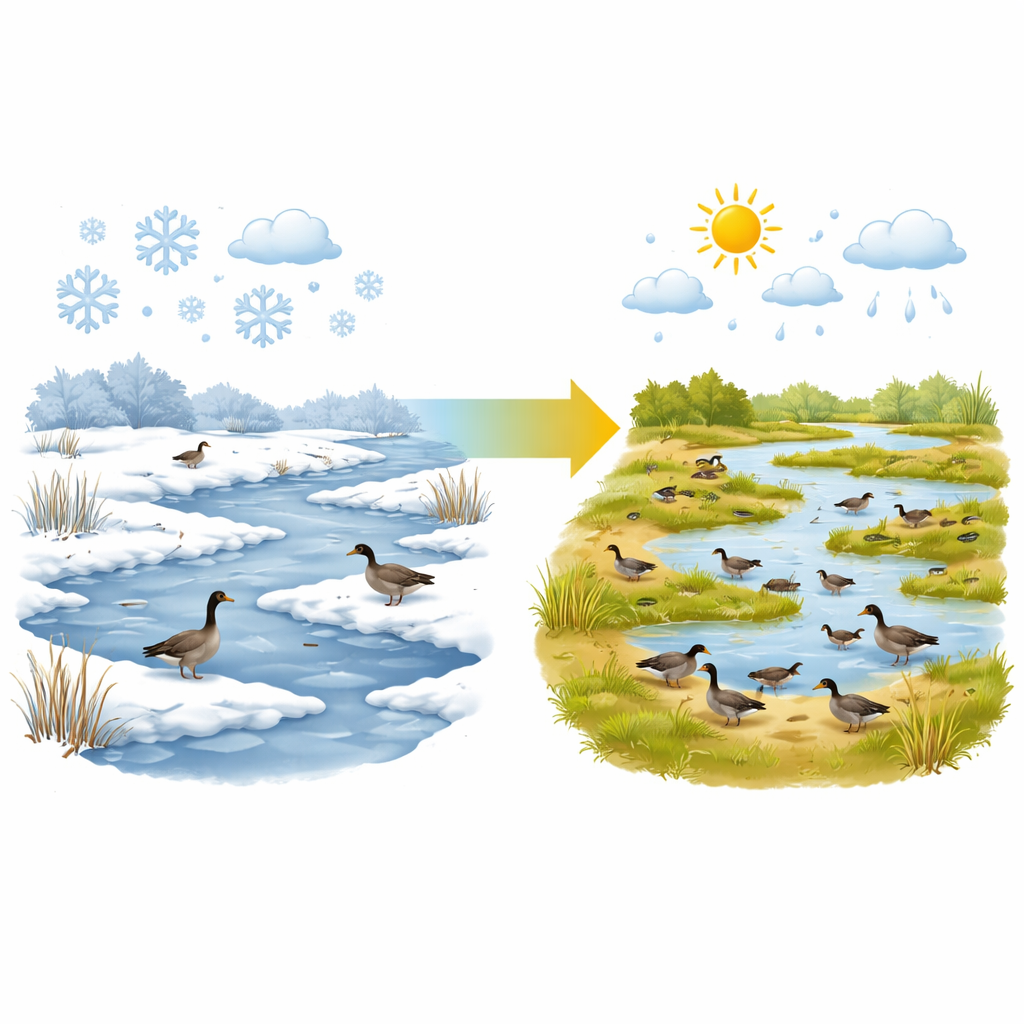
To find out why, the team compared goose numbers with detailed weather records. They found that mild winters play a central role. In cold winters with many frost days and frequent snow, fewer geese stayed at the site. In milder winters, with higher average temperatures and fewer frozen days, more geese remained. Over the decades, winters in the region have warmed, and unusually mild seasons have become more common. The researchers also saw that in late winter and early spring, higher temperatures and snowy days tended to push birds to move on toward their Arctic breeding grounds sooner, reducing local counts. Overall, the analysis shows that short-term weather and long-term warming combine to favor staging and overwintering in Hortobágy.
Landscape and hunting: side stories, not main drivers
The study also tested other possible explanations. Using European land-cover maps, the authors examined changes in grasslands, croplands and wetlands within 5, 10 and 20 kilometers of the central fishponds. Over nearly three decades, only small shifts were detected, such as modest increases in pastures and marshes, affecting well under 2% of the surrounding area. These subtle changes were too limited to account for the huge rise in goose numbers. Agricultural statistics showed that the area of maize and wheat—crops whose leftover grain geese often eat—actually declined over time, and higher crop area was linked with slightly fewer geese, not more. Hunting data painted a similar picture: the number of geese shot in nearby counties increased, and geese counts at Hortobágy also rose, but this likely reflects hunters following the birds rather than hunting pressure driving birds into the park.
What this means for people and wildlife
Put simply, this work shows that warmer, less snowy winters have turned Hortobágy from a short stopover into a growing winter home for Arctic geese. Climate change, more than changing fields or hunters’ guns, is reshaping where these birds spend the coldest months. As numbers continue to grow, managers will need to balance the needs of wildlife with agriculture and hunting. The authors suggest creating well-managed “goose fields” near safe roosting ponds inside the park so that birds can feed without disturbance and with less impact on surrounding farms. Beyond one Hungarian wetland, the study offers a clear, real-world example of how rising temperatures are quietly redrawing the migration map of a long-distance traveler.
Citation: Gyüre, P., Lengyel, S. Flyway population increase and emergence of new wintering grounds with climate change in an Arctic-breeding goose. Sci Rep 16, 11878 (2026). https://doi.org/10.1038/s41598-026-40447-0
Keywords: climate change, bird migration, geese, wetland conservation, Hortobagy National Park