Clear Sky Science · en
An exploratory study on shared sanitation and equity in peri-urban India
Why Shared Toilets Matter for Everyday Life
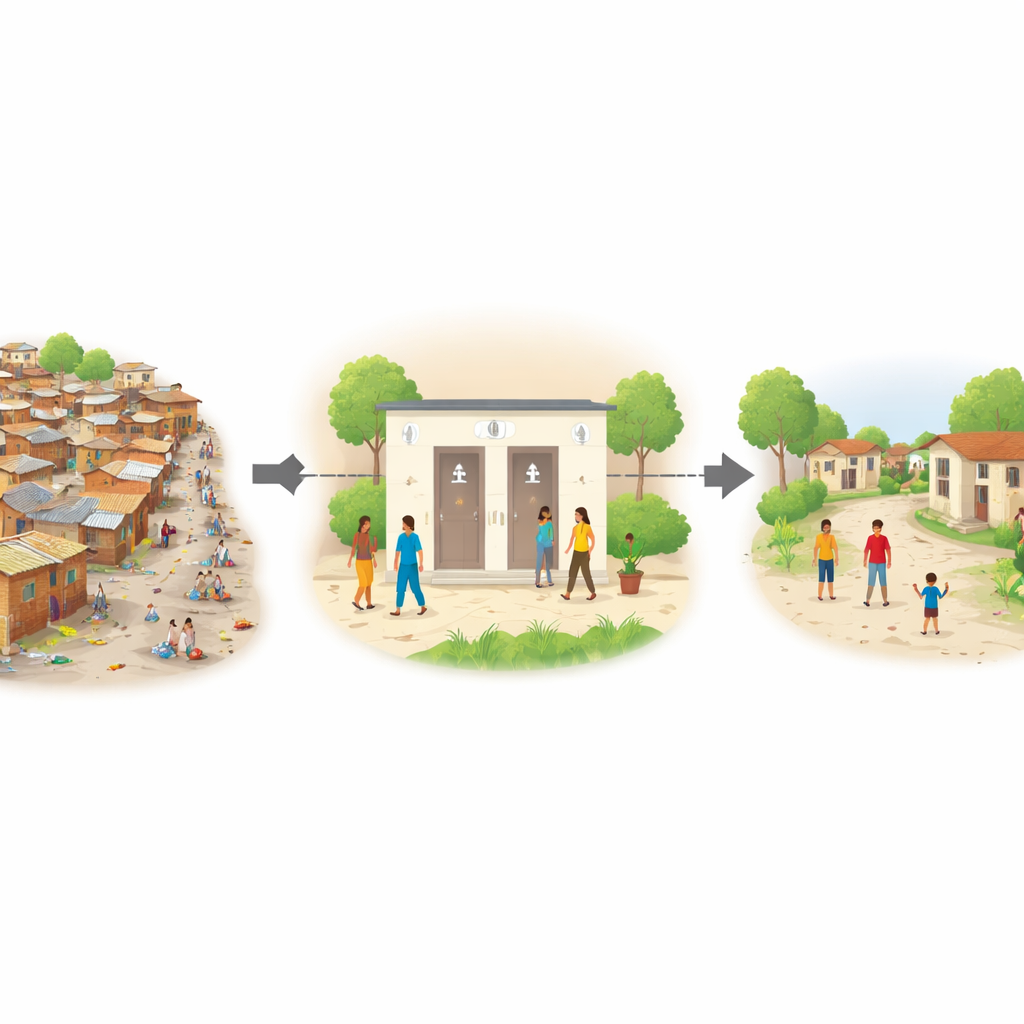
For many families living on the edges of Indian cities, having a private toilet at home is still out of reach. Even when a household toilet exists, it may be cramped, smelly, or lack water and light. This study looks at a simple but powerful idea: well-run, free shared toilets in the neighborhood might help close this gap, making daily life safer and more dignified—especially for women, children, and low-wage workers who often have the fewest options.
Big Promises, Uneven Results
India’s massive Swachh Bharat Mission has led to over a hundred million household toilets being built and has reduced open defecation nationwide. Yet this progress has not been evenly shared. People in crowded informal settlements and low-income peri-urban areas often lack the space or money to build and maintain a decent toilet at home. Some cannot afford upfront construction costs or later expenses such as emptying pits. Others have flimsy structures with broken doors, poor air flow, and no running water. The authors frame this as part of an “inequality paradox”: a program that improves overall conditions can leave the most disadvantaged people relatively further behind when their specific needs are overlooked.
Listening to Users in Two Communities
To understand how high-quality shared toilets might help, the researchers interviewed 39 users of two community toilet blocks in peri-urban Jharkhand. These facilities, run by a local non-profit, were unusual for the area: they were free to use, staffed, cleaned several times a day, supplied with water and soap, and had separate, lockable spaces for men and women. Most participants lived within a five-minute walk. Some had no usable toilet at home; others had basic toilets that worked only in emergencies or only for urination. Through detailed one-on-one conversations, the team explored how people used these facilities both when they were at home and when they were out for work, school, errands, or leisure.
Why People Use Shared Toilets Even When Home
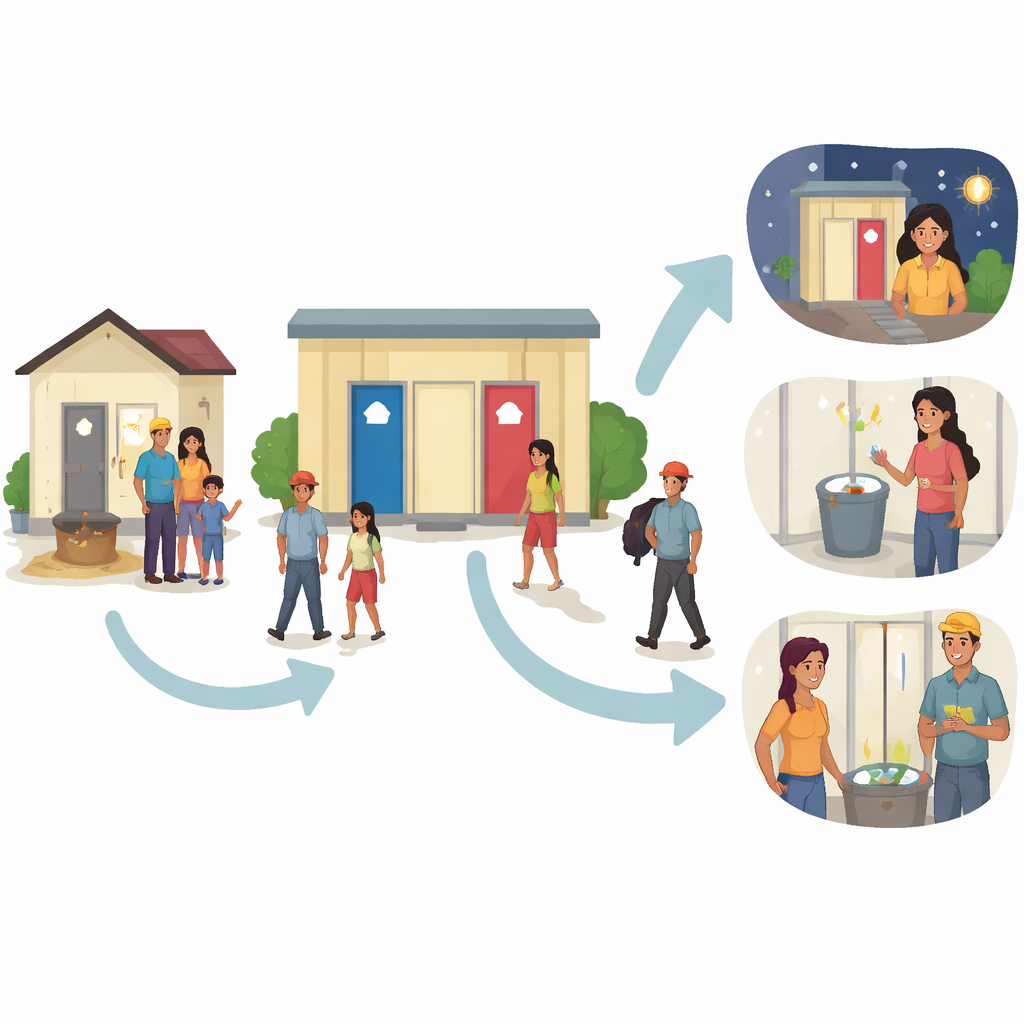
The study found that shared toilets played three different roles for people while they were at home. For those without any home toilet, the community block was essential: it reduced long walks, fear of being seen, and threats such as harassment or bites from animals and insects. For others, the shared toilets were preferred over their own because they were cleaner, cooler, better lit, and had reliable water. Using the free community facilities also helped prevent shallow home pits from filling quickly, which would be costly to empty. Finally, even those who mainly used their home toilet relied on the shared blocks as a backup when their bathroom was occupied, when guests visited, or when water was unavailable. At night or in emergencies, many still had to fall back on open defecation because the shared blocks were closed, underscoring the limits of current arrangements.
Life Away from Home: A Hidden Sanitation Gap
Outside the home, nearly all participants described serious gaps in toilet access. Markets, work sites, and public spaces often had no toilets at all, forcing people to hurry their errands, hold their urine or stool, or avoid drinking water. When facilities existed, they were frequently filthy, not separated by gender, or lacked water, so people used them only in dire emergencies. Women in particular preferred to return home or use the neighborhood shared facility when possible, but that was not always practical. Some workers and students openly admitted to defecating in the open when away from home, despite feeling that it was unclean and unsafe. The study shows that the need for clean, safe shared sanitation extends far beyond the doorstep.
What This Means for Fairness and Future Goals
The authors argue that good shared toilets are not a poor substitute for household toilets, but an essential partner to them. In these communities, staffed, clean, free-to-use facilities clearly improved people’s ability to find a safe, private place to relieve themselves, whether or not they had a toilet at home. Yet current global monitoring systems classify all shared toilets as a “lower” level of service, regardless of quality. The researchers suggest revising these standards to recognize well-maintained shared toilets as a legitimate part of universal sanitation. For policymakers, the message is straightforward in lay terms: if the goal is for everyone to have a safe, dignified place to go—where they live, work, shop, and study—then investing only in private home toilets will never be enough. High-quality shared facilities must be part of the solution.
Citation: Pitchik, H.O., Jain, A., Kupfer, M. et al. An exploratory study on shared sanitation and equity in peri-urban India. Sci Rep 16, 11011 (2026). https://doi.org/10.1038/s41598-026-40069-6
Keywords: shared sanitation, peri-urban India, sanitation equity, public toilets, Swachh Bharat Mission