Clear Sky Science · en
Identifying key influencing factors and their hierarchical structure for green supply chain management in China’s aerospace manufacturing using DEMATEL-ISM
Why greener airplanes start long before takeoff
Most people think of jet engines and fuel when they picture aviation’s impact on the environment. But behind every aircraft is a vast web of factories, suppliers, customers, and regulators whose choices quietly shape how “green” flying can become. This paper looks inside that hidden web for China’s aerospace sector and asks a simple, practical question: which forces matter most if we want cleaner skies without sacrificing safety, innovation, or economic growth?
Looking at the whole picture, not just the plane
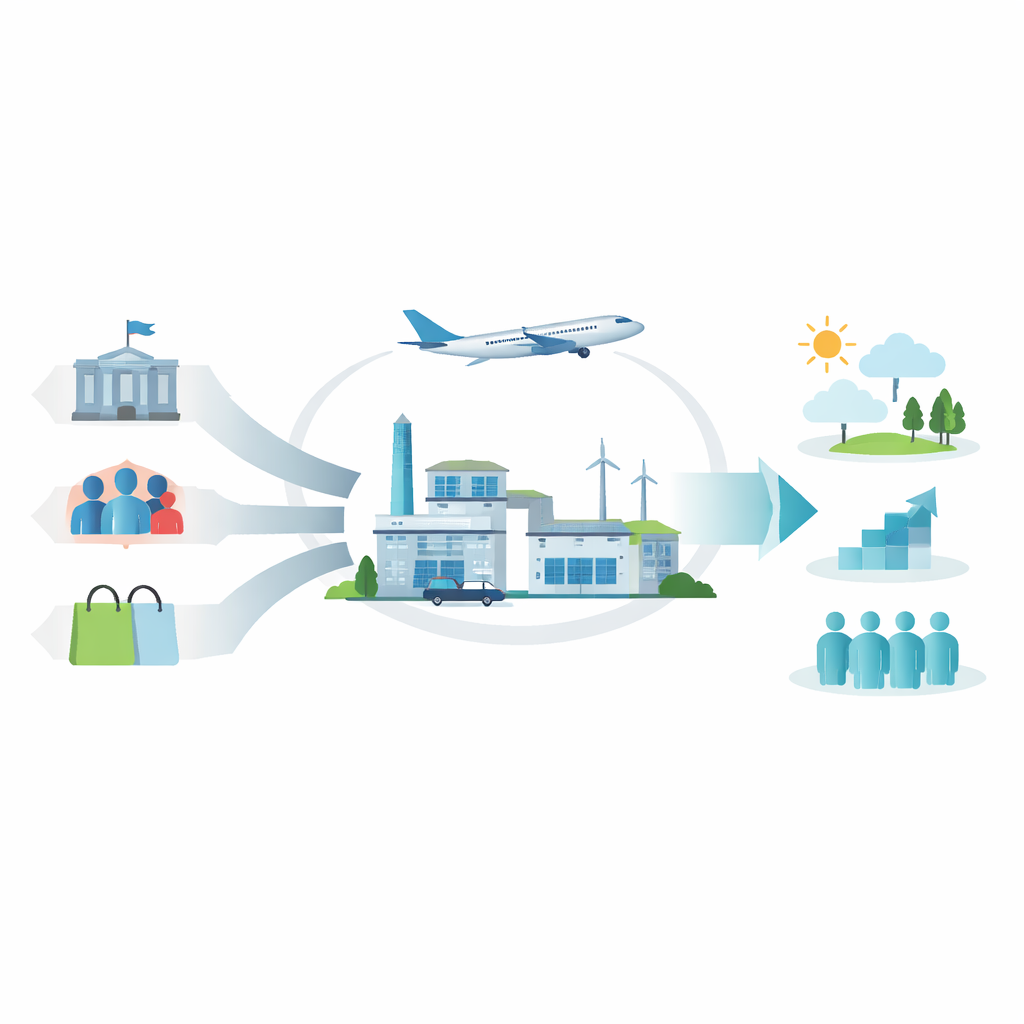
The authors treat aerospace manufacturing as a complex system rather than a single company or technology. They use the “triple bottom line” idea, which weighs environmental protection, economic performance, and social well‑being together. From hundreds of studies on green supply chains in different industries, they distilled 37 possible influences and then narrowed them to 14 that best fit the aerospace world. These range from government policies and public attitudes to managers’ mindsets, factory practices, and how willing customers are to support green products. The goal is not just to list these factors, but to see how they interact and form a hidden hierarchy of causes and effects.
Turning expert judgment into a map of influence
To uncover this structure, the researchers surveyed 150 experts across the aerospace ecosystem in China: industry managers, academics, policy makers, recycling specialists, and informed consumers. Using two systems‑analysis tools, DEMATEL and ISM, they converted expert opinions about “who influences whom” into numbers and diagrams. DEMATEL measures how strongly each factor pushes on others and how strongly it is pushed in return, identifying “drivers” and “followers.” ISM then arranges these factors into layers, from deep root causes at the bottom to surface‑level outcomes at the top. Together, these methods transform a tangle of opinions into a clear, multi‑level map that shows where interventions are likely to have the biggest payoff.
Five layers from hidden drivers to visible actions
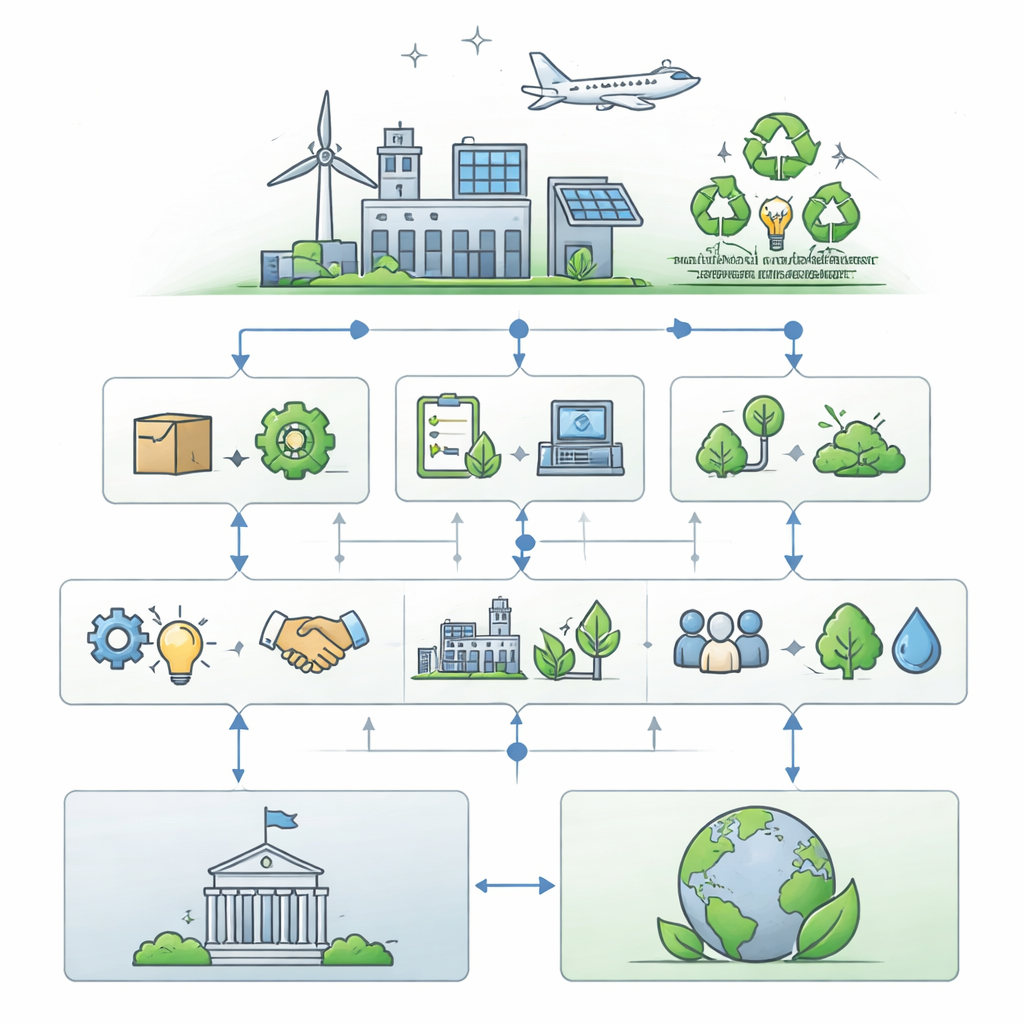
The analysis reveals five distinct levels of influence. At the deepest level sits a single powerhouse: government subsidies and policy support. This factor exerts strong pressure on the rest of the system, shaping company strategies, management priorities, and even consumer behavior. Above it lie middle layers made up of corporate green strategies, the environmental awareness of top executives, and how companies manage and communicate their environmental performance. These “linkage” factors translate policy and social signals into real organizational capabilities. At the surface are more immediate, visible elements such as advanced green technologies, specific tools for managing green supply chains, and the degree of cooperation between companies and customers. These surface factors are the ones most people see, but the study shows they depend heavily on what happens in the deeper layers.
Seven levers that really move the system
Not all 14 influences are equally important. By combining the strength and direction of each factor’s impact, the authors identify seven key levers. On the public and policy side, government support and broader environmental culture stand out. Inside companies, three forces are central: whether a firm adopts an explicit green strategy, how seriously senior executives take environmental issues, and the quality of its internal and external environmental management. Finally, one market‑facing factor—how actively customers cooperate with companies to improve green products and services—plays a crucial role in turning intentions into practice. In contrast, some elements that might seem important, such as acceptance of price premiums for green products or pressure from non‑governmental organizations, turn out to be relatively weak in this context.
What this means for cleaner air and stronger industry
For a non‑specialist, the message is straightforward: greening aerospace supply chains is less about a single breakthrough technology and more about aligning policies, leadership, culture, and collaboration. Lasting change starts with clear government rules and incentives, but it only takes off when executives weave green goals into corporate strategy and daily management, and when customers and partners join in. By spelling out which factors sit at the roots and which are just the leaves, this study offers a roadmap for governments and aerospace firms to prioritize their efforts, invest resources wisely, and move more quickly toward aircraft that are not only safe and efficient, but also far kinder to the planet.
Citation: Zheng, J., Li, X., Wang, F. et al. Identifying key influencing factors and their hierarchical structure for green supply chain management in China’s aerospace manufacturing using DEMATEL-ISM. Sci Rep 16, 13968 (2026). https://doi.org/10.1038/s41598-026-39587-0
Keywords: green supply chain, aerospace manufacturing, sustainability policy, environmental management, China industry