Clear Sky Science · en
Comprehensive machine learning identifies anoikis signatures predicting therapeutic resistance and survival in gastric cancer
Why this research matters for patients
Stomach cancer remains one of the deadliest cancers worldwide, largely because many tumors stop responding to chemotherapy and new immunotherapies. This study asks a simple but crucial question: can we read the molecular “survival tricks” of tumor cells and their surroundings to predict which patients will resist treatment and which will benefit? By mining thousands of genes with modern machine learning, the researchers build a powerful score that may help doctors choose more effective, personalized therapies for people with gastric cancer.
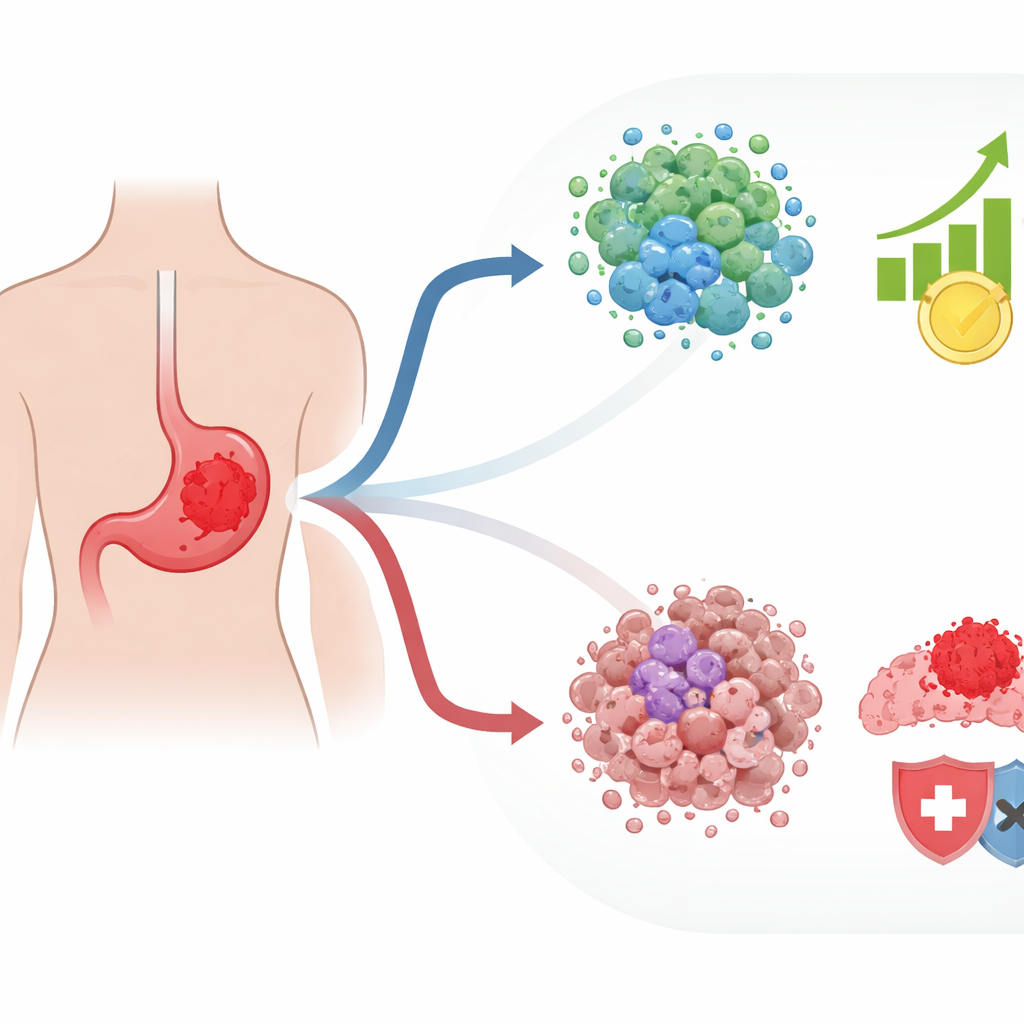
How tumor cells escape their natural safety checks
Normal cells are wired with a self-destruct program that activates when they lose their proper home in the tissue, a process called detachment-induced cell death. Cancer cells often learn to dodge this fate, allowing them to spread and seed new tumors. The authors focused on genes connected to this detachment response and on how they relate to the ways tumors respond to drugs. Using 10 large public databases of gastric cancer, they cross-referenced gene sets tied to cell death, sensitivity or resistance to chemotherapy, and responsiveness to immunotherapy. From this complex overlap, they distilled 125 key genes that both reflect how easily cells evade detachment-induced death and how they behave under treatment; they call these drug-naturalized anoikis genes, or DNAGs.
Two hidden types of stomach tumors
When the team grouped more than 800 gastric tumors based on DNAG activity, two major patterns emerged. One group of tumors carried many genetic mutations and changes in chromosome structure, which might sound ominous but can actually make cancer more visible to the immune system. These tumors had more signs of active immune attack and included immune cells that can recognize and fight cancer. The second group looked very different: it occurred more often in younger patients and a particular molecular subtype known to be aggressive. These tumors sat in a heavily suppressed environment dominated by structural support cells and other components that tend to shield cancer from immune attack. Patients with this second pattern fared worse overall.
The treatment score that reads tumor behavior
Building on these patterns, the researchers used combinations of 101 machine learning approaches to distill a smaller set of 11 genes into a “treatment-oriented prognostic signature,” or TOPS. This score divides patients into high- and low-risk groups. Across several independent patient collections, those with high TOPS scores consistently had shorter survival, more advanced disease, and tumor types known for invasive behavior. At the same time, tumors with high TOPS were less likely to respond to both chemotherapy and immune checkpoint drugs, whereas low-TOPS tumors showed better responses and longer survival after immunotherapy. The score outperformed traditional clinical features such as age, sex, and stage in predicting outcome.
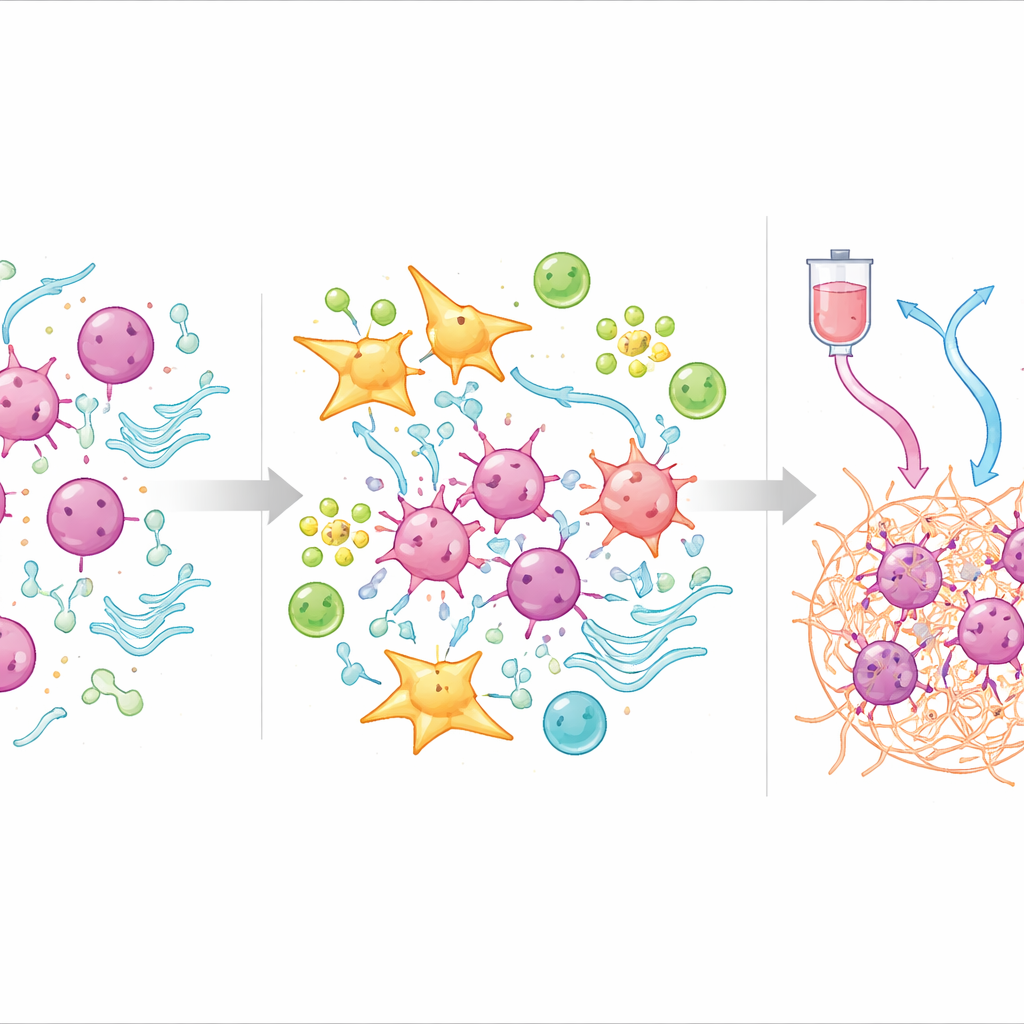
What the tumor ecosystem reveals about resistance
To understand why the score works, the team turned to single-cell sequencing, which examines individual cells inside tumors. They found that high-TOPS tumors were packed with fibroblasts—cells that help build tissue scaffolding—and certain blood vessel cells, forming a dense, protective shell around cancer cells. Within this shell, fibroblasts followed a developmental path toward a subtype that strongly communicates with tumor cells and activates pathways linked to new blood vessel growth, altered metabolism, and immune suppression. In contrast, low-TOPS tumors contained more T cells, B cells, and plasma cells that can mount an effective immune attack and showed gene activity patterns favoring normal metabolism and tissue maintenance rather than invasion.
What this could mean for future treatment
For patients, the study’s main message is that not all stomach cancers are alike, even when they look similar under the microscope. By reading an 11-gene signature related to how cells handle detachment and how the surrounding tissue behaves, doctors may one day better predict who will benefit from standard chemotherapy or immunotherapy, and who may need alternative or combination strategies that also target the supportive cells and signals in the tumor’s neighborhood. While the model still needs testing in prospective clinical trials, it offers a promising roadmap toward making gastric cancer treatment more truly personalized and improving the odds for patients facing this difficult disease.
Citation: Liu, F., Zhou, Y., Xie, Y. et al. Comprehensive machine learning identifies anoikis signatures predicting therapeutic resistance and survival in gastric cancer. Sci Rep 16, 11571 (2026). https://doi.org/10.1038/s41598-026-38996-5
Keywords: gastric cancer, treatment resistance, tumor microenvironment, immunotherapy response, machine learning biomarkers