Clear Sky Science · en
Characterization of sooty blotch and flyspeck fungi on mango (Mangifera indica L.) in Peninsular Malaysia
Why specks on mangoes matter
Mango lovers may notice fruits speckled with black smudges or tiny dark dots that make them look dirty, even when they are perfectly safe to eat. These blemishes, caused by a group of fungi known as the sooty blotch and flyspeck (SBFS) complex, can slash the price farmers receive for their harvest. This study explores which fungi are behind these stains on mangoes in Peninsular Malaysia, how common they are in different regions, and why understanding them is key to protecting both fruit quality and growers’ income.
Spots on the skin, money off the price
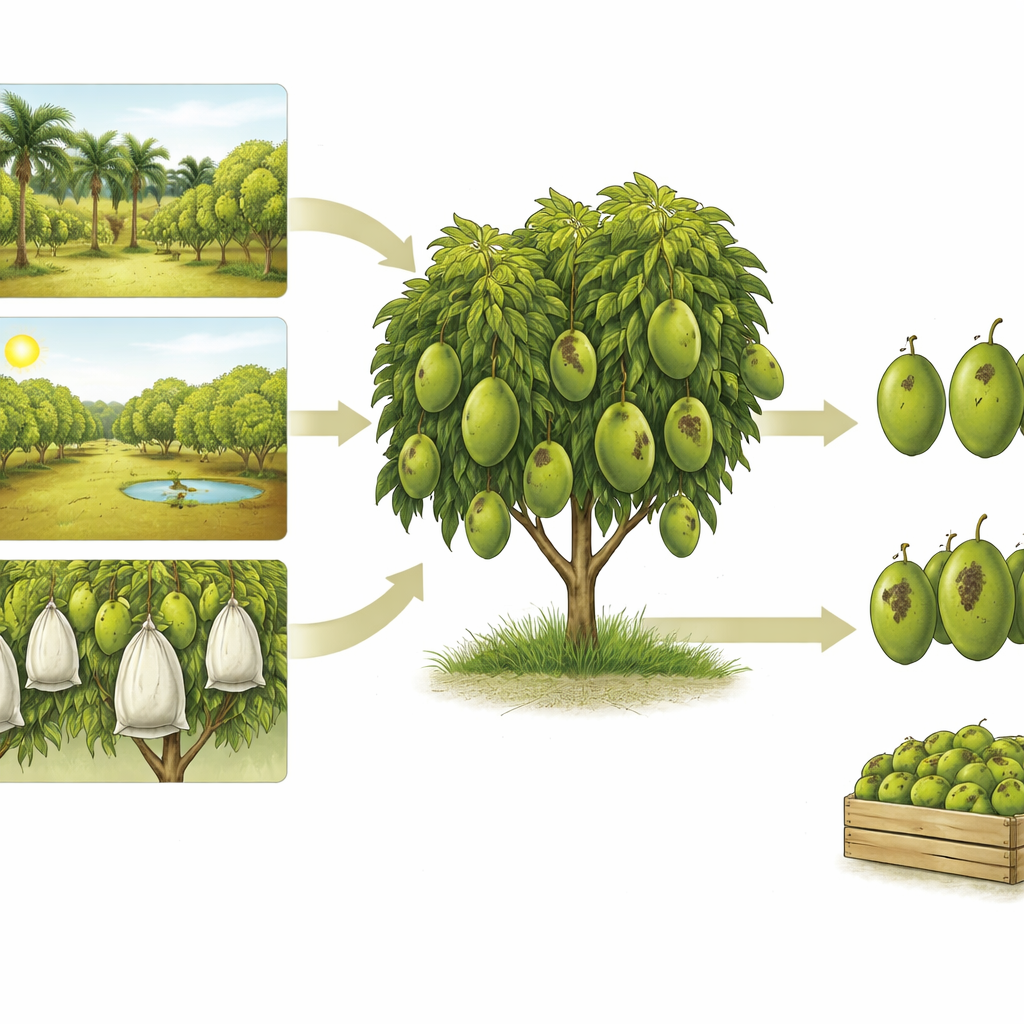
SBFS fungi live on the outside of fruits and leaves, forming dark blotches and pinhead-sized dots that spoil appearance but do not invade the flesh. In Malaysia, mango is an important crop for local markets and export, yet growers have reported that heavily speckled fruits can sell for only half the usual price. Unlike rots that damage the inside of the fruit, SBFS mainly attacks the waxy surface, making the fruit look unappealing. Because similar blemishes on apples and other fruits already cause major losses in countries such as the United States, the authors set out to document which SBFS fungi are present on mangoes in three Malaysian states—Perak, Pahang, and Perlis—and how severe the problem is in each place.
Hunting for the fungi on mango skins
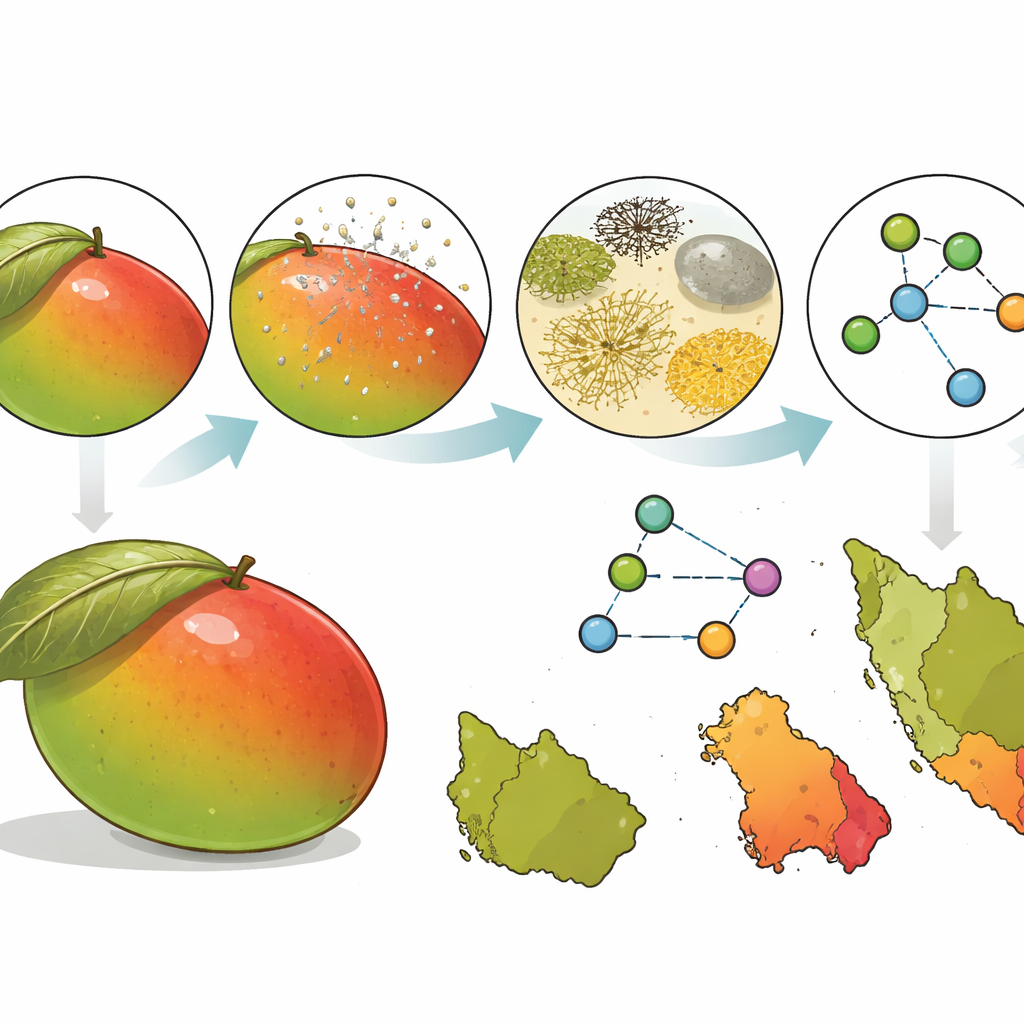
Researchers collected 87 mango fruits with visible SBFS symptoms from eight orchards across the three states during the 2019 growing season. Under the microscope, they found four recurring patterns of fungal growth on the peel, which they called ramose (fine branching mats), punctate (dense clusters of dark dots), fuliginous (sooty, uniform films), and ridged honeycomb (raised, patchy clumps). By gently culturing pieces of peel in the lab, they succeeded in growing 31 pure fungal isolates, mostly from the ramose and punctate types. The cultures were then examined for their visible traits, such as colony color and spore shape, and their DNA was sequenced in two standard ribosomal regions to see how they fit into known fungal family trees.
Unmasking familiar culprits and a hidden newcomer
By combining appearance and DNA evidence, the team showed that the blemishes on mangoes in these orchards are caused by three known fungal genera—Zasmidium, Exophiala, and Scolecobasidium—plus a previously undescribed, Peltaster-like group. The most frequent fungus was a species called Zasmidium citrigriseum, previously known mainly as a leaf-spotting pathogen, now confirmed as a surface colonizer of mango fruit. Two different Exophiala species, better known from human and environmental samples, were also found living ectophytically on the fruit skin, along with a single Scolecobasidium isolate. The Peltaster-like fungi formed their own distinct clusters in DNA-based family trees, close to but clearly separate from named species, hinting at one or more new species awaiting formal description.
Where the problem is worst and why it matters
The study revealed clear regional differences. Perak orchards had the highest number of SBFS colonies per fruit and the largest average area of peel covered—nearly half the surface on some samples—as well as the greatest mix of fungal types. Pahang showed moderate disease and only a single genus, while Perlis, where fruit bagging is more common, had the lowest infection levels and only Zasmidium. Statistical tests confirmed strong links between state, infection severity, and which fungal genera were present, suggesting that local climate, nearby vegetation such as oil palm, and management practices like pruning, spraying, and bagging all shape the SBFS community. In controlled tests on healthy mangoes, all 12 representative isolates reproduced typical SBFS blemishes and were re-isolated, proving that each is a true pathogen of the fruit surface.
What this means for cleaner-looking mangoes
For consumers, SBFS mainly affects how mangoes look, not how safe they are to eat. For growers, however, these “cosmetic” fungi can halve the value of a crop. This research provides the first detailed picture of which SBFS fungi live on mangoes in parts of Peninsular Malaysia and confirms that both familiar species and likely new ones are involved. By mapping the fungi and their severity across orchards, the study lays the groundwork for smarter management—such as targeted pruning, protective fruit bagging, and better-timed fungicide use—aimed at keeping mango skins clear and bright without unnecessary chemical sprays.
Citation: Tham, K.X., Goh, K.S., Marsani, M.F. et al. Characterization of sooty blotch and flyspeck fungi on mango (Mangifera indica L.) in Peninsular Malaysia. Sci Rep 16, 11520 (2026). https://doi.org/10.1038/s41598-026-38319-8
Keywords: mango fruit blemishes, sooty blotch and flyspeck, tropical plant disease, fruit surface fungi, orchard management