Clear Sky Science · en
Spatial and temporal variability of supraglacial algae on an Alpine glacier (Forni Glacier, Italy)
Hidden Life on Melting Ice
High‑mountain glaciers may look like lifeless white rivers of ice, but their surfaces host bustling microscopic worlds. This study explores the tiny algae living on Italy’s Forni Glacier and shows how these organisms vary from place to place and from month to month. Because these algae help control how fast glaciers melt and provide food and nutrients to downstream ecosystems, understanding their diversity is crucial as climate change shrinks glaciers worldwide.
Many Small Worlds on One Glacier
The researchers treated the glacier surface not as a single habitat, but as a patchwork of seven distinct "micro‑landscapes": clean snow, bare ice, narrow meltwater streams, water‑filled holes with dark sediment at the bottom, the sediment itself inside those holes (cryoconite), cone‑shaped mounds of dusty ice (dirt cones), and thin layers of windblown dust scattered across the ice. Over two summers, they repeatedly sampled each of these habitats, collected snow, ice, water, and sediment, and then used microscopes to identify and measure the volume of each algal type.
Who Lives Where on the Glacier?
The team found 17 main algal taxa, belonging mostly to green algae and cyanobacteria, along with a distinctive cold‑adapted fungus. 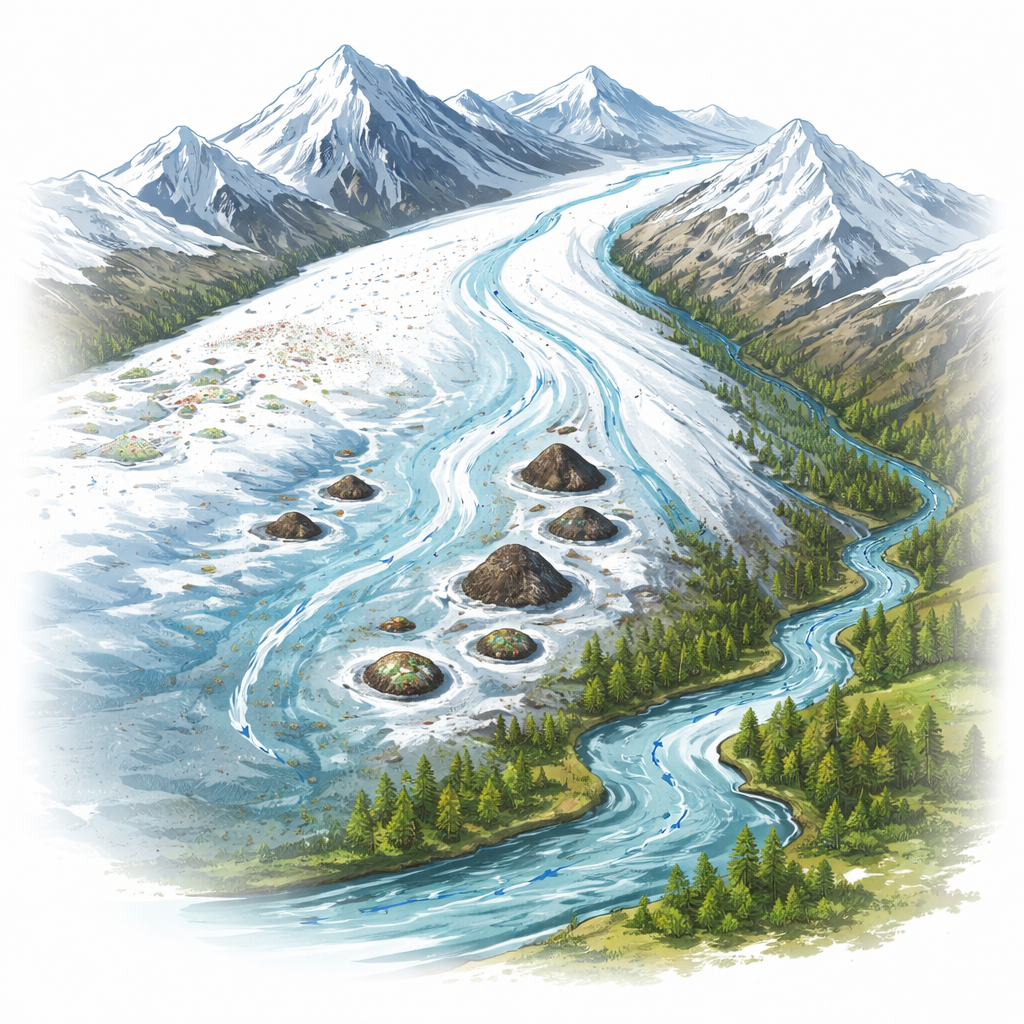
Dominant Specialists and Community Turnover
On bare ice, one species, the green alga Mesotaenium berggrenii, was overwhelmingly dominant, sometimes making up more than 90% of the algal volume. This species is well adapted to intense sunlight, strong ultraviolet radiation, and near‑freezing temperatures, thanks in part to protective pigments in its cells. The study’s statistical analyses revealed that differences among glacier habitats were driven mostly by how many species each habitat could support, rather than by a complete swap of species from place to place. Snow contributed disproportionately to the overall variety of communities across the glacier, while dirt cones, cryoconite sediments, and scattered dust showed high rates of species replacement as conditions shifted from wet, bright surfaces to darker, warmer, more stable substrates. 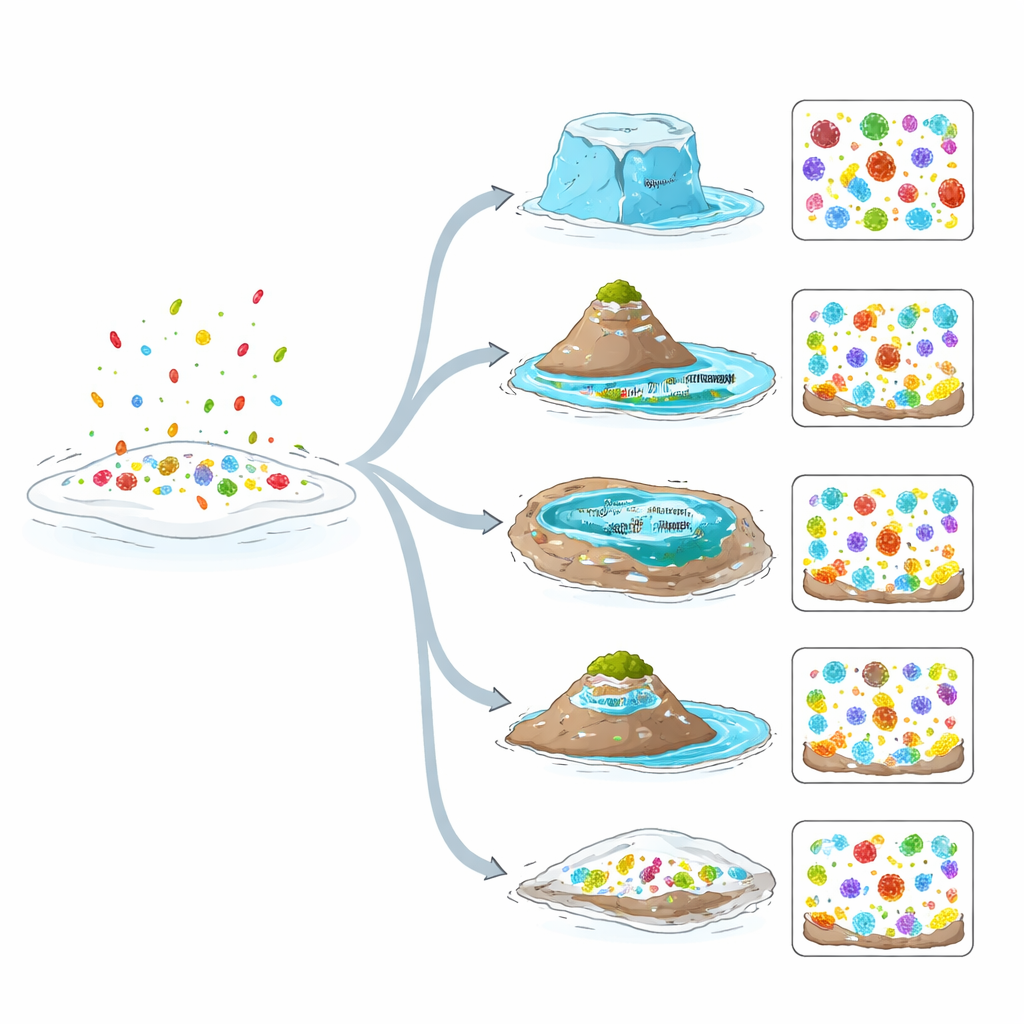
Glacier Seasons and Algal Booms
Time of year also mattered. In late summer 2023, algal biomass in aquatic habitats surged, largely due to a bloom of Mesotaenium berggrenii on bare ice, which raised total algal volume while reducing diversity as it crowded out other species. Early in the melt season, dormant cyst‑like stages of different snow algae were relatively more common, while later in the season, communities shifted toward a few better‑adapted forms. Differences between the two study years appeared linked to variations in temperature, sunlight, rainfall, and possibly how many algae and nutrients were delivered to the glacier surface by snow and atmospheric deposition.
Why This Matters Beyond the Glacier
As glaciers in the European Alps continue to thin and retreat, the habitats that support the richest algal communities—especially snow and certain sediments—are disappearing. Losing these specialized communities could alter how much light the glacier absorbs, how quickly it melts, and how much organic matter and nutrients flow downstream to high‑altitude ecosystems that rely on glacier water. This study shows that to understand and predict these cascading effects, we need fine‑scale, habitat‑by‑habitat biological surveys on individual glaciers. If such work is not done soon, much of this hidden biodiversity—and the clues it holds about life in extreme environments—may vanish along with the ice.
Citation: Dory, F., Ambrosini, R., Ahmad, A. et al. Spatial and temporal variability of supraglacial algae on an Alpine glacier (Forni Glacier, Italy). Sci Rep 16, 11402 (2026). https://doi.org/10.1038/s41598-026-36705-w
Keywords: glacier algae, supraglacial habitats, glacier biodiversity, alpine ecosystems, climate change