Clear Sky Science · en
Physical activity for public health in the 21st century
Why Moving Your Body Matters More Than You Think
Most of us have heard that being active helps prevent weight gain and heart disease. This article argues that this well-worn message is only part of the story. Drawing on data from 68 countries and decades of health research, the authors show that movement shapes our chances of avoiding infections, depression and cancer—and that not all movement is created equal. Whether activity protects or harms health depends on who you are, where you live and whether you move by choice or out of necessity.
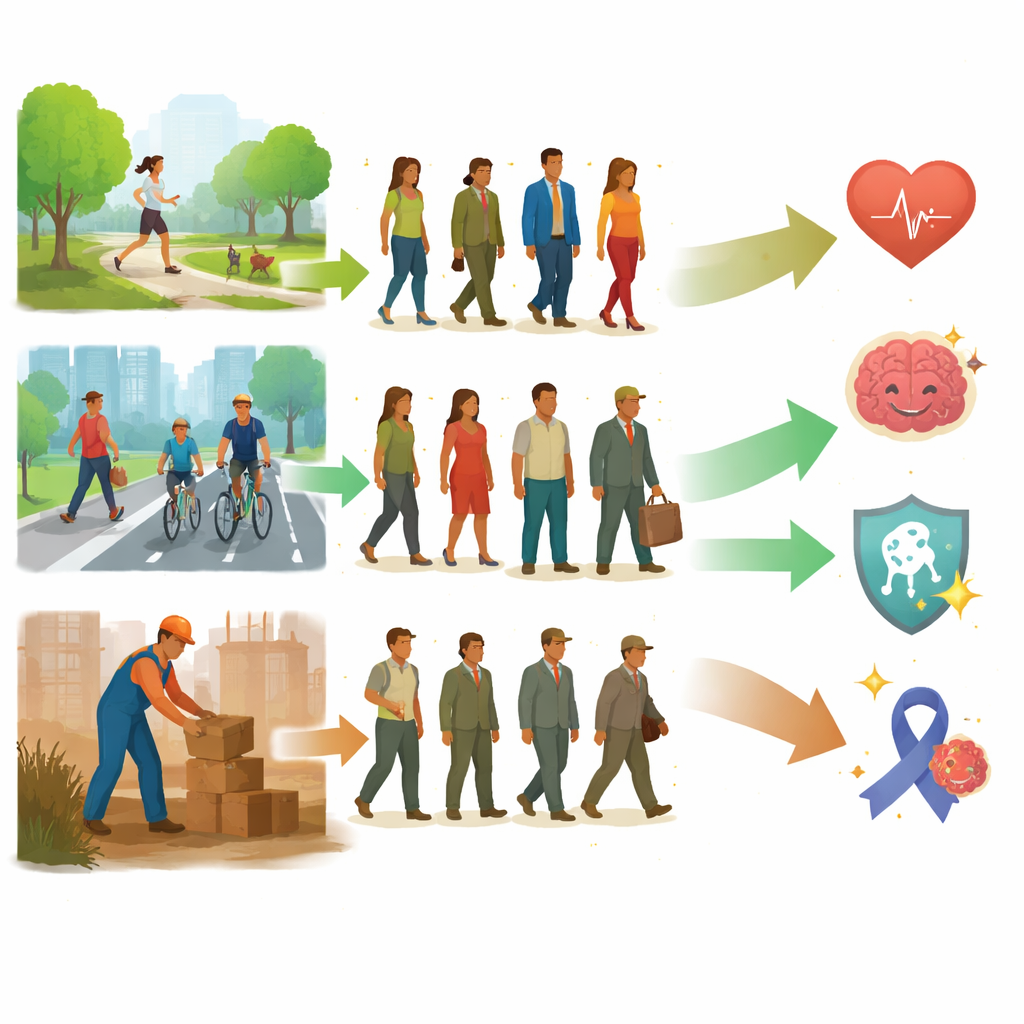
Different Kinds of Moving Through the Day
The researchers divide physical activity into three everyday arenas. "Active leisure" is what many people picture when they think of exercise: going for a run, playing soccer, dancing or doing yoga. "Active transport" covers walking or cycling to get places. "Active labor" includes manual work, from farm tasks to lifting boxes in a warehouse. Using World Health Organization survey data, the team examined how much adults in each domain move in a typical week and whether they reach current global guidelines for health-protective activity.
Who Gets to Move by Choice
A striking pattern emerges when activity is viewed through income, education and gender. People in richer countries are less likely to meet overall activity targets, but when they do, a large share comes from active leisure—movement chosen for enjoyment or health. In poorer countries, most activity comes from work and travel, often under tough conditions such as long walks along unsafe roads or physically demanding jobs without proper protections. Within countries, people with more education have far more opportunities for active leisure than those with little or no schooling. Men are more active than women in every domain, but the biggest gap is in leisure time movement.
When Disadvantage Piles Up
The authors use an "intersectional" lens to see what happens when social disadvantages overlap. Comparing wealthy men to poor women in the same country, they find an activity gap of nearly 30 percentage points for leisure movement alone. When they compare wealthy men in rich countries with poor women in poor countries, that gap widens to about 40 percentage points. In other words, those who are already most burdened by poverty and social barriers are also the least likely to access the safest and most enjoyable forms of movement. Meanwhile, many low-income women rack up large amounts of necessity-driven work or travel activity, which can be exhausting, risky and not particularly good for long-term health.
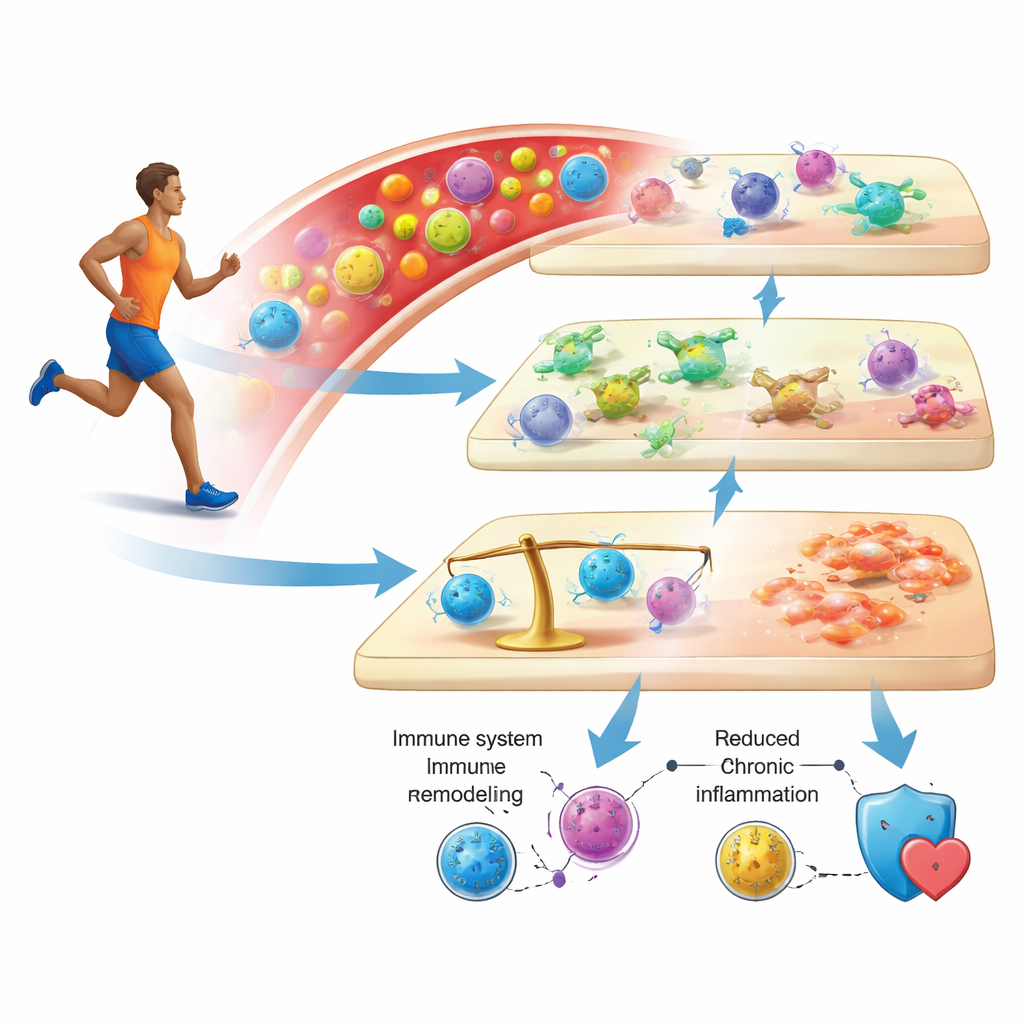
Beyond Waistlines: How Movement Guards the Body and Mind
Looking past weight and blood sugar, the article reviews evidence that regular physical activity strengthens the immune system, steadies mood and helps prevent and manage cancer. Studies show that people who are regularly active are less likely to get severe respiratory infections and are more likely to respond well to vaccines. Long-term research suggests that even half the recommended weekly activity lowers the chance of developing depression, and structured exercise programs can ease symptoms in people already diagnosed. For cancer, higher levels of movement—especially in leisure time—are linked to lower risk of several tumor types and to better survival among people already living with cancer. However, intense physical labor does not always bring these benefits and may even raise the risk of some cancers or other health problems.
Rethinking What “Healthy Activity” Really Means
On the basis of this global and clinical evidence, the authors propose a new way to think about movement: "physical activity for health and wellbeing." In this view, activity is health-promoting only when it takes place in safe, dignified and non-coercive conditions. They call for governments and health systems to measure not just how much people move, but where and why they move, and to design policies that expand access to free, pleasant spaces for leisure activity and safer routes for walking and cycling. At the same time, they argue that public messages should highlight the full spectrum of benefits—from stronger immunity to better mental health and cancer outcomes—while avoiding slogans that ignore the hardships of people whose only option is to move under unsafe or exploitative conditions. In short, the article concludes that movement is a powerful, underused tool for human and planetary health, but only if societies ensure that everyone can move by choice, safely and with dignity.
Citation: Salvo, D., Crochemore-Silva, I., Wendt, A. et al. Physical activity for public health in the 21st century. Nat Med 32, 1479–1489 (2026). https://doi.org/10.1038/s41591-026-04237-5
Keywords: physical activity, health inequalities, active transport, mental health and exercise, cancer prevention