Clear Sky Science · en
Long-term HIV-1 remission achieved through allogeneic haematopoietic stem cell transplant from a CCR5Δ32/Δ32 sibling donor
Hope from an Unexpected Turn
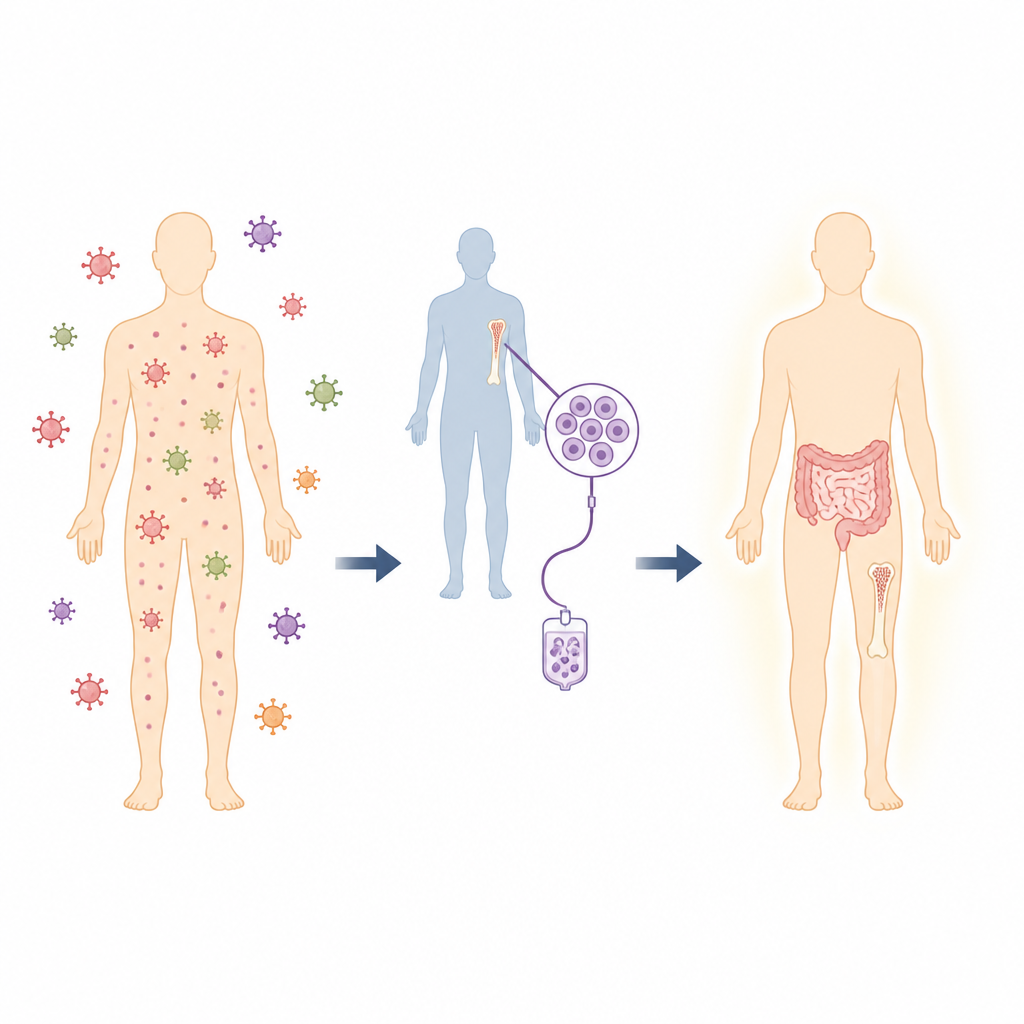
For more than four decades, HIV infection has usually meant a lifetime of daily medication to hold the virus in check. True cures have been so rare that each new case is followed closely around the world. This article tells the story of a man in Oslo whose treatment for a blood disorder, using stem cells from his brother, appears to have wiped out his HIV. The work matters not because this high risk procedure could be offered to everyone, but because it reveals clues about how the virus can finally be cleared from the body.
The Patient’s Long Journey
The patient, now in his sixties, was diagnosed with HIV in 2006 and quickly began modern antiviral therapy. These drugs drove the amount of virus in his blood down to levels that standard tests could no longer detect, and kept him healthy for years. In 2018 he developed a serious bone marrow disease called myelodysplastic syndrome, which can progress to leukemia. Doctors decided he needed a transplant to replace his blood forming stem cells, a risky but sometimes life saving procedure.
A Fortunate Genetic Match
The medical team searched for a stem cell donor who carried a rare change in a gene called CCR5. Many strains of HIV use the CCR5 molecule as a doorway into immune cells. People who inherit a specific missing segment, known as CCR5Δ32, in both copies of this gene are highly resistant to these strains of HIV. Remarkably, the patient’s brother, who was already a perfect tissue match, turned out to have two copies of this protective version, while the patient had only one. In late 2020 the man received his brother’s stem cells, all while continuing his HIV medication.
Checking Every Corner for Hidden Virus
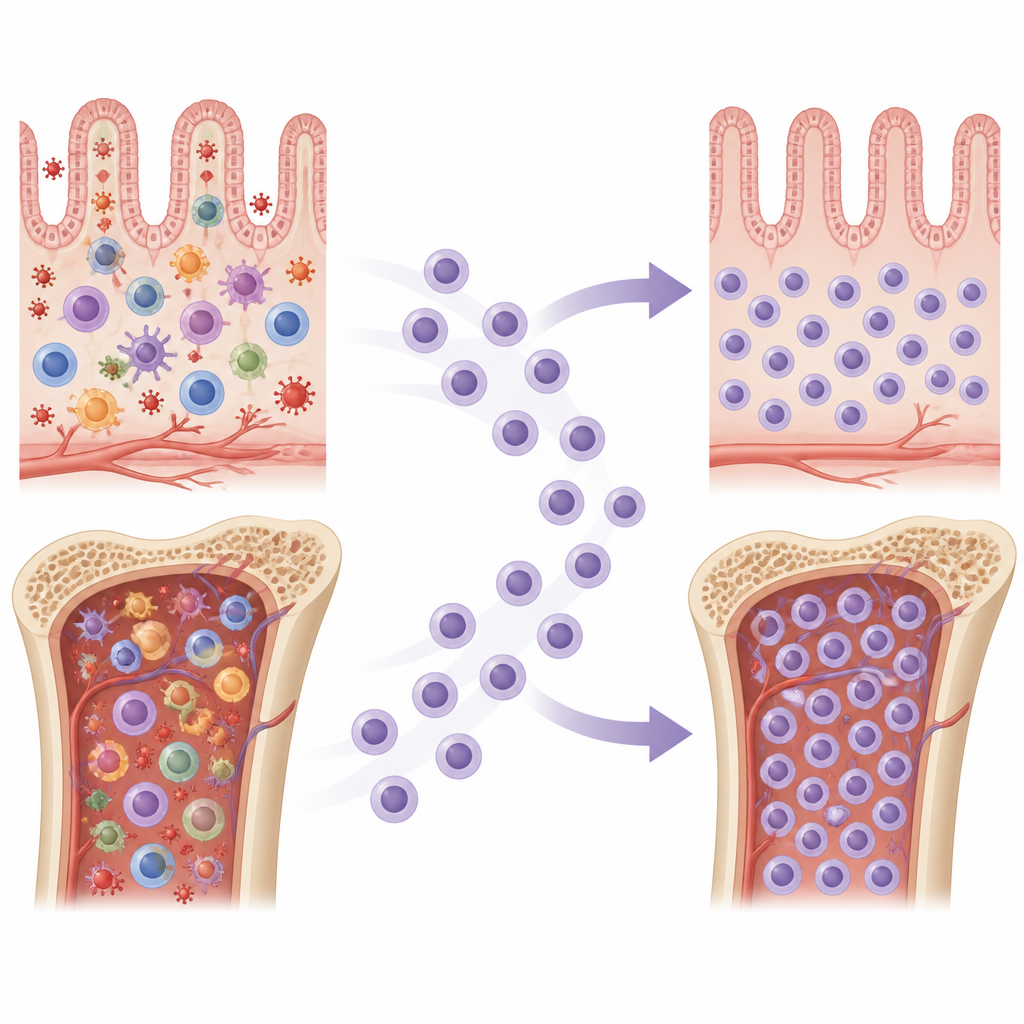
After the transplant, the doctors watched for two things. First, they needed to see whether the brother’s stem cells fully took over blood formation, a state called full donor chimerism. Second, they had to look for any sign that HIV was still hiding in the body. Over the next months the new immune system grew in and the patient endured a tough bout of graft versus host disease, in which donor cells attack the gut and skin. By three months, blood tests no longer showed any of the patient’s original immune cells, and by four years donor cells dominated not just the blood and bone marrow but also samples from the gut, a major hiding place for HIV.
Silence from the Virus and the Immune System
To probe for lingering virus, researchers used extremely sensitive techniques that can detect rare bits of viral DNA or coax dormant virus to wake up in the lab. In blood and gut samples taken up to 48 months after transplant, they found at most faint traces of broken viral fragments and no intact viral genomes capable of making new virus. When they tried to grow virus from more than 65 million of the man’s immune cells, none appeared. His T cells, which once recognized HIV, no longer reacted to viral proteins, and his antibody levels against HIV slowly faded and became weaker over time, although standard tests still read as positive.
What This Case Can Teach Us
Two years after the transplant, the man and his doctors agreed to stop antiretroviral therapy under close monitoring. Three years later his blood remains free of detectable virus, his immune system is stable, and detailed tests from blood, bone marrow and gut show full replacement by donor cells that lack the usual HIV entry point. The authors conclude that this combination a resistant donor, complete takeover of key tissues, and a strong donor immune response has probably cleared his body of replication competent HIV. While such transplants are far too risky to be used simply to treat HIV infection, each case like this sharpens our picture of what a true cure looks like, and highlights biological markers that could guide safer strategies in the future.
Citation: Myhre, A.E., Meyer-Myklestad, M.H., Gullaksen, H.H. et al. Long-term HIV-1 remission achieved through allogeneic haematopoietic stem cell transplant from a CCR5Δ32/Δ32 sibling donor. Nat Microbiol 11, 1374–1386 (2026). https://doi.org/10.1038/s41564-026-02304-8
Keywords: HIV cure, stem cell transplant, CCR5 mutation, viral reservoirs, HIV remission