Clear Sky Science · en
Environmental fluctuations alter the competitive trade-offs of group size in a social primate
Why monkey group size matters in a changing world
In many social animals, living in a bigger group can mean better protection and more control over food, but also fiercer competition with one another. This study follows wild white‑faced capuchin monkeys in Costa Rica over 33 years to ask how changes in weather and seasons tip the balance between the perks and downsides of living in a large group. The findings help explain why groups of very different sizes can coexist and how climate swings may reshape social life in the forest.
Life in a harsh seasonal forest
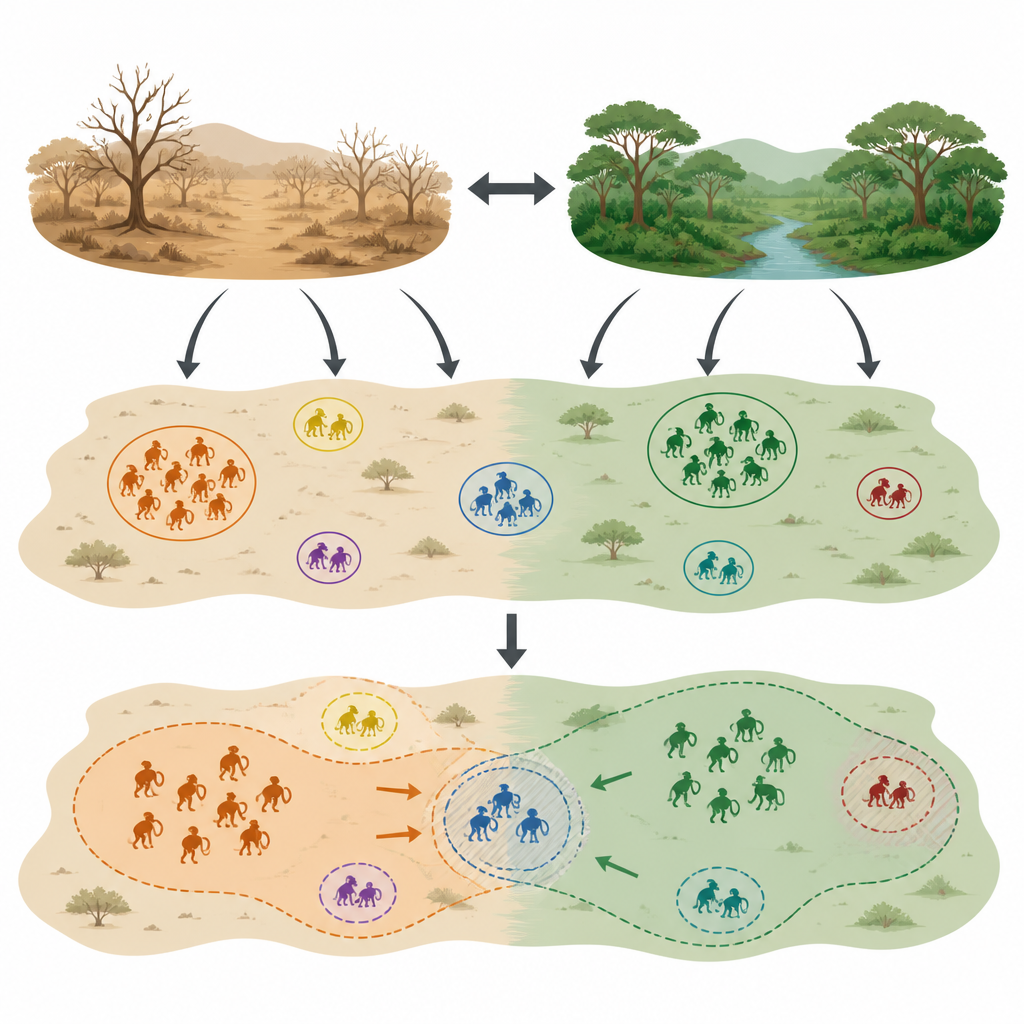
The capuchins live in one of the last remaining patches of tropical dry forest, where months of heavy rain are followed by a long, hot dry spell. In the wet season, food and shade are more evenly spread across the landscape. During the dry season, many trees lose their leaves and water, cool shade and fruit become concentrated along green ribbons of rivers and streams. At the same time, the region is strongly affected by climate cycles linked to El Niño and La Niña, which can make seasons much drier or wetter than usual. These shifting conditions create a natural laboratory for watching how monkey groups adjust their movements and social battles over space.
The costs of being many mouths to feed
The researchers combined detailed behavioral observations with satellite measures of forest greenness to track how 12 neighboring groups, each with 5 to 40 monkeys, used space and food over time. They found that individuals in larger groups tended to get less fruit per day, a sign of heavier competition within the group. Surprisingly, these large groups did not respond by walking farther each day, which would raise their energy bills. Instead, they spread their movements over a larger home range and returned less often to the same spots. By rotating across more patches over weeks and months, big groups seem to ease pressure on any single area without boosting daily travel.
When big groups push small groups around
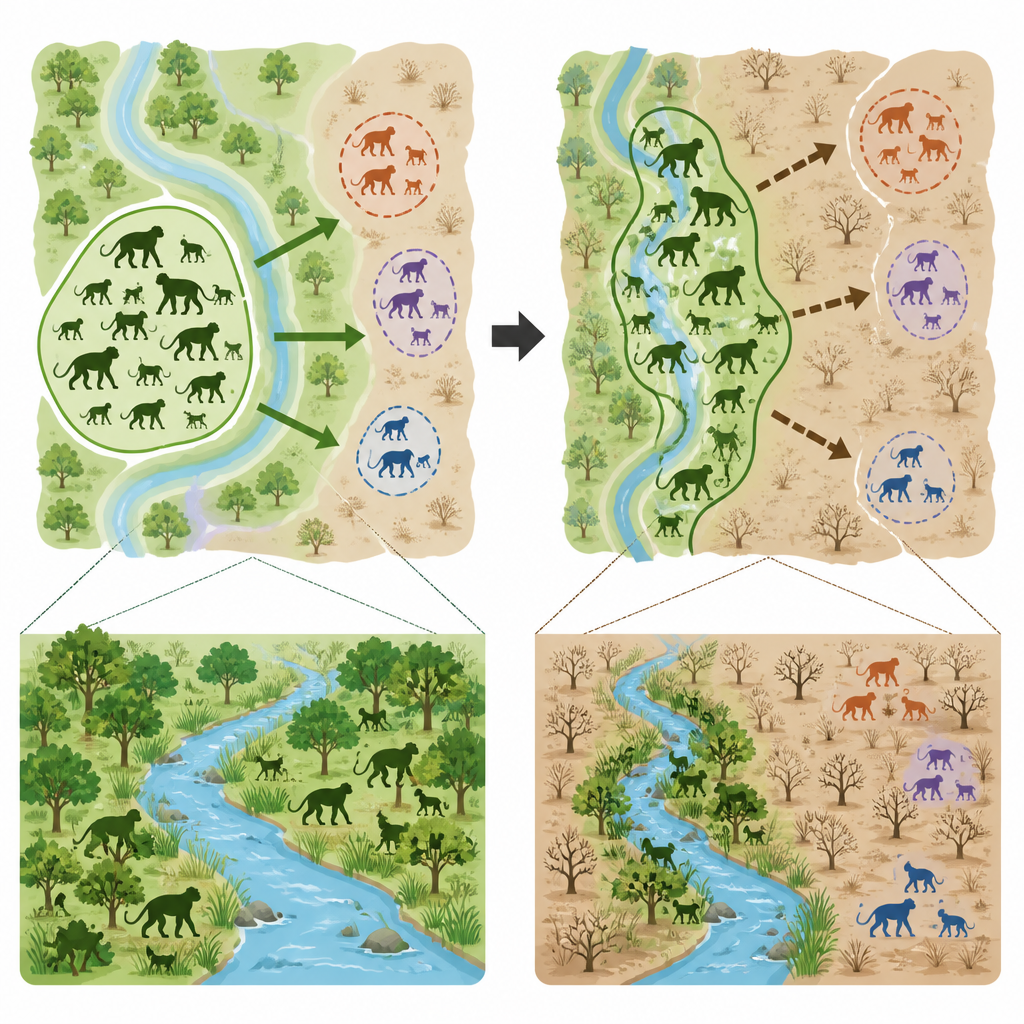
Size also matters when groups meet. Larger groups have the advantage in noisy, often hostile contests at the edges of their ranges. Using new statistical tools that treat each pair of neighboring groups as a social relationship, the team showed that big groups tended to encroach more deeply into the ranges of smaller neighbors over the years. When overlap between two groups increased, it was usually because the group that had become larger shifted its range toward the other. In the dry season, when food is packed into narrow green river zones, overall overlap shrank and encounters became more frequent in shared areas, suggesting active defense of prime feeding grounds.
Climate swings tilt the balance
Weather extremes did not affect all groups equally. During especially hot, dry El Niño periods and unusually wet La Niña wet seasons, individuals in large groups suffered the sharpest drops in fruit intake, showing that many mouths to feed become a serious burden when food production falters. Yet when climate anomalies softened the usual pattern, such as wetter than average dry seasons or drier than average wet seasons, the disadvantage of large group size nearly disappeared. Under these more moderate but patchy conditions, larger groups were more likely to occupy greener, higher‑quality home ranges, taking better advantage of their strength in between‑group contests.
What this means for animal societies
Taken together, the study shows that there is no single best group size for these monkeys. Small groups benefit from less competition among themselves and can survive by anchoring to safer core areas or slipping into buffer zones between powerful neighbors. Large groups enjoy an edge in claiming and holding rich patches of forest, especially when resources are clumped, but pay a price during climatic extremes that strain food supplies. As climate change alters the timing and intensity of dry and wet periods in tropical forests, the balance between these costs and benefits may shift, influencing which group sizes thrive and how social animals share shrinking and changing habitats.
Citation: Jacobson, O.T., Crofoot, M.C., Finerty, G.E. et al. Environmental fluctuations alter the competitive trade-offs of group size in a social primate. Nat Ecol Evol 10, 919–931 (2026). https://doi.org/10.1038/s41559-026-03048-8
Keywords: capuchin monkeys, group size, social behavior, tropical dry forest, climate variability