Clear Sky Science · en
Wildfire risk for species under climate change
Why bigger, hotter fires matter for wildlife
From Australian koalas to South American frogs, more and more animals and plants are being caught in the path of extreme wildfires. This study asks a simple but urgent question: as the world warms, how will changing fire patterns affect thousands of already vulnerable species? Using global climate models and detailed maps of where species live, the authors provide the first worldwide forecast of how wildfire risk to biodiversity is likely to grow—and where the damage could be most severe. 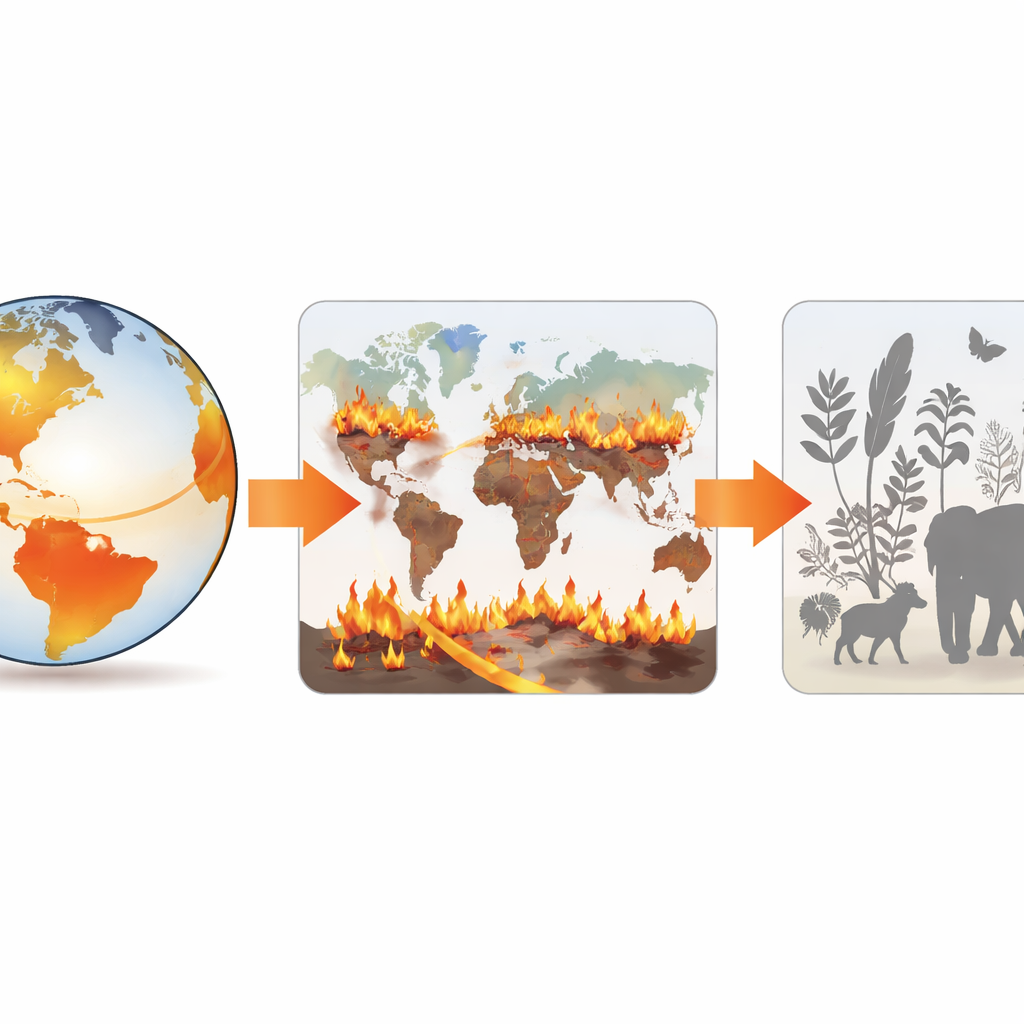
Fires spreading in a warming world
The researchers began by looking at how much land burns each year and how long the fire season lasts across the globe. They combined satellite records of burned area with weather data and used a modern machine-learning method to learn how climate, vegetation, and seasons together shape fire activity. They then fed this trained model with future climate projections under several emissions pathways, from relatively moderate pollution to fossil-fuel–intensive futures, to see how burned area and fire seasons might change by the end of this century.
Not every continent burns the same
The forecasts reveal that, on average, more land will burn and fire seasons will lengthen almost everywhere, but not in the same way in each region. Under a middle-of-the-road emissions pathway, the total burned area worldwide is projected to rise by around 9%. South America stands out, with increases of about one-third overall and more than half in some central and northern areas. High-latitude regions in North America and Eurasia, including parts of the Arctic, also see sharp rises in both burned area and the number of fire‑prone days. Europe and Asia experience noticeable growth in fire activity, while Africa is a rare exception: some central and eastern regions may actually see less area burned, likely because of wetter conditions, even as the fire season lengthens modestly. 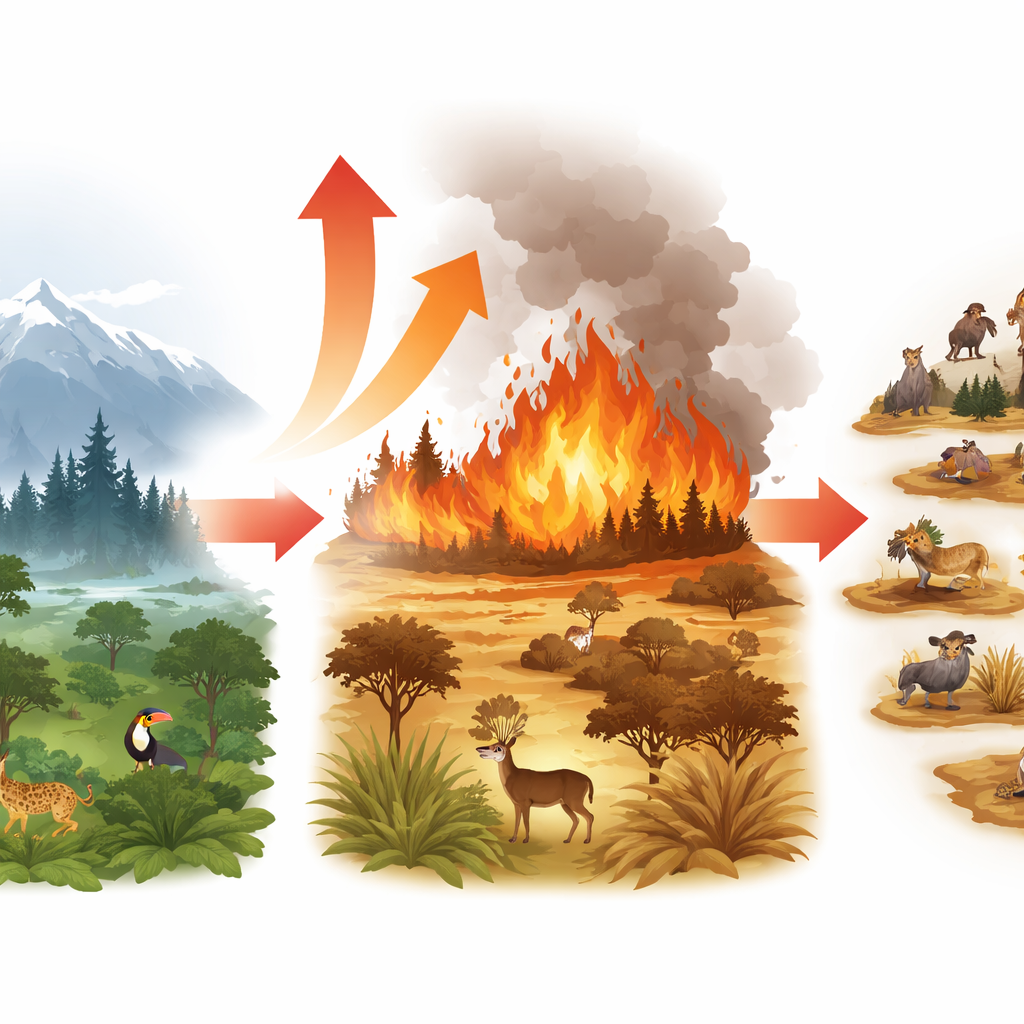
Thousands of species in the line of fire
To translate these fire projections into risks for wildlife, the team overlaid them with maps of more than 9,500 terrestrial species that the International Union for Conservation of Nature already lists as threatened by changes in fire. For each species, they calculated how much of its home range is expected to burn and how long fires are likely to be possible each year. The results are sobering: by 2100, under moderate emissions, roughly 84% of these fire‑sensitive species will face higher wildfire exposure. Nearly 40% of such species in South America are projected to experience more than a 50% increase in burned habitat, and many in Europe, North America, Asia, and Oceania also see major jumps. In contrast, up to about 42% of African species may see reduced fire exposure, highlighting a strong geographic imbalance in future risk.
Small ranges, big dangers
The study finds that species with tiny geographic ranges and already high conservation concern are hit hardest. The top 1% most exposed species—just 96 in total—cluster in South America, South Asia, southern Australia, and New Zealand. Many of these are amphibians and plants restricted to only a handful of locations, making them especially easy for fire to wipe out. Overall, species listed as Endangered or Vulnerable are over‑represented among those facing the steepest rises in burned area. By contrast, species projected to experience less fire tend to occupy larger areas and have better conservation status, suggesting that wide-ranging species are somewhat buffered against a more fire‑prone planet.
How much risk can be avoided
The authors also compare different futures to show how cutting emissions could spare species from fire. Following a moderate pathway rather than a higher‑pollution one reduces global growth in burned habitat by roughly one‑third to two‑thirds, depending on the scenario. Some places, such as New Zealand, eastern North America, parts of South America, and high‑latitude regions, gain particularly large benefits from stronger climate action, with much smaller increases—or even declines—in fire exposure for local species. These differences demonstrate that the choices societies make about emissions this century will strongly influence how much additional fire pressure wildlife must endure.
What this means for protecting nature
In plain terms, the study concludes that climate‑driven wildfires are set to become a major, uneven threat to global biodiversity. Many species already stressed by changing fire patterns are likely to see those pressures intensify, especially in South America, parts of Asia and Oceania, and newly fire‑prone northern regions. While some African species may face less fire, the overall picture is one of longer fire seasons, larger burned areas, and growing risk for species with small, fragile ranges. The authors argue that conservation plans must now treat wildfire as a central climate‑related hazard—anticipating where fires will spread, shoring up protection for the most exposed species, and recognizing that rapid emissions cuts could prevent a substantial share of future fire‑driven habitat loss.
Citation: Yang, X., Urban, M.C., Su, B. et al. Wildfire risk for species under climate change. Nat. Clim. Chang. 16, 613–621 (2026). https://doi.org/10.1038/s41558-026-02600-5
Keywords: wildfire risk, biodiversity loss, climate change, species conservation, burned area