Clear Sky Science · en
Re-shaping the immune response to influenza vaccination in a host with immune memory from influenza infection
Why past flu infections matter for future shots
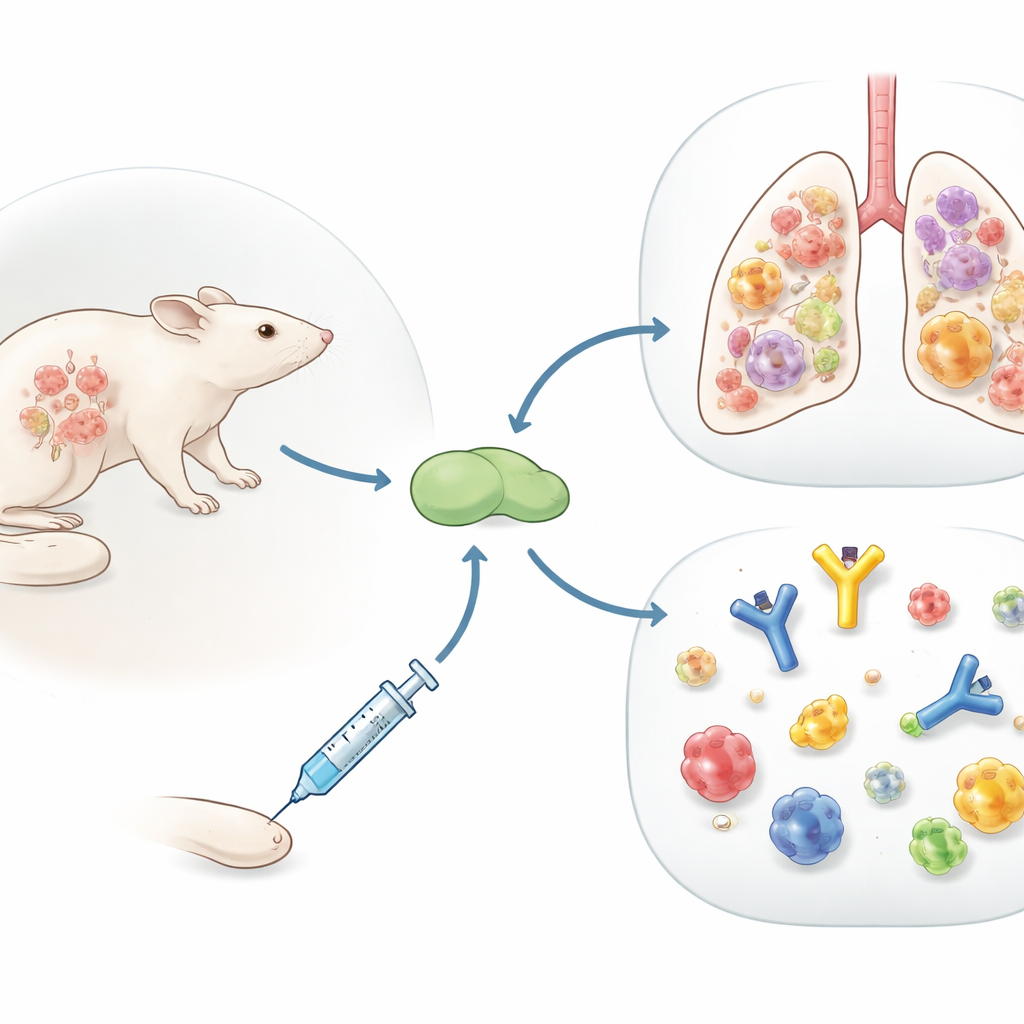
Most people first catch the flu long before they ever roll up a sleeve for an adult flu shot. This study asks a simple but important question: how does that early infection memory change the way our bodies respond to later vaccines? Using a mouse model designed to mimic human experience, the researchers show that prior flu infection can transform a standard protein-based flu vaccine from a simple antibody booster into a engine for powerful virus-fighting T cells that home to the lungs, where protection is most urgently needed.
Looking beyond antibodies
Today’s flu vaccines are built mainly to raise antibodies against the virus’s outer coat, which works well until the virus mutates. The team instead focused on CD4 T cells, a class of white blood cells that help other immune cells and can recognize parts of the virus that change less over time. They studied Flublok, a licensed flu vaccine made only of purified viral proteins, given with one of two add-on ingredients that wake up the immune system: an oil-in-water mixture similar to MF59, and a newer positively charged fat particle called R-DOTAP. In mice that had never seen flu before, both versions triggered CD4 T cells, but R-DOTAP produced many more cells with a broader mix of virus-fighting signals.
What changes after a first flu encounter
The researchers then gave mice a flu B infection, waited until long after recovery, and vaccinated them. Now the response looked very different. CD4 T cells in the lymph node draining the injection site flared rapidly, peaking around day six instead of day nine. With R-DOTAP, the number of flu-specific CD4 T cells in these nodes was more than ten-fold higher than in naïve animals. Just as striking, the “personality” of the cells shifted: instead of favoring signals that mainly support antibody production, the cells now poured out strong antiviral signals (TNF-alpha and interferon-gamma) associated with direct virus control and help for killer T cells.
Guided migration toward the lungs
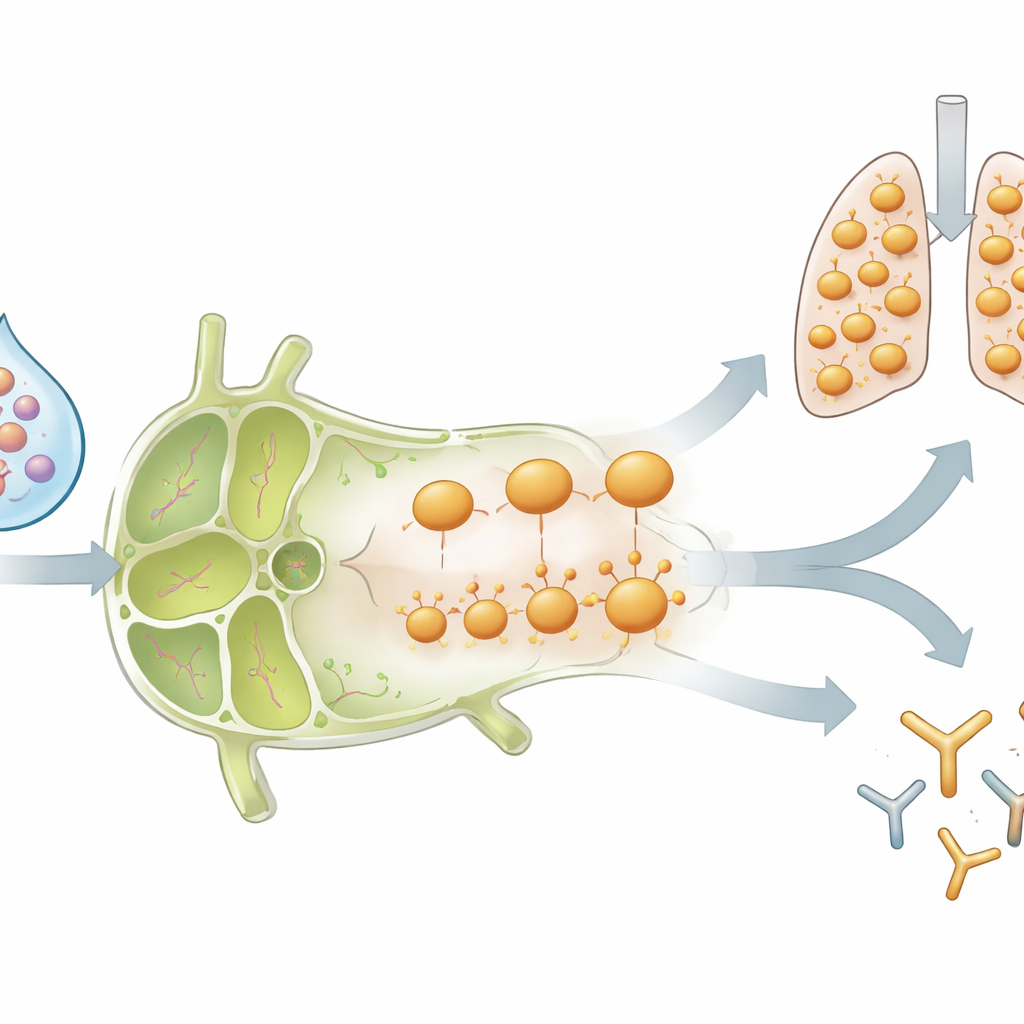
Why did the flood of cells in the lymph node quickly shrink after peaking? The team found that, in infection-experienced mice, many of the vaccine-triggered CD4 T cells switched on chemokine receptors—surface molecules that act like GPS for moving through the body—especially CCR5 and CXCR3. These markers are known to guide cells into inflamed tissues such as the lung. Over time, cells with these receptors disappeared from the lymph node, while flu-specific CD4 T cells built up inside lung tissue, where they persisted for at least a month. This pattern fits a model in which the vaccine first expands flu-specific helpers in the node, then reroutes a selected subset to settle in the airways as sentinels ready for the next infection.
Memory changes the entire vaccine neighborhood
An important test was whether these effects were limited to the exact flu strain used for the initial infection. Flublok contains several flu protein types, including one (H3) for which the infected mice had no prior T cell memory. Surprisingly, the newly primed H3-specific CD4 T cells in previously infected mice behaved much like the boosted cells that recognized the original flu B strain: they expanded quickly, produced strong antiviral signals, turned on chemokine receptors, and then declined in the lymph node as cells appeared in the lung. Antibody levels against both the old and new viral proteins were also higher in infection-experienced animals. This suggests that earlier infection reshapes the “climate” inside the draining lymph node—through inflammatory molecules and recruited immune cells—so that any new vaccine antigen entering that space is handled differently.
What this means for better flu protection
For non-specialists, the key message is that the body’s history with flu can be turned from a complication into an asset. In this mouse model, a protein-based vaccine combined with a lipid nanoparticle adjuvant did more than top up antibodies: in animals with past flu infection, it rapidly generated strong helper T cells that learned to home to the lung and boosted antibodies even to unrelated flu components. The work points toward future flu shots designed not just to chase the latest viral variant, but to harness existing immune memory and deliberately plant long-lived defender cells in the airways, where they may offer broader and more durable protection against ever-changing respiratory viruses.
Citation: White, C.L., Mengu, L., Sidhu, I.S. et al. Re-shaping the immune response to influenza vaccination in a host with immune memory from influenza infection. npj Vaccines 11, 73 (2026). https://doi.org/10.1038/s41541-026-01397-w
Keywords: influenza vaccination, immune memory, CD4 T cells, vaccine adjuvants, lung immunity