Clear Sky Science · en
Production of low-calorie biscuits using stevia extract and dietary fibers from oats and fenugreek for functional food applications
A New Take on a Favorite Snack
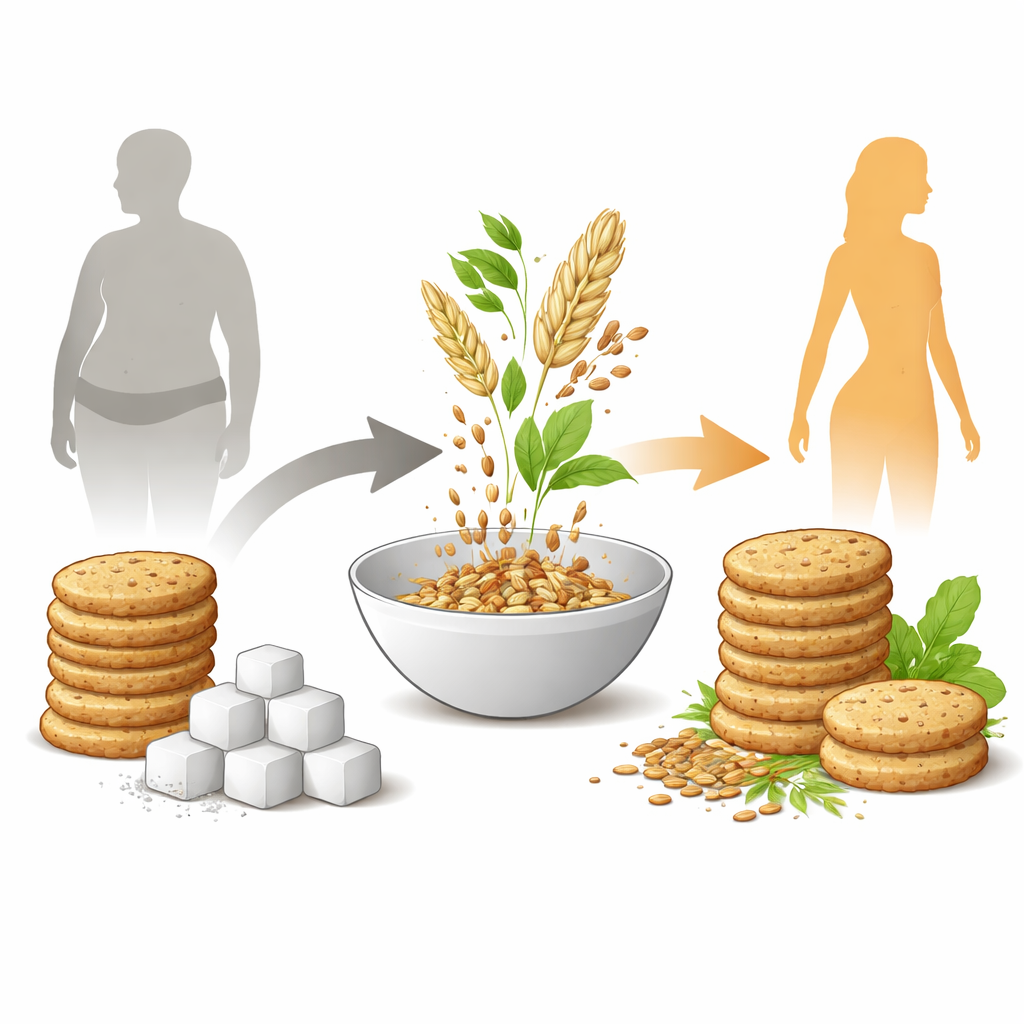
Biscuits—what many would call cookies—are a cheap, tasty treat found in lunchboxes and grocery aisles around the world. Yet their high sugar and low fiber content link them to rising rates of obesity, type 2 diabetes, and heart disease. This study explores whether a classic biscuit recipe can be reinvented to be kinder to blood sugar and waistlines without sacrificing taste, by replacing sugar with plant-based sweetener from stevia leaves and adding special fibers from oats and fenugreek seeds.
Why Rethink Everyday Biscuits?
Traditional biscuits are made mostly from refined wheat flour, sugar, and fat. That combination delivers quick energy but almost no fiber, causing sharp spikes in blood sugar and offering little satiety. During the COVID-19 lockdowns, biscuit consumption climbed because they are long-lasting and convenient, making their health impact even more relevant. Scientists and food makers are now searching for ways to keep biscuits enjoyable while reducing their sugar load and boosting ingredients that support better metabolic health. Stevia, a plant whose sweet compounds have almost no calories, and soluble fibers from oats (β-glucan) and fenugreek (galactomannan) offer two promising tools for this makeover.
Building a Healthier Biscuit
The researchers created five biscuit recipes. One was a standard control, made with sugar and 100% refined wheat flour. In the four experimental versions, they completely removed the sugar and replaced its sweetness with liquid extract from stevia leaves. They then enriched these stevia biscuits with either oat fiber (β-glucan) or fenugreek fiber (galactomannan) at two levels (3 or 6 grams per 100 grams of flour). The scientists first studied how these additions changed the dough’s behavior—how much water it absorbed, how stable it was during mixing and heating, and how the starch thickened and cooled. The added fibers made the dough hold more water and generally more stable, while slightly slowing the staling process, all useful traits for industrial baking.
Less Sugar, Fewer Calories, More Helpful Compounds
Replacing sugar with stevia and fiber reshaped the biscuits’ nutrition profile. Compared with the control, the new biscuits contained more protein and more dietary fiber, but far less non-reducing sugar—the type typically supplied by table sugar. Overall calorie content dropped by about 11%, thanks to removing sugar and using a zero-calorie sweetener. The team also measured antioxidant activity, a sign that food can help neutralize harmful free radicals in the body. Here, too, the fiber-stevia biscuits outperformed the standard recipe. The version containing 6% oat β-glucan (called WB-6 in the study) showed the strongest antioxidant activity, helped both by bioactive compounds in stevia extract and by the fibers themselves.
Helping the Body Handle Starch More Gently
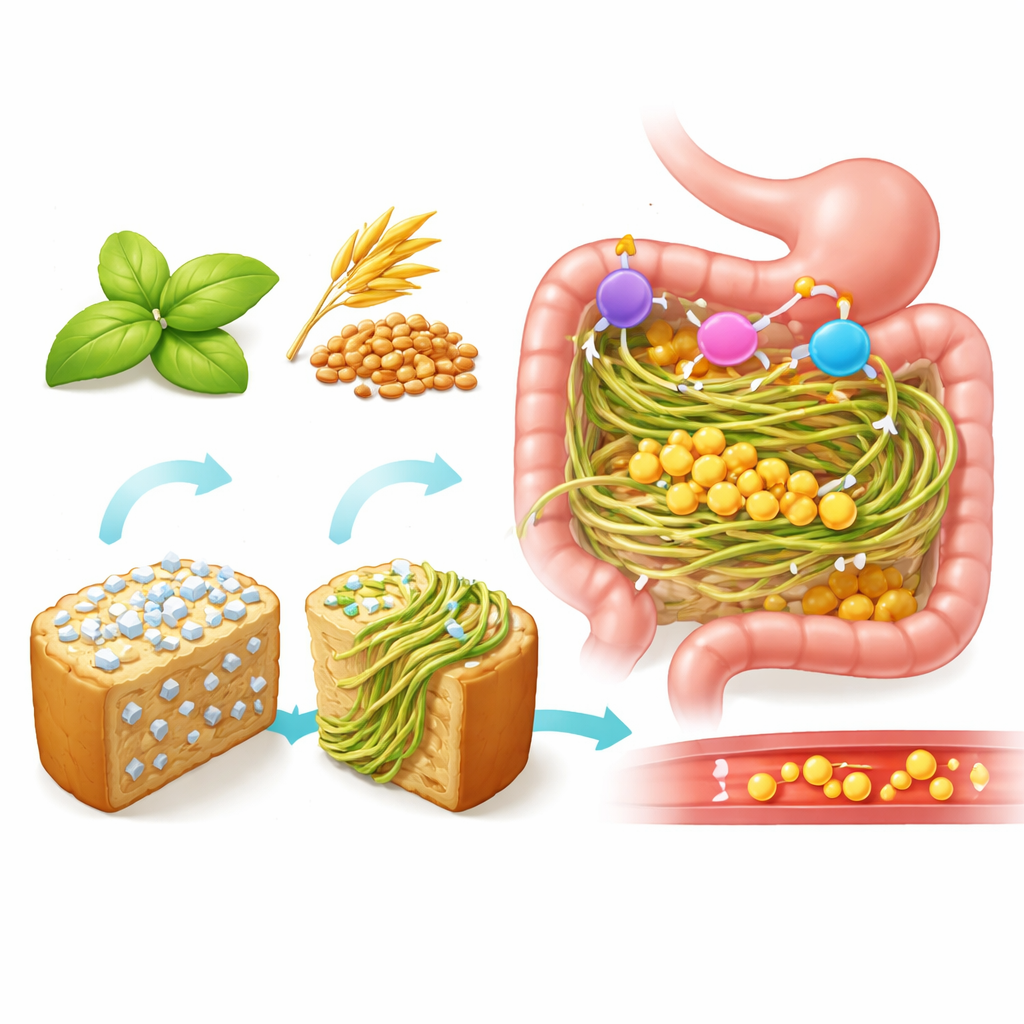
A key concern in diabetes is how fast the body turns starch into absorbable sugar. Two digestive enzymes—α-amylase and α-glucosidase—do this job, and slowing them can soften blood-sugar spikes after eating. The scientists tested whether crumbs from the different biscuits could inhibit these enzymes in the lab. All stevia-and-fiber biscuits noticeably reduced enzyme activity compared with the regular biscuits, suggesting gentler digestion of starch. Again, the oat β-glucan–rich WB-6 biscuit stood out, showing about six times more α-amylase inhibition and over five times more α-glucosidase inhibition than the control. Fibers likely work by physically blocking enzymes from reaching starch and by binding to enzyme surfaces, while plant polyphenols in stevia and the fibers add further blocking power.
Taste, Look, and What It Means for Your Plate
Healthier biscuits only matter if people still want to eat them. A trained tasting panel compared the new recipes with the standard biscuits for color, texture, taste, smell, and overall liking. While the stevia biscuits were darker—because stevia extract naturally carries green and yellow pigments—their taste, texture, and aroma were judged similar to the control. Most of the fiber- and stevia-enriched options were as acceptable overall as the classic biscuit, with one high-fenugreek version scoring slightly lower. In everyday terms, the study shows that it is feasible to turn a sugar-heavy snack into a lower-calorie, higher-fiber biscuit that may better support blood-sugar control and antioxidant defenses, without sacrificing the familiar eating experience. Future work will need to test how these biscuits perform in longer storage and in real-world blood-sugar studies, and to refine the color of stevia extracts so the treats look as light as they taste.
Citation: Hassan, M.A., Mustafa, M.A., Abdelshafy, A.M. et al. Production of low-calorie biscuits using stevia extract and dietary fibers from oats and fenugreek for functional food applications. npj Sci Food 10, 111 (2026). https://doi.org/10.1038/s41538-026-00768-w
Keywords: low-calorie biscuits, stevia sweetener, dietary fiber, blood sugar control, functional foods