Clear Sky Science · en
2040 greenhouse gas reduction targets and energy transitions in line with the EU Green Deal
Why Europe’s Climate Plans Matter to Everyone
The European Union is trying to become one of the world’s first large economies to stop adding greenhouse gases to the atmosphere by 2050. This study asks a simple but crucial question: what needs to happen by 2040 to keep that promise believable, affordable, and technologically realistic? Using a detailed computer model of Europe’s energy and economic systems, the authors map out how fast emissions must fall, how quickly clean technologies must spread, and which sectors can move first—and which will struggle the longest.
Setting the Pace for Cutting Emissions
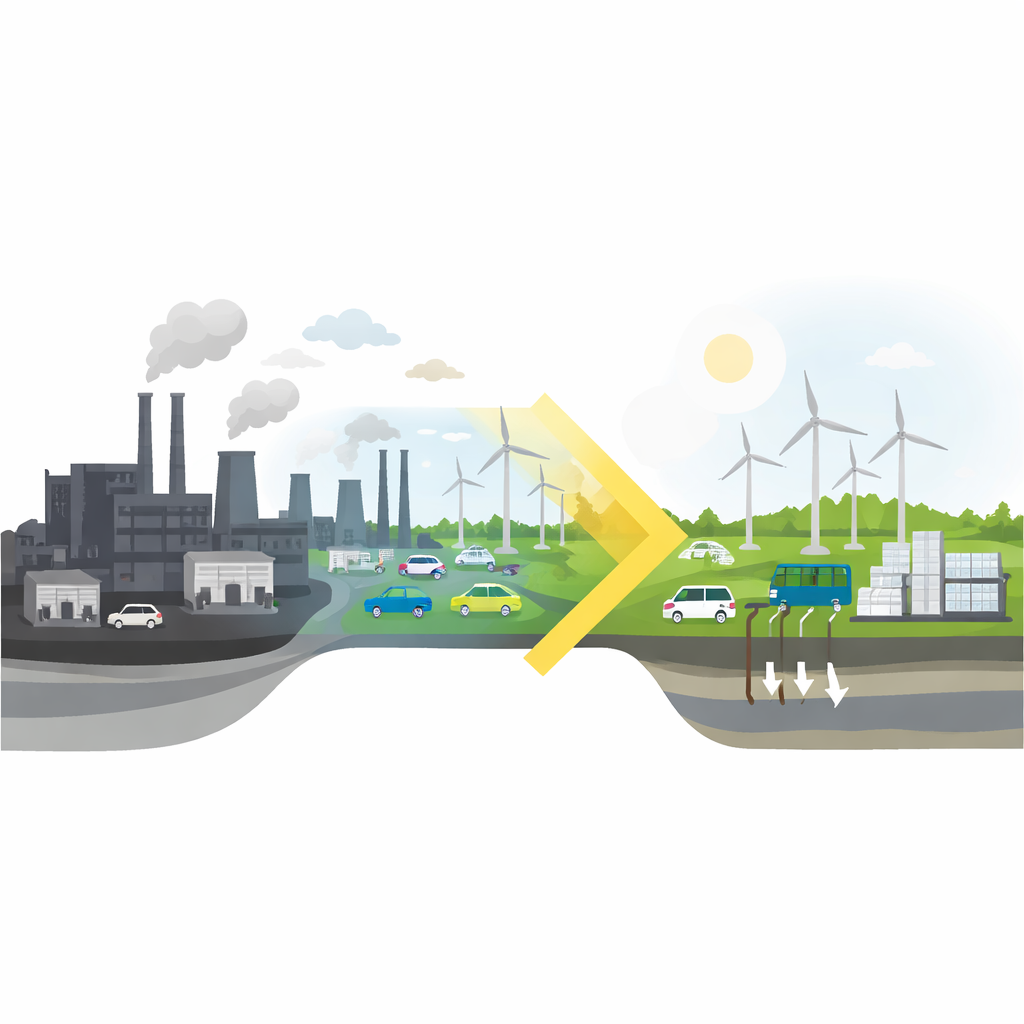
The researchers find that a gentle, straight-line decline in emissions from today to 2050 is not enough. To reach climate neutrality at reasonable cost, Europe has to move faster in the next two decades. The model suggests that by 2040, total greenhouse gas emissions should be about 86% lower than in 1990, with plausible pathways ranging from 80% to 93%. This is clearly more ambitious than simply sitting halfway between the EU’s 2030 and 2050 targets. Moving quicker upfront avoids locking in polluting equipment, such as fossil-fuel boilers and cars with combustion engines, that would either have to be scrapped early or keep emitting beyond 2050.
Cleaning Up Power and Using More Electricity
A central message is that Europe’s electricity system must become almost entirely free of fossil fuels by 2040. Coal is phased out completely, and gas-fired power plants shrink to only a tiny share of generation. In their place, wind and solar power expand roughly seven-fold, together supplying nearly four-fifths of all electricity. Nuclear power plays a modest, steady role in a few countries. At the same time, electricity’s share of final energy use nearly doubles so that it provides about half of all the energy people and businesses consume. This push happens mainly through three channels: electric vehicles in transport, heat pumps and efficient appliances in buildings, and increased electrification in industry.
Transforming Transport, Buildings, and Industry
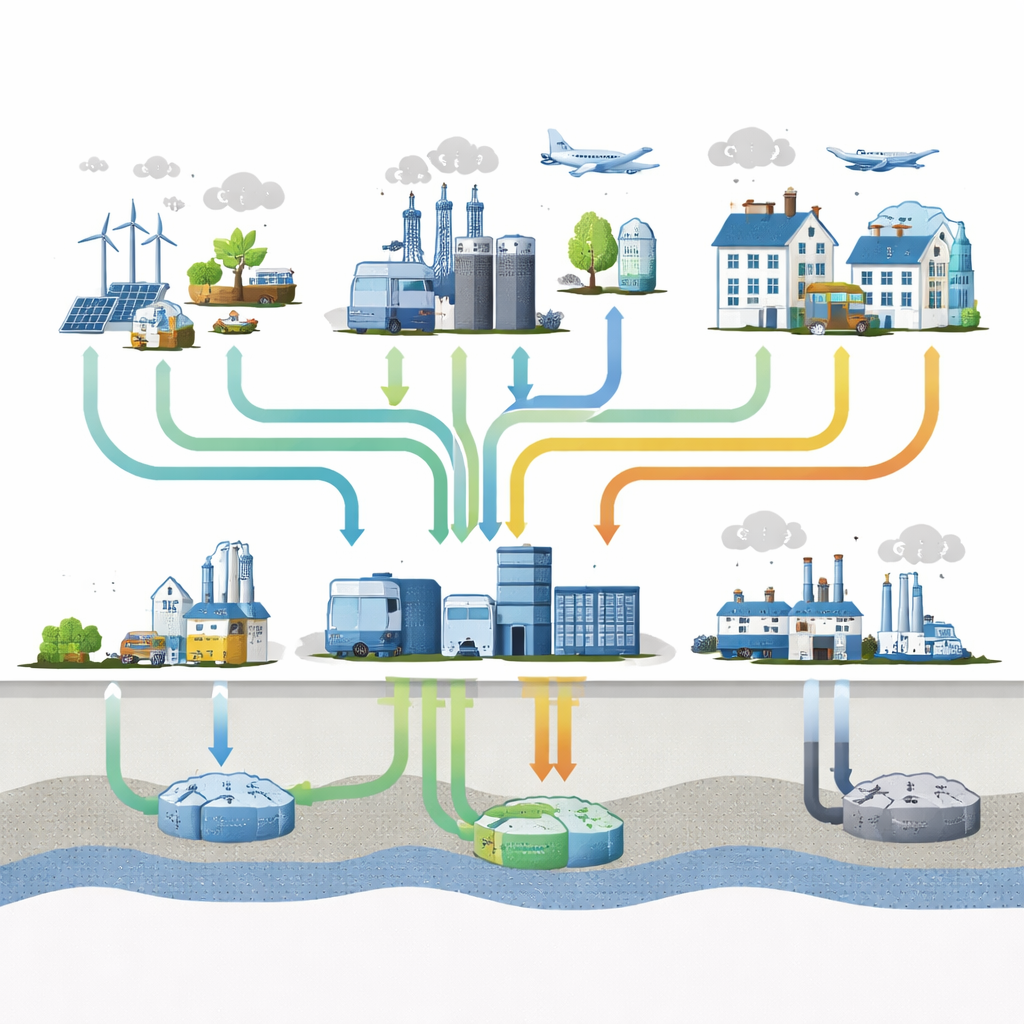
The switch to cleaner end uses is just as important as cleaning up power plants. In transport, strict standards that effectively end sales of new petrol and diesel cars by 2035 drive a rapid spread of battery-electric vehicles. Electricity demand for transport more than doubles in the 2030s, requiring an extensive rollout of charging infrastructure. Heavy trucks, planes, and ships are harder to clean up: road freight gradually shifts toward electric and possibly hydrogen trucks, but aviation and shipping still rely heavily on fossil fuels in 2040, with low‑carbon synthetic fuels and biofuels only taking over at scale later. In buildings, heat pumps and district heating become the main way to keep homes and offices warm, sharply cutting the need for gas and oil boilers and reducing overall energy use for heating, thanks to much higher efficiency.
New Fuels, Carbon Sinks, and Energy Security
Industry faces its own set of changes. Steel production leans more on recycled scrap and increasingly uses hydrogen instead of coal for new steel. Cement relies heavily on capturing and storing its process emissions underground. Chemical plants start to replace fossil feedstocks with biomass and hydrogen-derived fuels. Across the economy, some emissions remain stubbornly hard to remove, especially from aviation, shipping, agriculture, and certain industrial processes. To balance these out, the study finds Europe will need to scale up carbon capture and storage and other carbon‑removal methods rapidly, storing around 188 million tonnes of CO₂ per year by 2040. At the same time, overall demand for coal, oil, and gas falls sharply, cutting fuel imports and improving energy security even when new imports of hydrogen or synthetic fuels are considered.
Milestones on the Road to a Net-Zero Europe
In plain terms, the paper concludes that Europe can reach climate neutrality by 2050 without buying offsets from abroad, but only if it treats 2040 as a major checkpoint, not a gentle waypoint. By then, the authors argue, the EU should have almost completely cleaned up its power system, doubled the role of electricity in everyday energy use, deeply electrified transport and heating, and built substantial capacity to capture and store carbon. These milestones give policymakers and businesses concrete numbers to plan around, highlight where current plans for hydrogen and carbon storage may be over‑ or under‑ambitious, and underline that the 2030s will be a decisive decade for rolling out new technologies at scale.
Citation: Rodrigues, R., Pietzcker, R., Sitarz, J. et al. 2040 greenhouse gas reduction targets and energy transitions in line with the EU Green Deal. Nat Commun 17, 3417 (2026). https://doi.org/10.1038/s41467-026-71159-8
Keywords: EU Green Deal, climate neutrality, energy transition, renewable electricity, carbon capture and storage