Clear Sky Science · en
Modified letrozole vs GnRH antagonist protocols in ovarian aging women for IVF: an open-label, multicenter, randomized controlled trial
Why this fertility study matters
Many women today try to have children later in life, but the ovaries do not keep the same pace as modern plans. For women whose egg supply is already low or whose age is in the early to mid forties, in vitro fertilization (IVF) often brings low odds, high costs, and tough choices. This study tests whether a different way of preparing the ovaries, using a drug called letrozole alongside standard fertility hormones, can make IVF more effective or less burdensome for these women.
Two paths to the same goal
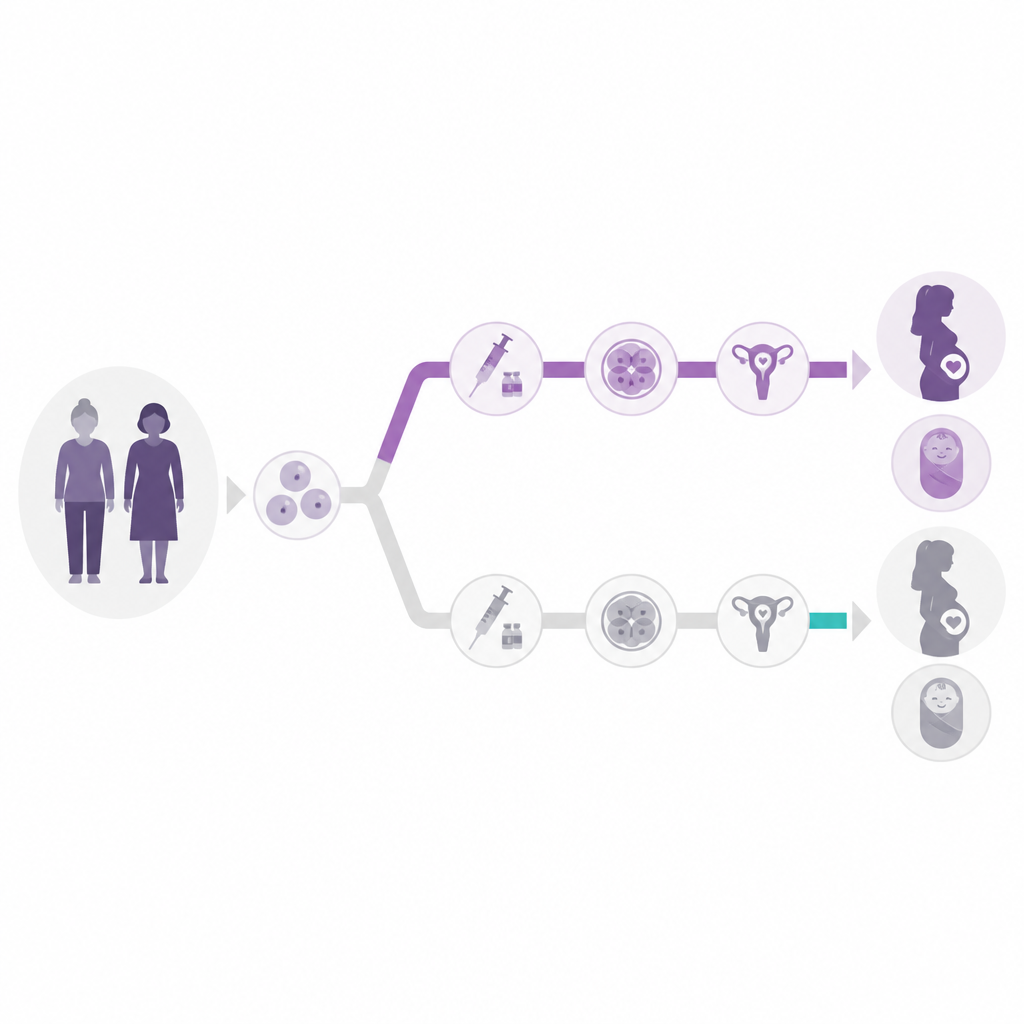
In IVF, doctors give hormone drugs to coax several eggs to mature at once. The standard approach for many patients blocks a natural brain hormone and replaces it with daily hormone shots. The new approach tested here adds an oral medicine, letrozole, for a few days at the start and adjusts the timing of other drugs to better match the body’s own signals. Both methods aim to help women with few remaining eggs, or women aged 40 to 45, produce embryos that can be transferred back to the womb to start a pregnancy.
How the trial was set up
Researchers at six fertility centers in China enrolled 318 women between 2020 and 2023. All had either a low egg count or were between 40 and 45 years old and planning IVF. Half were randomly assigned to the modified letrozole protocol, while the other half received the usual antagonist protocol. The team followed every started treatment cycle through all fresh and later frozen embryo transfers, counting how many women had a clinical pregnancy and how many ultimately had a live birth.
What the study found
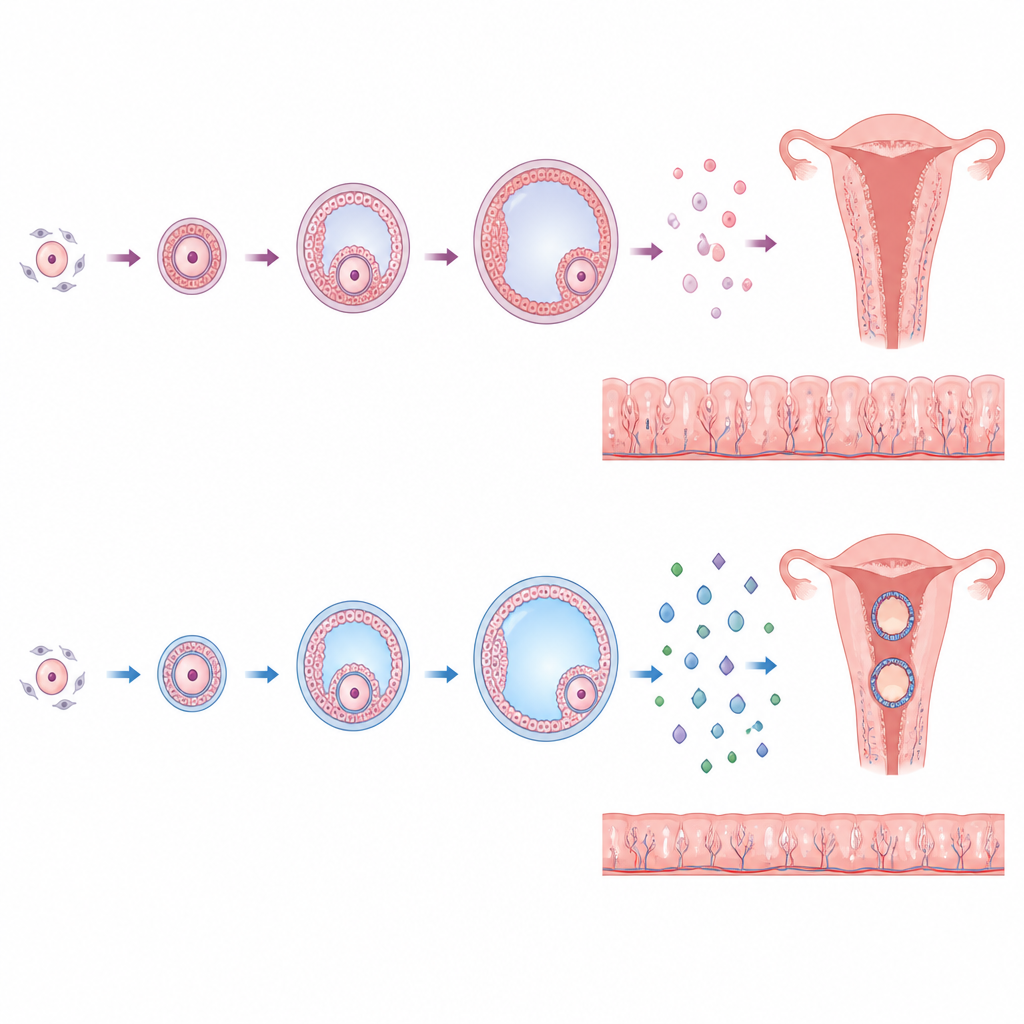
When all transfers from a single treatment cycle were considered together, the two methods produced very similar results. Roughly one in three women in each group became pregnant at least once, and about one in four went on to have a live birth. In other words, the new protocol did not clearly raise overall success rates. However, an important difference appeared when the researchers looked only at fresh embryo transfers in women with low egg reserve. Among those who received two early-stage embryos in a single fresh transfer, the letrozole-based plan led to pregnancies in about two thirds of cases, compared with just over one third in the standard group.
Less medicine, similar chances
The modified letrozole plan also changed what happened inside the body. Women on this protocol needed fewer days of hormone shots and a lower total dose, which can reduce cost and treatment fatigue. Their hormone patterns showed higher levels of certain androgens, lower estrogen levels during stimulation, and a slightly thinner womb lining at the time of the trigger shot. Despite producing a few fewer mature eggs and embryos on average, the number of good-quality embryos and the chance of taking home a baby were similar between groups. This suggests that how embryos are used, especially early fresh transfers, can matter as much as how many embryos are created.
What it means for patients
For women facing age-related fertility decline or a poor egg reserve, IVF often involves repeated cycles and hard trade-offs. This study shows that a letrozole-based protocol is a viable alternative to a common standard approach, with comparable chances of having a baby and the possibility of better pregnancy rates in certain fresh transfer situations. It may allow some women to reach pregnancy with fewer injections and shorter treatment time. While larger studies in different populations are still needed, the work supports a shift toward simpler, carefully timed fresh embryo use rather than more complex, drawn-out strategies for women with very limited eggs.
Citation: Zhao, Y., Zhao, S., Xu, J. et al. Modified letrozole vs GnRH antagonist protocols in ovarian aging women for IVF: an open-label, multicenter, randomized controlled trial. Nat Commun 17, 4282 (2026). https://doi.org/10.1038/s41467-026-70964-5
Keywords: IVF, diminished ovarian reserve, letrozole protocol, ovarian aging, embryo transfer