Clear Sky Science · en
African inland wetland area on the rise during the 21st century
Why Expanding African Wetlands Matter
African wetlands—from lush inland swamps to tidal flats along the coast—quietly support millions of people by storing water, nourishing crops, buffering floods, and sheltering wildlife. For decades, scientists have warned that the world is rapidly losing these vital landscapes. Yet, for Africa, the true picture has been surprisingly unclear. This study delivers the first high‑resolution, continent‑wide look at how African wetlands have changed over the past four decades and how they might evolve through the rest of this century. Its message is both reassuring and cautionary: inland wetlands are holding their ground and may even expand, while coastal wetlands are shrinking under human pressure and rising seas.
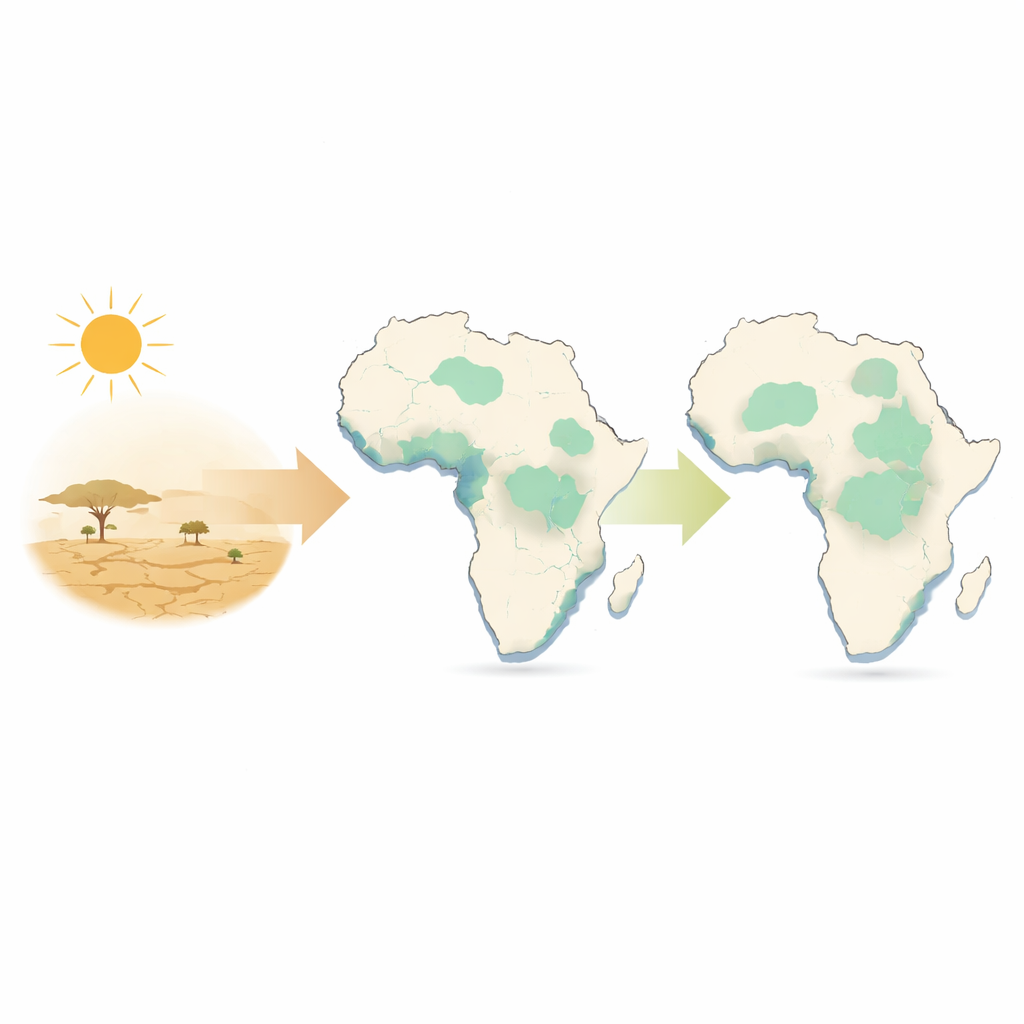
Taking a Fresh Look from Space
To uncover what is happening across such a vast and varied continent, the researchers turned to satellites. They analyzed around 810,000 Landsat images covering all of Africa from 1984 to 2021 and combined them with more than a quarter‑million carefully checked reference points on the ground. Using advanced computer classification, they mapped eight main types of natural wetlands, separating inland systems such as marshes and swamps from coastal zones such as tidal flats and shallow marine waters. They then tracked how the area of each wetland type changed through time, and compared these patterns with records of temperature, rainfall, drought, soil moisture, and human pressure.
A Mixed Record of Loss and Gain
The widely repeated claim that the planet has lost more than half of its wetlands since 1700 raised fears that Africa might have suffered similar damage in recent decades. Instead, the study finds that, overall, African wetland area has remained surprisingly stable since the mid‑1980s. Across the continent, losses of about 138,500 square kilometers were nearly balanced by gains of about 132,400 square kilometers, resulting in a net decline of only 0.51% between 1984 and 2021. However, this balance hides sharp differences. Vegetation‑covered wetlands such as swamps and marshes generally shrank, especially in the Congo Basin and in southern Africa, while surface water bodies, salt pans, and shallow coastal waters tended to expand.
Coasts Under Pressure, Inland Areas Tied to Climate
Coastal wetlands tell a more alarming story. Over 38 years, tidal flats, coastal swamps, and coastal marshes together lost nearly 10% of their area, following a clear downward line. These zones are under intense pressure: people increasingly convert them into farms, aquaculture ponds, cities, ports, and other infrastructure, all in places already exposed to sea‑level rise, storms, and erosion. In contrast, inland wetlands show a slight net increase—about 0.50%—and a more complex, up‑and‑down pattern, with drops around the mid‑2000s and renewed growth after 2017. By comparing wetland changes with climate records, the authors show that inland wetlands track shifts in soil moisture more closely than they do temperature or rainfall alone, reflecting how evaporation, runoff, and groundwater all interact. In regions such as the Congo Basin, long‑running droughts have been linked to declining forested wetlands.
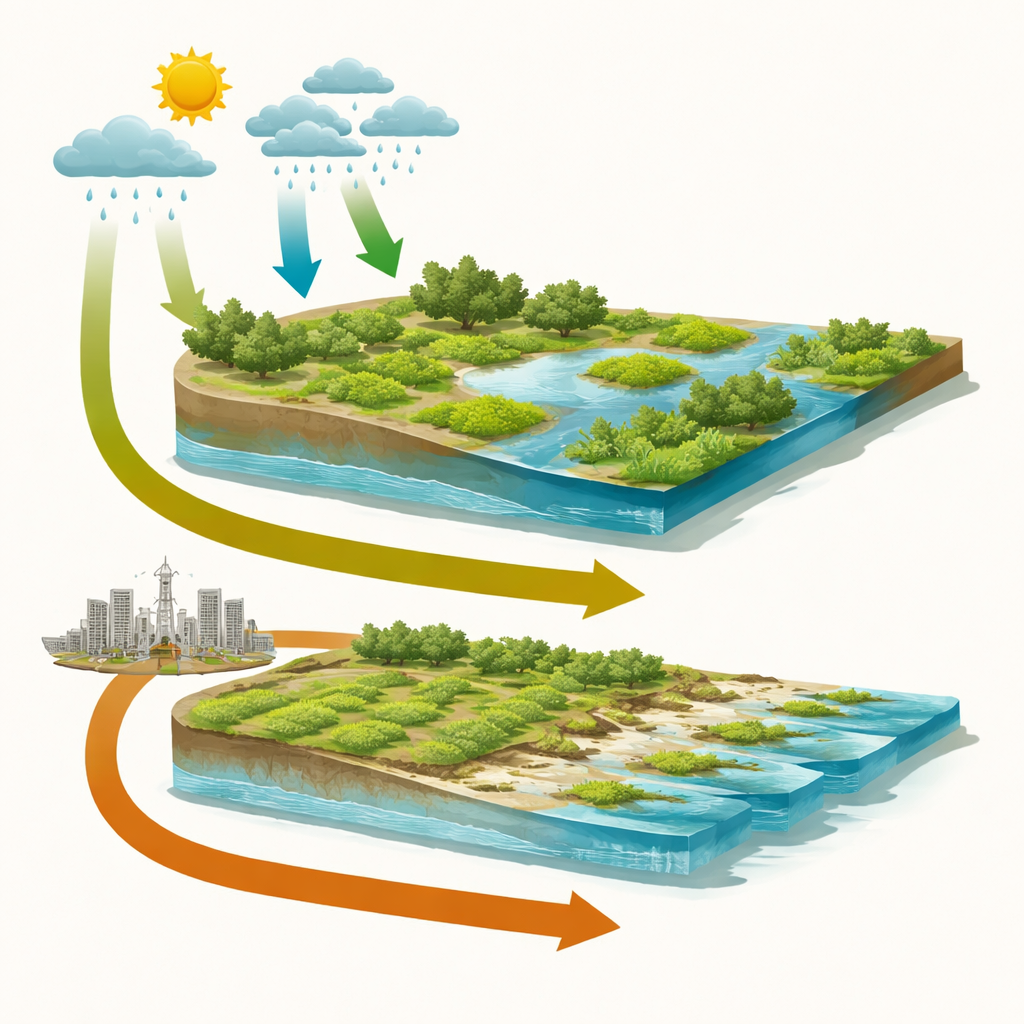
Peering Ahead to the End of the Century
Looking to the future, the team used climate projections from 14 global models, together with a widely used wetland model, to estimate how inland wetlands might respond to different greenhouse‑gas pathways up to 2100. Across all four scenarios—from strong climate action to high emissions—the simulated average area of African inland wetlands grows by more than 10% between the early 2020s and the end of the century. The largest potential gains are projected for northern Africa, particularly the Sahel, where slightly wetter soils could create new wetland patches. Yet the maps also reveal hotspots of likely loss, including parts of the Congo Basin, western Africa, and some iconic southern wetlands such as the Okavango region and Etosha, especially under stronger warming. Gains in one place will not simply replace the ecological and cultural value of losses elsewhere.
What This Means for People and Policy
For a lay reader, the core takeaway is that Africa has not experienced the kind of continent‑wide wetland collapse seen in some richer regions, and climate change may even favor the spread of inland wetlands in the coming decades. But this is no guarantee of safety. Coastal wetlands are already disappearing quickly under the combined weight of human development and rising seas, and some inland forests and floodplains are at risk of long‑term decline. Moreover, stable or expanding area does not automatically mean healthy ecosystems—wetlands can degrade in quality even as they hold their size. The authors argue that governments and communities now have a window of opportunity: by steering farming, infrastructure, and water management in ways that respect wetland functions, Africa can harness these landscapes to support food security, reduce disaster risk, and store carbon, rather than watching them erode into a source of new vulnerabilities.
Citation: Li, A., Chen, S., Song, K. et al. African inland wetland area on the rise during the 21st century. Nat Commun 17, 3600 (2026). https://doi.org/10.1038/s41467-026-70480-6
Keywords: African wetlands, climate change, coastal habitat loss, remote sensing, soil moisture