Clear Sky Science · en
Lactate-mediated NK cell dysfunction as a prognostic marker and therapeutic target in breast cancer
When Tumor Fuel Turns Against the Immune System
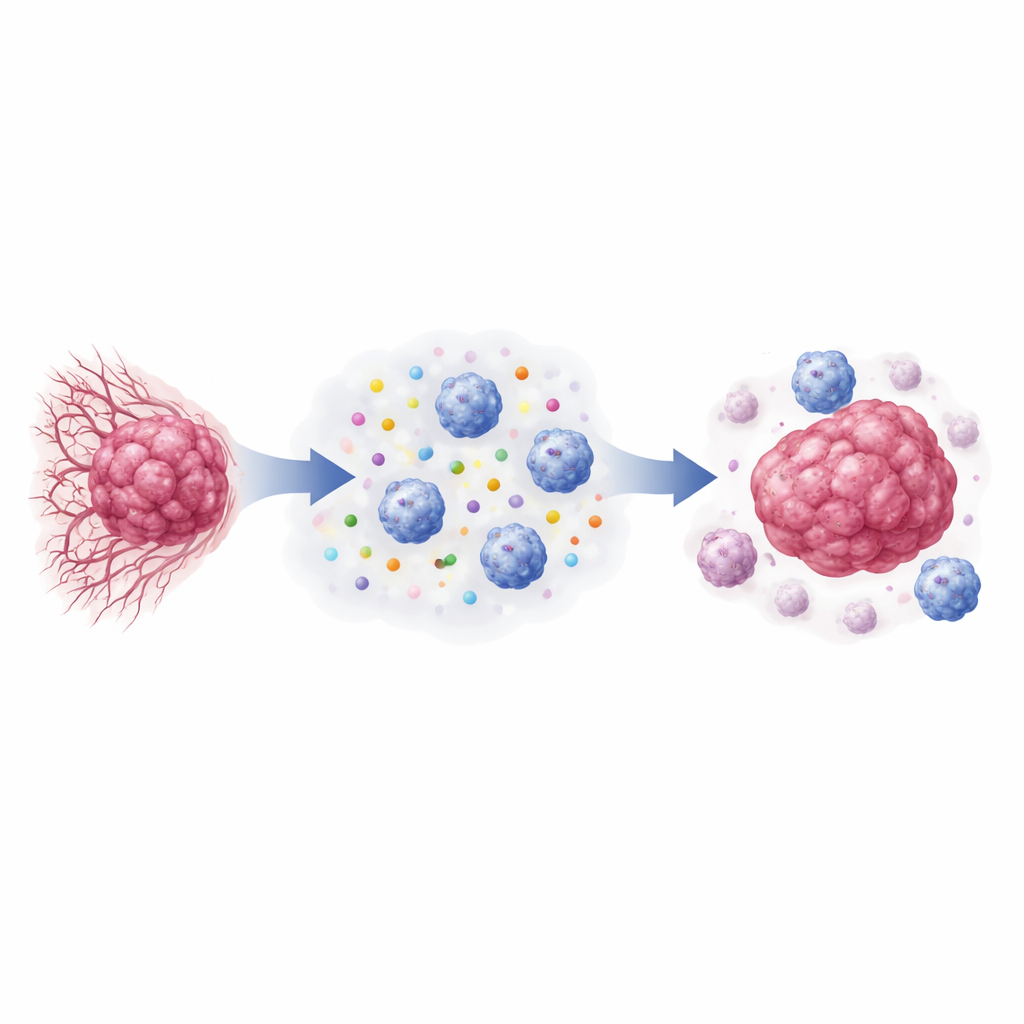
Our bodies constantly produce lactate, a simple molecule best known for making muscles burn during exercise. In many cancers, however, tumors churn out lactate in such large amounts that it reshapes their surroundings. This study shows how excess lactate in breast tumors can quietly shut down natural killer (NK) cells—front-line immune defenders—and how blocking lactate’s movement and signals could revive these cells and improve patient outcomes.
A Hidden Link Between Tumor Chemistry and Patient Survival
The researchers first turned to gene expression data from 882 women with breast cancer. They examined genes that drive lactate production and sensing in tumor cells, alongside genes that mark NK cell activation. Tumors with higher activity of lactate-related genes, especially LDHA and HCAR1 (which encodes the lactate receptor GPR81), consistently showed lower expression of NK cell activation receptors. Patients whose tumors had this “high lactate, low NK activity” signature experienced shorter periods without cancer recurrence, even after accounting for age, tumor size, hormone receptor status, and other clinical factors. In contrast, women whose tumors combined low lactate metabolism with strong NK activation signals tended to do better over time.
How Too Much Lactate Weakens Immune Attack
To understand what high lactate levels actually do to NK cells, the team isolated NK cells from healthy donors and exposed them to lactate concentrations similar to those found inside aggressive breast tumors. Over two days, NK cells grew more slowly but did not die, revealing a kind of functional “braking” rather than outright cell loss. Surface markers that indicate readiness to fight, as well as key activating receptors, dropped. Inside the cells, levels of the potent killing tools interferon-gamma and granzyme B fell. Advanced imaging and metabolic measurements showed that lactate reshaped the NK cells’ internal chemistry: their mitochondria produced less energy, oxygen use declined, and fat-like molecules accumulated, all signs of a sluggish, energy-starved state.
Blocking Recruitment and Silencing Tumor Signals
Beyond weakening individual NK cells, lactate also interfered with getting them to the tumor in the first place. In tiny microfluidic devices that mimic the three-dimensional structure of tumors, NK cells migrated far less efficiently toward breast cancer spheroids bathed in lactate. The tumor structures in lactate-rich channels showed much less cell death, indicating that fewer NK cells arrived and those that did were less effective. Measurements of signaling molecules revealed that lactate reduced the production of chemokines CXCL9 and CXCL10, which normally help guide and activate NK cells. Even though the cancer cells displayed the right molecular “flags” to be recognized by NK cells, the combination of poor recruitment and blunted degranulation (the release of toxic granules) left tumors largely unchallenged.
Turning Off Lactate Routes to Reawaken Defenses
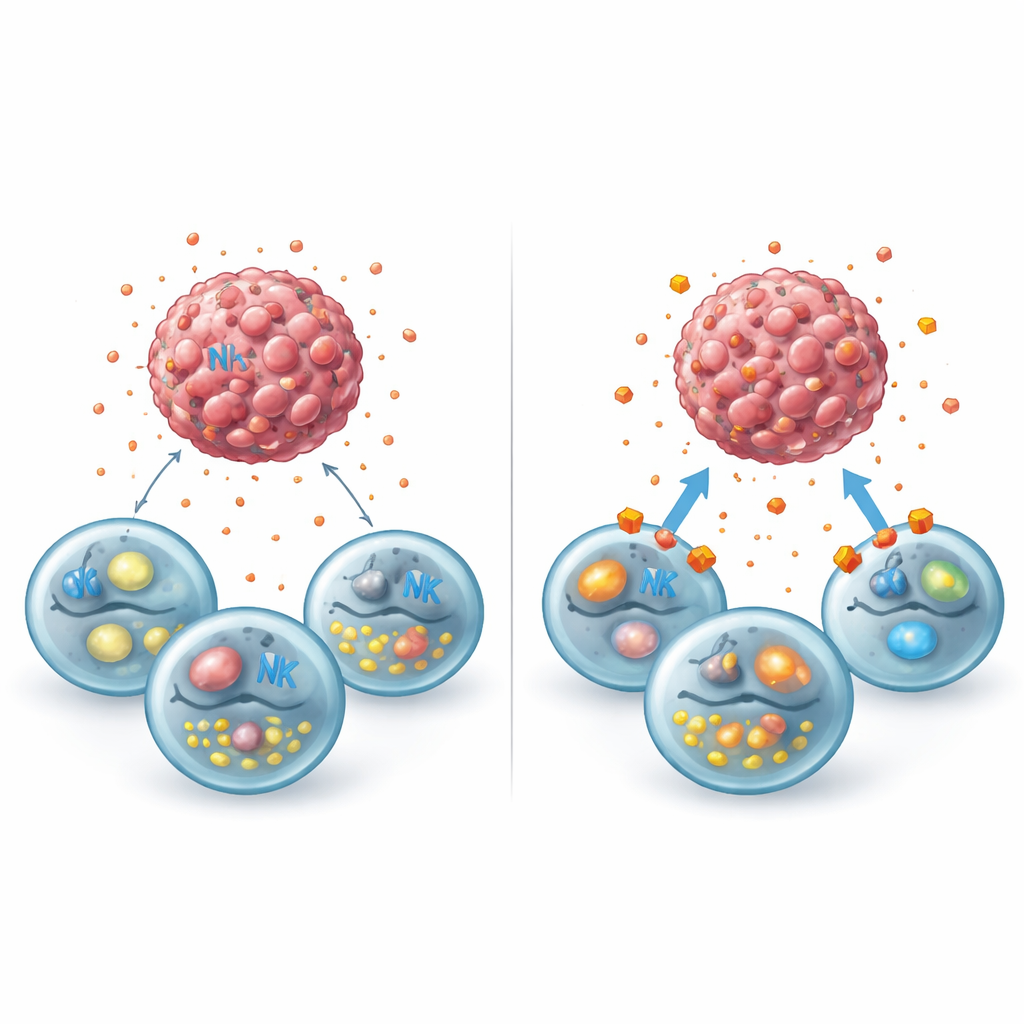
The study then asked whether cutting off lactate transport could lift this metabolic fog. The researchers treated breast cancer cells with syrosingopine, a drug that blocks two key transport proteins (MCT1 and MCT4) responsible for shuttling lactate across the cell membrane, and with a second drug cocktail that selectively inhibits each transporter. These treatments trapped lactate inside tumor cells, reduced its release into the environment, and did not directly kill the tumors at the doses used. When human NK cells were added, however, the picture changed: tumor spheroids shrank more, internal markers of apoptosis rose, and NK cells regained their ability to degranulate, even in the presence of added lactate. In parallel, analyses of publicly available datasets showed that switching off the GPR81 lactate receptor in breast cancer cells reprogrammed them to display more NK-stimulating signals and fewer molecules that help them hide or resist attack.
What This Means for Future Breast Cancer Treatment
Overall, the findings reveal that lactate is not just metabolic “waste” in breast tumors—it is an active suppressor of early immune defense. High lactate levels and strong signaling through its receptor help create a microenvironment where NK cells arrive less often, work less efficiently, and expend their energy poorly. By blocking lactate transport or its receptor, the study shows it is possible to restore NK cell activity and increase tumor cell death in realistic three-dimensional models. For patients, this work suggests that measuring lactate-related genes could help predict prognosis, and that drugs targeting lactate pathways might one day be combined with NK cell–based therapies and other forms of immunotherapy to turn metabolically hostile tumors back into terrain where the immune system can fight.
Citation: Ielpo, S., Barberini, F., Gaiba, A. et al. Lactate-mediated NK cell dysfunction as a prognostic marker and therapeutic target in breast cancer. Cell Death Discov. 12, 200 (2026). https://doi.org/10.1038/s41420-026-03063-5
Keywords: breast cancer, lactate metabolism, natural killer cells, tumor microenvironment, cancer immunotherapy