Clear Sky Science · en
The role of the oxytocinergic system in oral microbiome composition in children with autism: evidence from a randomized controlled trial of intranasal oxytocin
Why this matters for kids and families
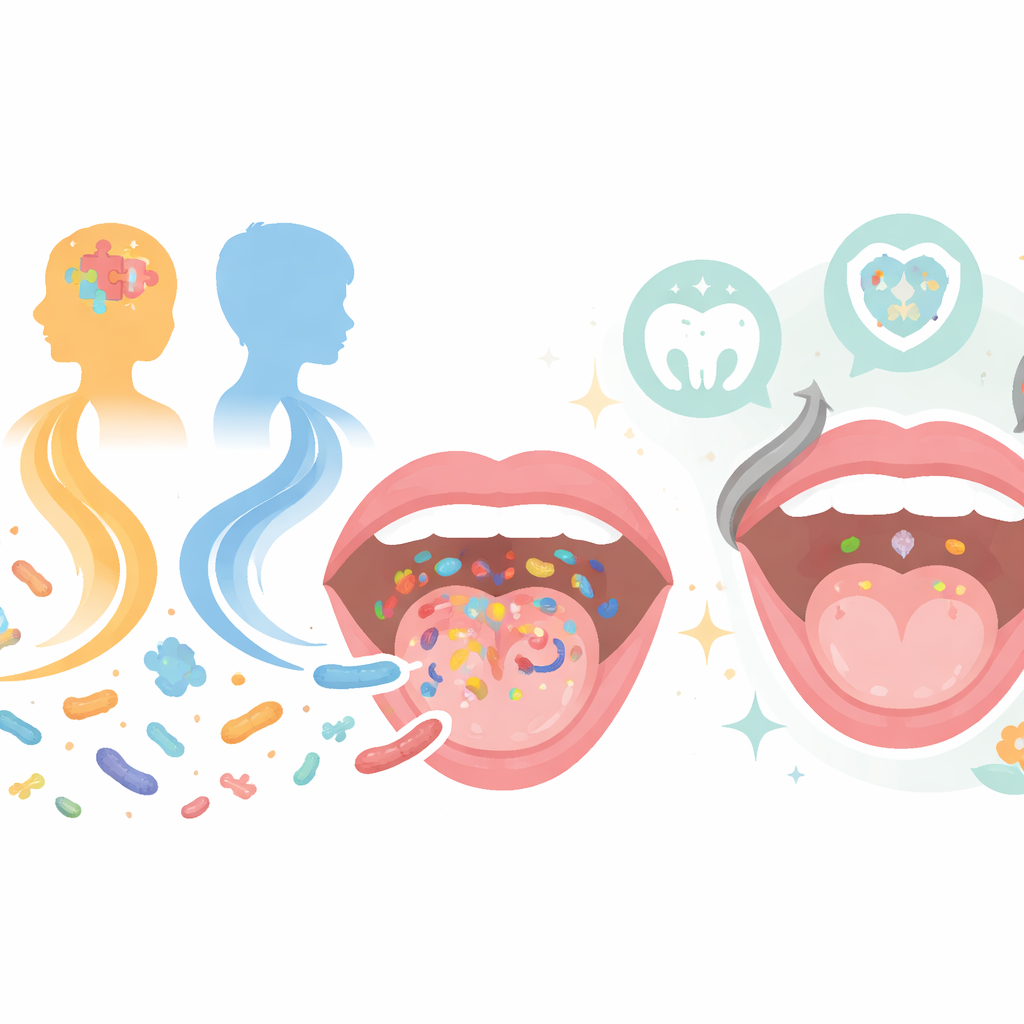
Autistic children often face not only social and communication challenges but also higher rates of dental problems, such as cavities and gum disease. At the same time, the hormone oxytocin is being explored as a possible treatment for social and stress-related difficulties in autism. This study brings these threads together by asking a new question: could oxytocin also shape the community of bacteria living in the mouth, and might this help explain differences in oral health and perhaps offer new paths for diagnosis and care?
The tiny world inside the mouth
Our mouths host rich “microbiomes” — communities of many different bacterial species that can support health or contribute to disease. Earlier work has shown that autistic children often have a different mix of mouth bacteria than their non-autistic peers, and that some of these differences relate to behavior and oral health. In this study, researchers collected tongue swabs from 80 autistic children and 40 non-autistic children, all aged 8 to 12 years. Using genetic sequencing, they measured which bacterial groups were present and in what amounts. They also measured oxytocin levels in saliva and examined chemical tags on the oxytocin receptor gene, which can influence how strongly the body responds to the hormone.
Linking a social hormone to mouth bacteria
The team first looked at natural, or endogenous, oxytocin levels before any treatment. Children with lower salivary oxytocin tended to have a more even and diverse bacterial community on their tongues. Twelve bacterial groups showed clear ties to oxytocin: some, such as Actinomyces, Streptococcus, and several other common oral residents, were more abundant in children with higher oxytocin; others, including Porphyromonas, Fusobacterium, and particularly Moraxella, were more common when oxytocin was lower. These patterns were seen across autistic and non-autistic children and remained even after taking into account diet and dental-care habits, suggesting a genuine link between the oxytocin system and the oral microbiome.
Testing intranasal oxytocin in autistic children
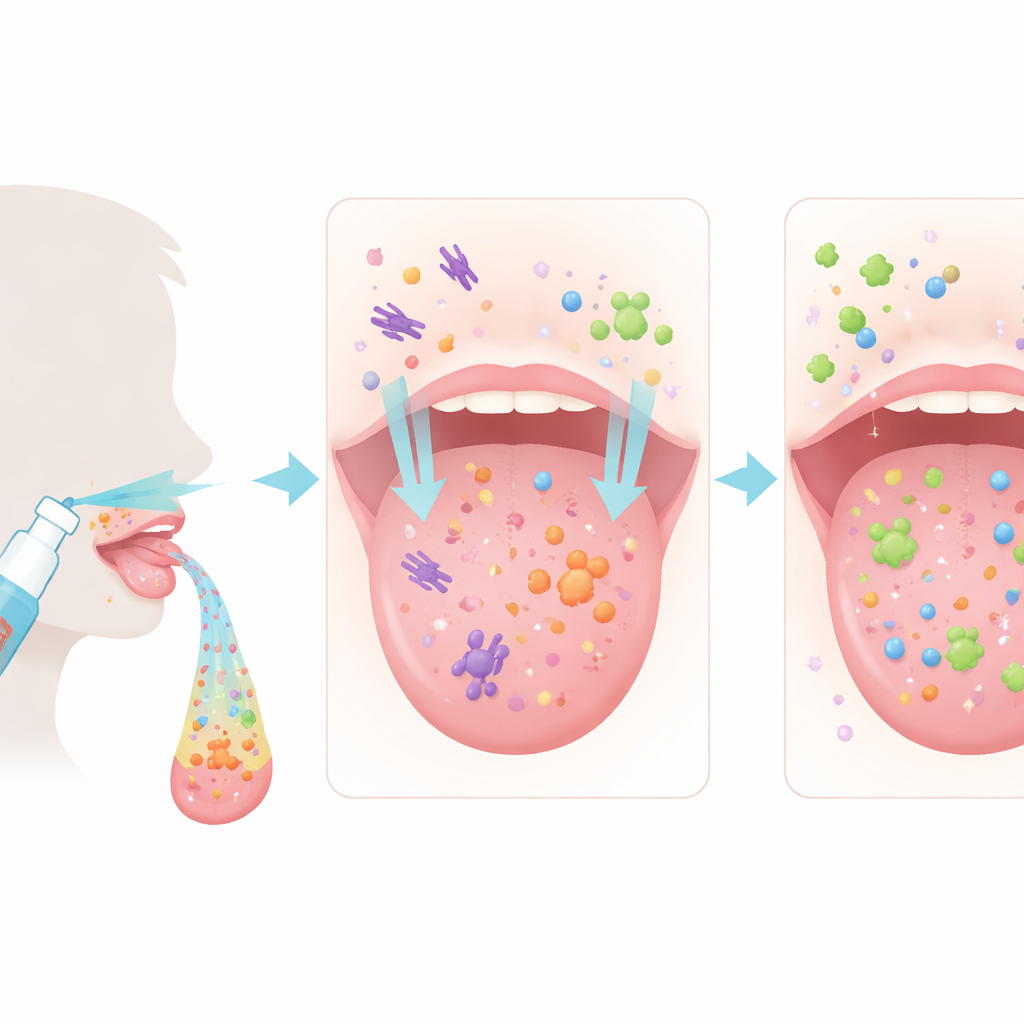
Next, the researchers carried out a four-week, double-blind trial in which autistic children were randomly assigned to receive either an oxytocin nasal spray or a placebo twice a day. Mouth swabs were collected at the start, right after the four-week course, and again four weeks later. Overall diversity of mouth bacteria did not shift differently between the oxytocin and placebo groups. But several specific bacterial genera did. In the oxytocin group, the abundance of Centipeda increased shortly after treatment, while Moraxella decreased. At a later follow-up, the genus Rothia also decreased in the oxytocin group compared with placebo. Some other bacteria changed mainly in the placebo group, which may reflect natural fluctuations or the impact of taking part in the study itself.
A closer look at a key microbe
Moraxella emerged as a particularly important player. At baseline, children with lower natural oxytocin had more Moraxella in their mouths. After oxytocin treatment, children who showed the largest drop in Moraxella tended to have the biggest rise in their own oxytocin levels. They also showed decreases in methylation of the oxytocin receptor gene, a chemical change usually linked to stronger gene activity. Previous work has associated Moraxella with inflammatory conditions of the airways and gums, so its reduction after oxytocin might point to a calming effect of the hormone on immune and inflammatory processes in the mouth.
What this could mean going forward
This exploratory study suggests that the body’s oxytocin system and the oral microbiome are closely intertwined in autistic children, and that giving oxytocin through a nasal spray can nudge specific mouth bacteria up or down. While these microbial shifts did not track with short-term changes in behavior, they may still matter for oral health and for understanding biological subtypes within autism. In the long run, profiling bacteria in saliva could help refine diagnosis or identify children who might benefit most from certain treatments, and oxytocin-based therapies might eventually be tailored not only to support social functioning but also to promote a healthier balance of microbes in the mouth.
Citation: Evenepoel, M., Daniels, N., Moerkerke, M. et al. The role of the oxytocinergic system in oral microbiome composition in children with autism: evidence from a randomized controlled trial of intranasal oxytocin. Transl Psychiatry 16, 204 (2026). https://doi.org/10.1038/s41398-026-03964-0
Keywords: autism, oxytocin, oral microbiome, children, intranasal treatment