Clear Sky Science · en
Neonatal gut Bifidobacterium associates with indole-3-lactic acid levels in blood and risk of ADHD at age 10
How Early Gut Bugs May Shape a Child's Attention
Parents often wonder why some children struggle with attention and impulse control while others do not. This study explores an unexpected suspect in the earliest days of life: friendly gut bacteria in newborns and the tiny chemicals they release into the bloodstream. By linking gut microbes in the first week after birth to attention-deficit/hyperactivity disorder (ADHD) at age ten, the researchers suggest that the timing of our very first microbial guests could leave a lasting mark on the developing brain. 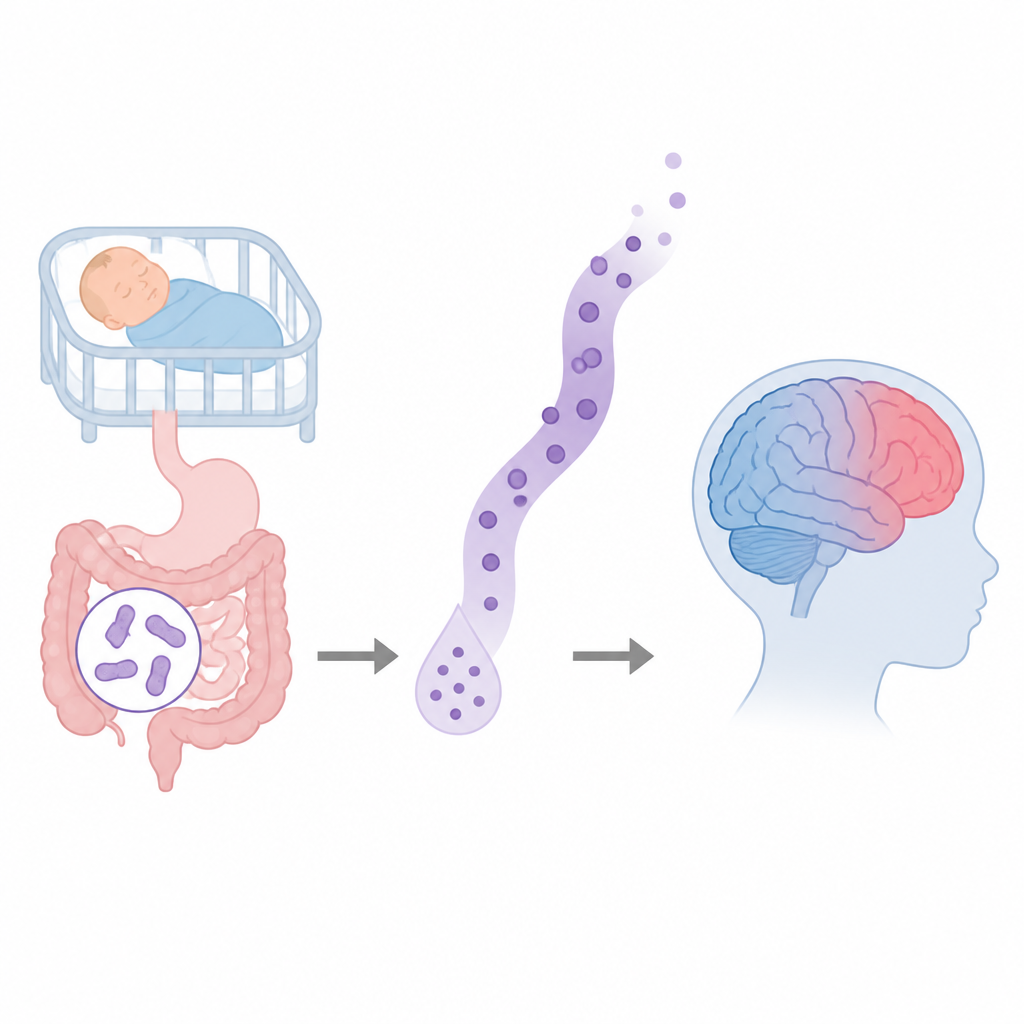
First Gut Settlers and the Growing Brain
Right after birth, a baby’s gut is rapidly colonized by bacteria that help digest milk and train the immune system. This period overlaps with a whirlwind of brain growth and wiring. Scientists have long suspected that signals from the gut can talk to the brain, but most human studies have looked at older children or adults. The team behind this work asked a more fundamental question: does the pattern of gut colonization in the very first days of life relate to who later develops ADHD, a common condition marked by inattention, hyperactivity, and impulsivity?
Tracking Babies From Birth to Age Ten
The researchers followed 700 Danish children from pregnancy through age ten. They collected stool samples at one week, one month, and one year, and blood samples in the first days after birth and later in infancy. At age ten, each child underwent a detailed psychiatric examination to assess ADHD symptoms and diagnosis, along with information on genetics, birth factors, feeding, antibiotic use, pets, and family background. This unusually rich dataset allowed the team to separate the effects of microbes from other influences, such as inherited genetic risk for ADHD.
An Early Spike in a Usually Helpful Bacterium
One week after birth, children who later met criteria for ADHD had a higher share of a group of bacteria called Bifidobacterium in their gut compared with those without ADHD. Bifidobacteria are typically thought of as beneficial and are common in breastfed infants. Interestingly, the difference appeared only in that narrow early window and faded by one month and one year. Statistical models indicated that for every tenfold increase in the relative amount of Bifidobacterium at one week, the odds of ADHD at age ten rose, even after accounting for sex, birth details, early-life exposures, and genetic risk for ADHD.
A Microbial Chemical Link in the Blood
To explore how these microbes might influence the brain, the team examined thousands of small molecules in newborn dried blood spots. They found that higher levels of Bifidobacterium in the one-week stool samples were tied to higher levels of a tryptophan-derived compound called indole-3-lactic acid in blood taken a few days after birth. Newborns with more of this compound had a greater chance of later ADHD, and this pattern was partly confirmed in two independent groups of young people. Mediation analyses suggested that about one fifth of the link between early Bifidobacterium and ADHD risk could be explained by this circulating chemical, with the rest likely involving other, still unknown pathways. 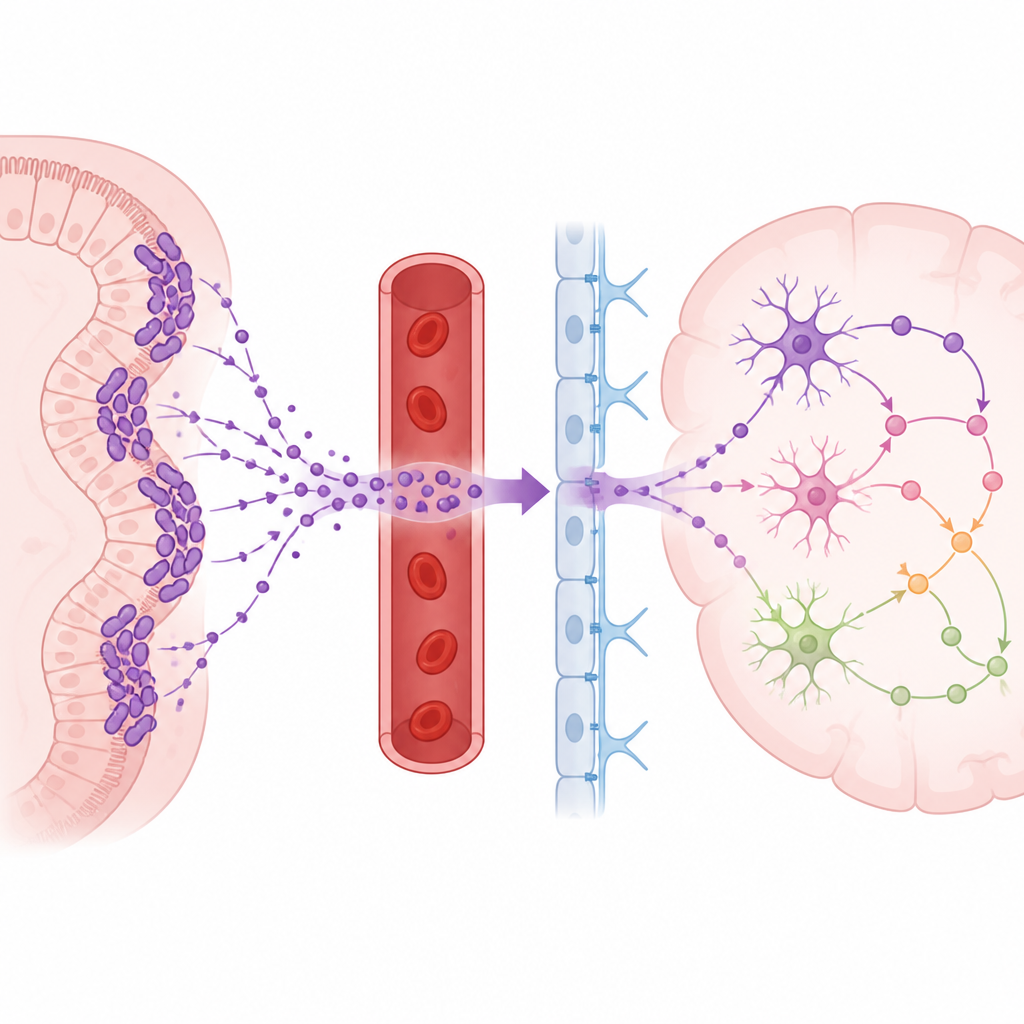
What This Might Mean for Neurodevelopment
Laboratory work has shown that indole-3-lactic acid can cross into the brain and interact with receptors involved in nerve growth and inflammation. It may generally support healthy development, but the timing and level of exposure could matter. The authors propose that unusually high amounts of Bifidobacterium and its chemical products in the very first week of life might nudge sensitive brain circuits onto a slightly different developmental path for some children, especially those already vulnerable for other reasons. Most babies with high early Bifidobacterium did not develop ADHD, underscoring that this is one factor among many rather than a simple cause.
Looking Ahead to Possible Early-Life Interventions
This research does not suggest getting rid of Bifidobacterium, which remains important for many aspects of infant health. Instead, it points to the idea that when and how quickly these bacteria expand in the newborn gut may be as important as how much is present overall. In the future, it may be possible to design early-life strategies that encourage a more gradual, well-timed colonization pattern and balanced production of microbial chemicals like indole-3-lactic acid. Such approaches, tested carefully in clinical studies, could one day help support optimal brain development and perhaps lower the risk of ADHD for susceptible children.
Citation: Widdowson, M., Shah, S., Thorsen, J. et al. Neonatal gut Bifidobacterium associates with indole-3-lactic acid levels in blood and risk of ADHD at age 10. Mol Psychiatry 31, 3544–3557 (2026). https://doi.org/10.1038/s41380-026-03480-z
Keywords: gut microbiome, ADHD, Bifidobacterium, neurodevelopment, indole-3-lactic acid