Clear Sky Science · en
Impact of augmented reality-driven cultural creative product innovation on consumers’ purchase intentions: evidence from Chinese tourist attraction refrigerator magnets
Souvenirs That Come to Life
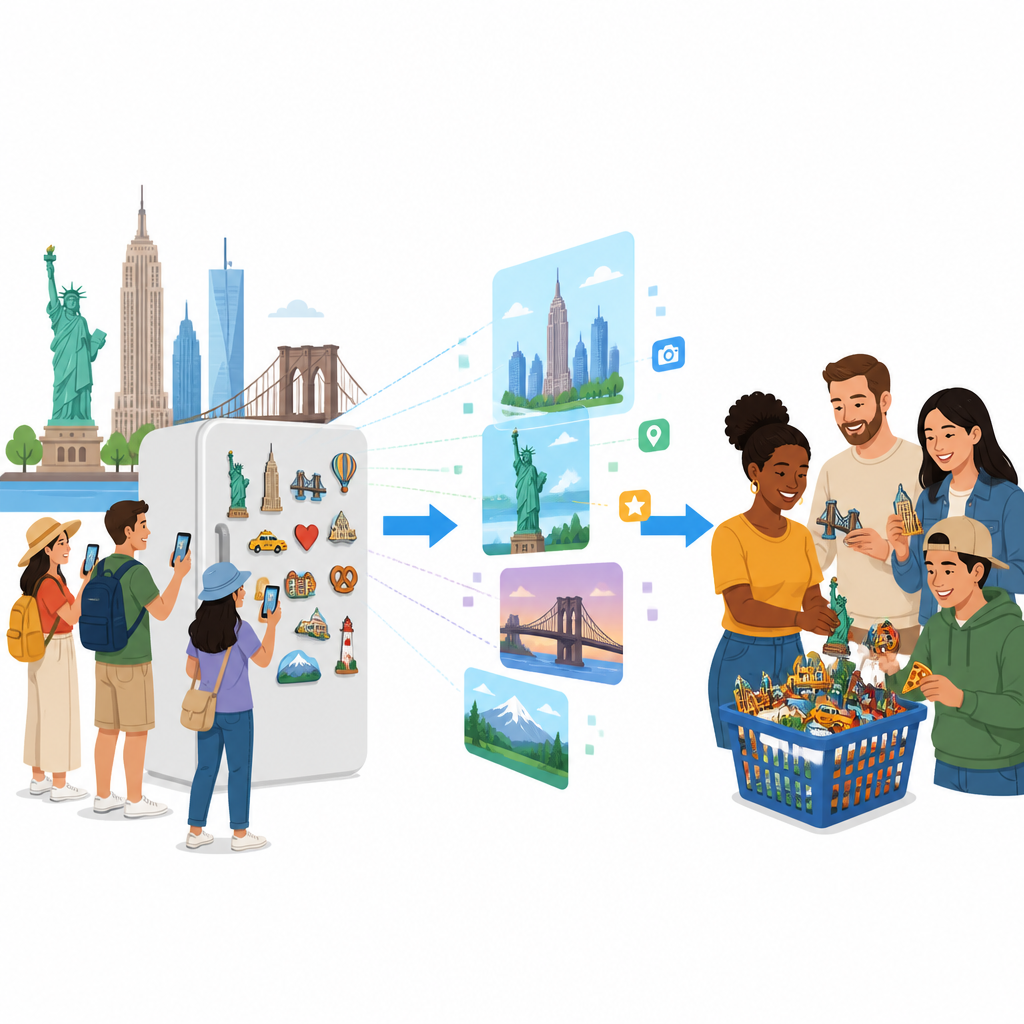
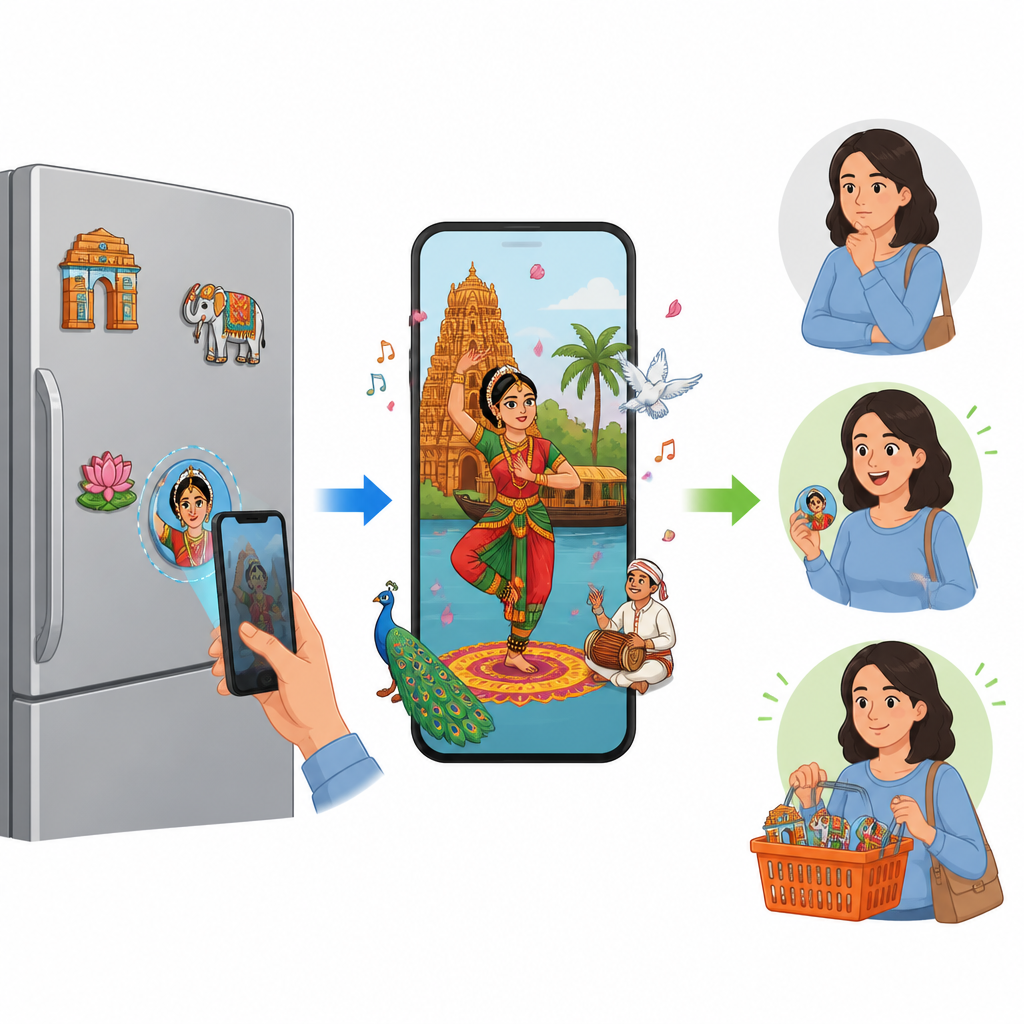
Imagine a simple fridge magnet from a holiday turning into a tiny window that replays your trip in sound and motion. This study looks at how adding augmented reality (AR) to refrigerator magnets at Chinese tourist sites changes the way people feel about these everyday souvenirs and how likely they are to buy them.
From Flat Magnets to Living Memories
Traditional cultural products, like souvenirs, aim to capture local history, scenery, and emotion in small, portable objects. In China, where cultural and creative industries are growing quickly, AR magnets have begun popping up at famous attractions. When viewed through a phone, these magnets trigger short videos, animations, or mini games tied to the place they represent. The researchers chose these magnets as a lens to understand how AR can reshape the value of cultural keepsakes and influence shoppers in busy tourist spots.
Listening to What Shoppers Say and Do
The team first gathered nearly one thousand customer reviews from a popular Chinese social platform and interviewed 20 collectors of AR magnets. By carefully coding and comparing this text, they uncovered eight main things people care about: how easy the magnets are to use, how useful they feel, how much friends and online communities matter, whether the price feels fair, how good they look, how strong the emotions are, how well they express local culture, and how innovative they seem. These ingredients became the building blocks of a larger model of why people decide to buy.
Testing Which Factors Matter Most
Next, the researchers surveyed 337 adults who had actually tried AR magnets, both online and at tourist attractions. Using statistical models, they checked how each factor influenced the intention to buy. Almost all factors had a clear positive effect, but one stood out: ease of use. If scanning the magnet felt quick, smooth, and reliable, people were much more willing to purchase. Price value came next, followed by social influence, cultural value, visual appeal, perceived usefulness, and emotional value. Perceived newness on its own, however, did not significantly push people toward buying, suggesting that a clever idea is not enough if it is not simple and clearly valuable.
Many Paths to Yes
Because real life decisions are rarely driven by just one factor, the team also used a method that looks at how different combinations work together. They mapped eleven distinct “recipes” of conditions that could all lead to strong purchase intention. In the most common pattern, easy operation, strong emotions, and strong social influence came together. Another, more unusual route showed that even when cultural meaning was weak, people could still be drawn in if the magnets felt both easy to use and highly innovative, and if the price seemed acceptable. This approach highlights that different types of shoppers can reach the same decision through different mixes of experience, value, and social cues.
What This Means for Future Souvenirs
For designers and tourism managers, the findings suggest that the success of AR souvenirs does not rest solely on high-tech tricks. Tourists are most likely to buy when scanning is effortless, the price feels fair, and friends or online communities make the product visible and desirable. Cultural storytelling, attractive visuals, and warm emotions still matter, but they work best when layered on a smooth, enjoyable interaction. In simple terms, the study shows that bringing souvenirs to life through AR can boost sales and enrich travel memories, as long as the magic fits comfortably into everyday use.
Citation: Ding, N., Hu, L. & Chen, M. Impact of augmented reality-driven cultural creative product innovation on consumers’ purchase intentions: evidence from Chinese tourist attraction refrigerator magnets. Humanit Soc Sci Commun 13, 702 (2026). https://doi.org/10.1057/s41599-026-07075-5
Keywords: augmented reality souvenirs, cultural creative products, tourist purchase intention, AR refrigerator magnets, consumer behavior