Clear Sky Science · en
Is delay equivalent to risk? A comparative study of intertemporal choice and risky choice in gain scenarios
Why waiting versus risk matters in everyday life
Should you take a sure but modest reward right now, or hold out for a bigger payoff later? And how does that differ from taking a chance on a risky payoff, like a lottery ticket or a volatile investment? This study looks closely at how people weigh waiting against taking risks when the possible money gains are carefully kept the same, revealing how our minds really trade time for certainty.
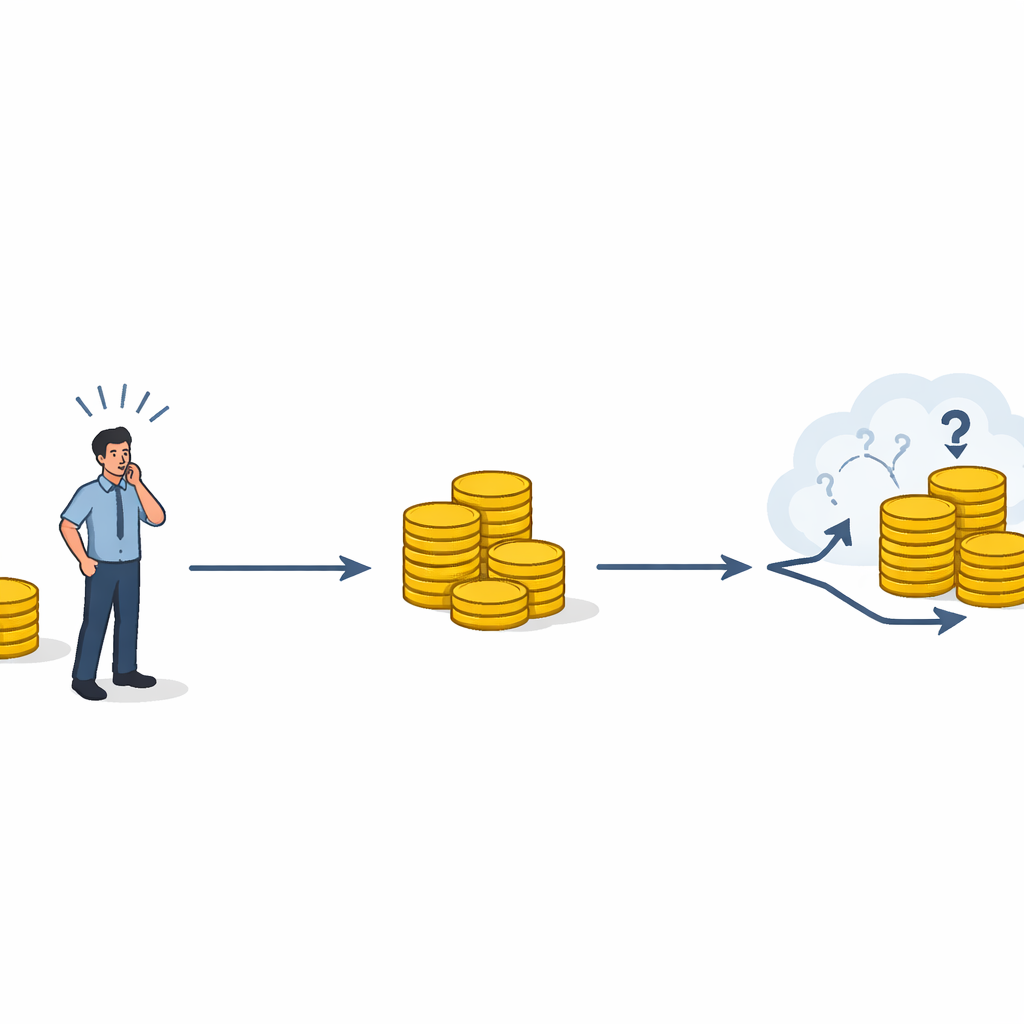
Choosing between now, later, and maybe
Everyday decisions often involve three kinds of options: taking a smaller amount of money right away, waiting for a larger amount later, or gambling on a larger amount that might not come at all. The researchers focused on these three choices, which they called a small certain reward now, a larger reward later, and a larger but risky reward. By concentrating only on gains, and by holding the size of the gains steady across different situations, they set out to see whether people treat waiting and risk as similar kinds of uncertainty or as something quite different.
Building fair comparisons between delay and risk
To make the comparison fair, the team first ran a preliminary test with university students to find money amounts that felt clearly “small” and “large.” They then asked participants to say how long they would be willing to wait for the larger amount, and what chance of winning the larger amount would feel equal to getting the small amount for sure. From these answers, the researchers calculated “equivalent” points: for most people, getting a modest sum immediately felt about the same as waiting 43 days for a much larger sum, or as having a bit better than a one-in-two chance of winning that larger sum. These matched options became the building blocks for the main experiment.
Putting preferences to the test
In the main part of the study, two groups of students rated and chose between these now, later, and risky options, all printed on paper and presented in a quiet indoor setting. One group had already taken part in the earlier matching tasks, and the other group was new to the choices. In both groups, most participants liked the larger later reward more than the small immediate reward, and they also liked the risky larger reward more than the small immediate one. Yet when forced to choose, a clear pattern emerged: whether they faced three options or only two, people picked the larger later reward far more often than the risky larger reward, even though the money amounts were aligned so that the options should have felt roughly equal in value.
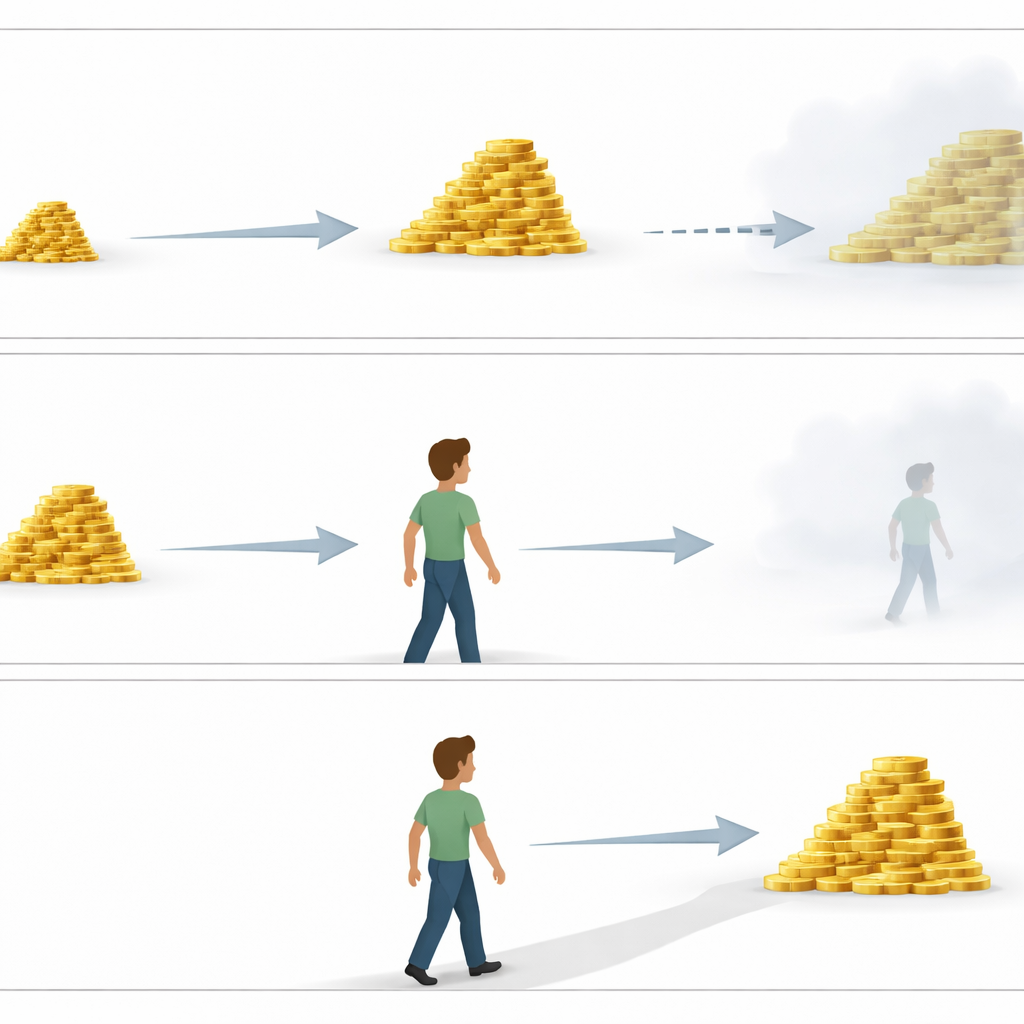
What our minds do with time and uncertainty
The results suggest that people do not treat waiting and risk as the same kind of “maybe.” Waiting for a known payoff in the future feels safer and more comfortable than taking a chance on a payoff that might never arrive. The authors link this to how people think about losses and certainty. Taking a risk brings the uncomfortable possibility of getting nothing, which can trigger a strong wish to avoid loss. Waiting, in contrast, can feel like a sure path to a reward, as long as the time frame is reasonable. Even when the study setup tried to remove the influence of changing money amounts, participants still treated time and risk differently, hinting at separate mental processes for handling each.
What this means for real-world decisions
For a layperson, the takeaway is simple: when money outcomes are the same, most people would rather wait than gamble. This means that delay is not psychologically equivalent to risk, even though both involve uncertainty about the future. The study suggests that policies and everyday advice that highlight the certainty of future benefits, such as steady savings or long-term health gains, may resonate more strongly than appeals that rely on risky chances of big wins. At the same time, the work points to open questions about how different people, cultures, and real financial stakes might change these patterns, setting the stage for future research into how we balance patience and risk in our daily lives.
Citation: Yan, Xh., Deng, Af. Is delay equivalent to risk? A comparative study of intertemporal choice and risky choice in gain scenarios. Humanit Soc Sci Commun 13, 597 (2026). https://doi.org/10.1057/s41599-026-06953-2
Keywords: intertemporal choice, risky choice, time preference, risk perception, monetary decision-making